
Painting Your Kitchen Cabinets vs Replacing Them
Refinishing is the cheaper path most of the time. But there are kitchens where it is the wrong answer, and a painter who tells you it is always the right one is selling something.
August 16, 2026 · by Fredy Vargas
Start with the boxes, not the doors
A kitchen has two parts: the boxes fixed to the wall and floor, and the doors and drawer fronts on the outside. Refinishing changes the second part. It cannot fix the first.
Open a cabinet and look at the box. Is the plywood or particleboard sound? Are the shelves sagging? Is there swelling at the base under the sink where a leak has been? Do the drawers glide or drag? Are the hinges loose in stripped screw holes?
Boxes in good condition are the green light. Solid plywood carcasses from the eighties or nineties are often better built than a mid-range new kitchen you would buy to replace them, which is the strongest argument for refinishing.
Boxes with water damage, delaminating particleboard or broken frames are the red light. A beautiful finish on a failing box is money spent twice.
Where refinishing wins
The case for painting is strong when several things are true at once.
- The layout works for you. If you are not moving the sink, the range or a wall, you are only changing appearance.
- The boxes are solid and square.
- The door style is one you can live with – shaker, flat panel, simple raised panel.
- You want a dramatic visual change for a fraction of the cost of new cabinetry.
- You need the kitchen back quickly. Refinishing takes days, not the weeks a full replacement demands.
- You are preparing to sell and want the return without the renovation.
The cost difference is the headline. Refinishing an entire kitchen is a small fraction of what new cabinetry plus demolition, disposal, installation, and the countertop, backsplash and plumbing work that follows would run. It is the single highest-impact change available for the money in most kitchens.
The disruption difference is nearly as important. Painting cabinets means your kitchen is partly usable throughout. Replacing them means no kitchen for weeks.
Where replacement wins
Honesty cuts both ways. Some kitchens should be replaced.
The layout is wrong. If you hate where the dishwasher is, or you need more counter, or the corner cabinet swallows your pots, paint does not help. You will look at a prettier version of the same frustration every day.
The boxes are failing. Swelling, delamination, water damage, broken frames.
You have thermofoil or laminate that is peeling. That material is a thin vinyl skin bonded with heat over an MDF core. Once it lifts, there is no good way to refinish it – you can paint the MDF underneath after removing the film, but the result rarely satisfies. Intact thermofoil can sometimes be coated with the right bonding primer, though it is a harder job than painting wood.
You want interior storage you do not have. Pull-outs, deep drawers instead of doors, soft-close everywhere. Some of that can be retrofitted, but if the wish list is long you are effectively rebuilding.
The door style is dated in a way paint cannot fix. Heavy cathedral arches, deep ornate routing, or 1970s slab doors with a bold grain pattern. Paint changes color, not shape.
One middle path worth knowing about: keep the boxes, replace only the doors and drawer fronts, and paint or order them prefinished. It costs more than refinishing and much less than a new kitchen, and it solves the door style problem while preserving good carcasses.
What refinishing actually involves
A cabinet job is 80 percent preparation. Anyone who quotes it as a quick paint job has not done many.
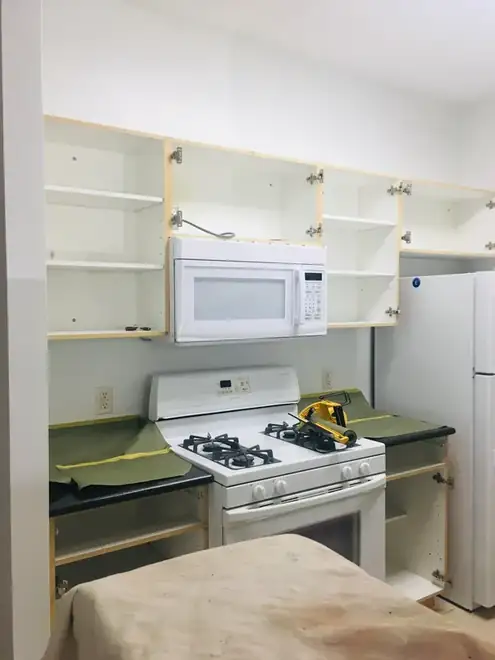
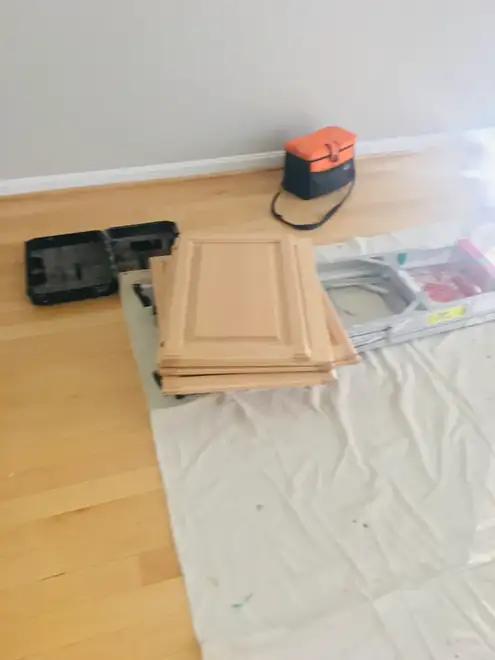
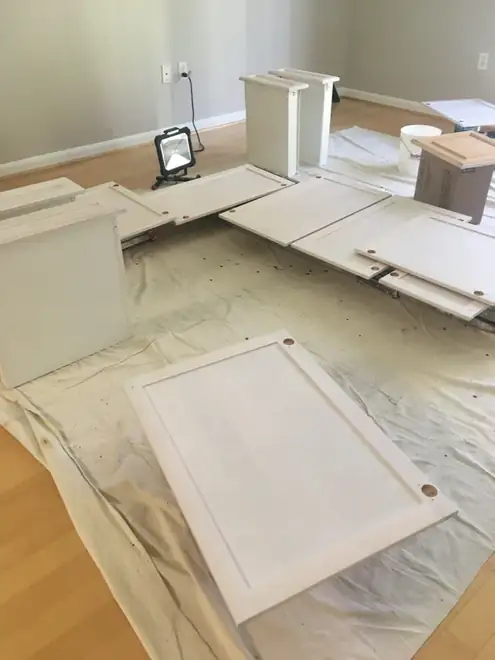
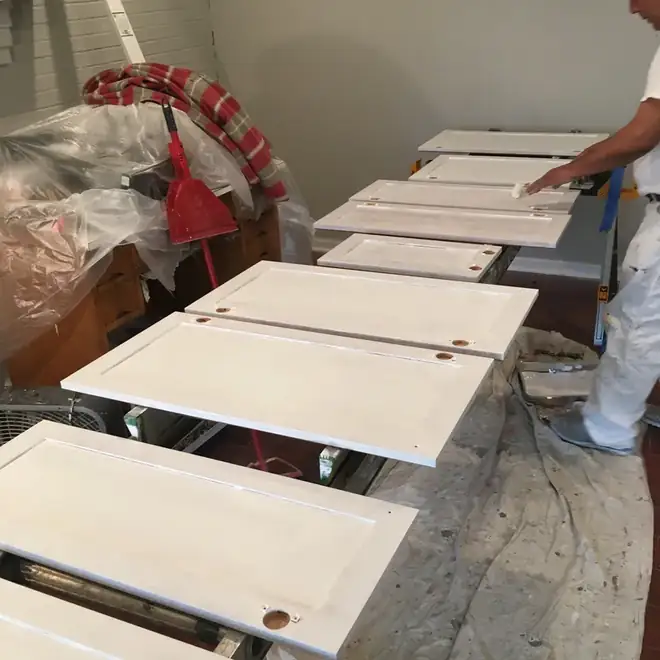
Doors and drawer fronts come off and get labeled so every one returns to its own opening. Hardware comes off and is bagged. Then everything is degreased – and this step is the one that separates jobs that last from jobs that peel. Kitchen cabinets carry years of cooking grease, hand oil and old furniture polish. No primer bonds through that.
Next comes sanding, to give the existing finish tooth. Then a bonding primer selected for the substrate – a different product for oak than for maple, different again for a factory-catalyzed finish or for laminate.
Open-grain woods like oak need a decision. The grain will show through paint. Some homeowners like it. Those who want a smooth modern look need the grain filled, which is real additional labor.
Finish coats go on thin and even. Thin is the key word. A heavy coat on a cabinet door looks great on day one and stays soft, then sticks where the door meets the frame for months afterward.
How durable is a painted cabinet, really
This is the fair question and it deserves a straight answer.
A properly refinished cabinet with the right primer and a quality cabinet-grade enamel is durable. It holds up to daily use, wipes clean, and looks good for years. It is not, however, identical to a factory finish. Manufacturers spray a catalyzed conversion varnish and bake it in a controlled environment. That is a harder film than anything achievable in your house.
What that means in practice: painted cabinets are more susceptible to chipping at high-impact points – the edge next to the trash pull-out, the door under the sink, the drawer front by the dishwasher. Those spots can be touched up, which is one advantage over factory finishes that cannot be matched at all once damaged.
Cure time is the other thing to know. The finish is dry to handle in a day or so and continues hardening for weeks. Treating cabinets gently for the first few weeks is the difference between a finish that lasts and one that carries marks from week one.
Color and hardware decisions
The most common choice is white or off-white uppers with a deeper color on the lowers or the island. It is popular because it works – it lifts the room, keeps the base looking grounded, and hides wear where the wear happens.
Something worth thinking about: a very bright white next to warm oak flooring or a beige countertop can look stark and can make the counter look yellow. Softer whites and greiges usually sit better with existing surfaces you are not changing.
Test against the things that are staying. Hold samples against your countertop, your backsplash and your floor, in daylight and under your evening kitchen lighting. Kitchen light is often much cooler or warmer than the rest of the house, and that changes how a color reads.
Hardware is the cheap upgrade that makes a refinished kitchen look intentional rather than repainted. New pulls and knobs cost little relative to the job. If you are changing from knobs to pulls, the new holes get filled and finished during the process, which is far easier while the doors are already off.
Timeline and living through it
Plan on several days for a typical kitchen, more for a large one or one that needs grain filling.
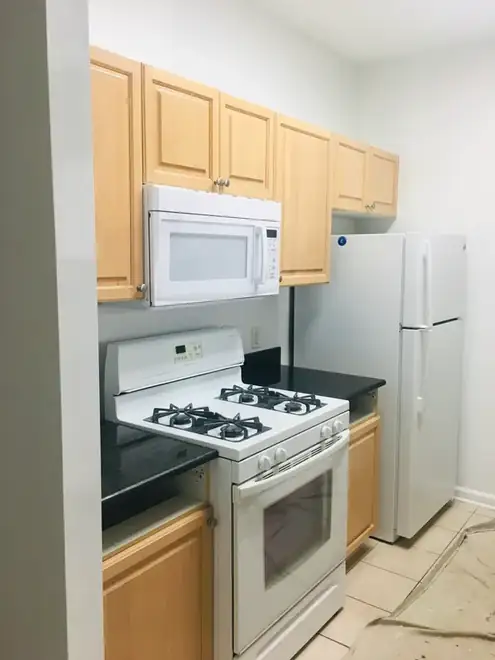
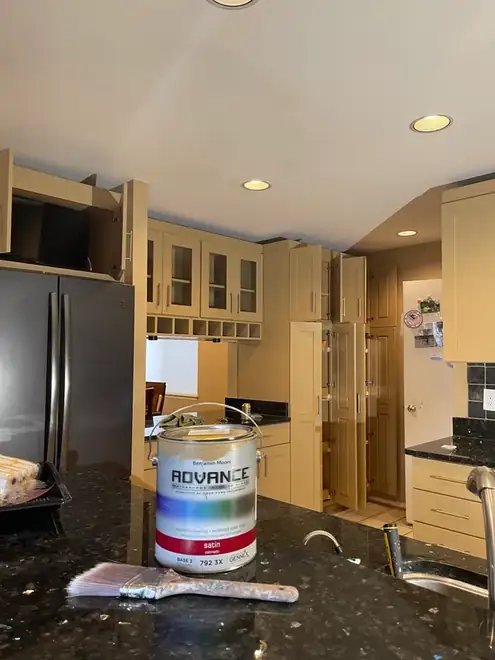
The doors come off early and stay off while they are prepped and finished. The boxes and frames get done in place, with the rest of the kitchen masked off. You will have countertops and appliances available for most of it, but expect open shelving and a working area that is smaller than usual.
Empty the cabinets before the crew arrives. All of them. This is the step homeowners most often underestimate and it is what determines whether day one is productive.
When the doors go back on, they get adjusted so everything closes evenly. Then give the finish a few weeks of gentle treatment – no slamming, no heavy stacking against interiors, no shelf liner or contact paper for at least a month, since adhesive can bond to a soft film and pull it off.
Making the decision
Run through it in this order.
- Does the layout work? If no, consider replacing.
- Are the boxes sound? If no, replace.
- Can you live with the door style? If no, consider new doors on existing boxes.
- Is the material paintable? Wood and MDF, yes. Peeling thermofoil, no.
- How long are you staying? Refinishing serves both a long stay and a near-term sale well.
- What is the budget doing elsewhere? Refinishing frees money for counters, backsplash, lighting or flooring, which together often deliver more visible change than new boxes would.
If the answer is refinishing, choose on prep rather than price. Every cabinet failure story starts with a skipped degreasing step or the wrong primer.
Fred General Painting LLC refinishes kitchen cabinets across Vienna, McLean, Oakton, Great Falls, Arlington, Falls Church, Fairfax, Reston and the surrounding towns. Fred will look at your boxes and tell you honestly which way to go. Call 703-869-0593.
Common questions
Is painting cabinets cheaper than replacing them?
Substantially, in nearly every case. Refinishing avoids demolition, disposal, installation, and the countertop and plumbing work that a replacement usually drags along with it.
How long do painted kitchen cabinets last?
Years, when the prep and product are right. They are not as hard as a baked factory finish, but they can be touched up, which a factory finish cannot.
Can oak cabinets be painted smooth?
Yes, but the open grain has to be filled first, which is meaningful extra labor. Left unfilled, the grain texture shows through the paint.
Can laminate or thermofoil cabinets be painted?
Intact thermofoil can sometimes be coated with the right bonding primer. Once it is peeling, refinishing rarely gives a result worth the cost.
How long will my kitchen be out of use?
Several days for a typical kitchen. The doors come off early and stay off, but you keep your appliances and most counter space throughout.
Do I have to empty the cabinets?
Yes, all of them, before the crew arrives. It is the single biggest thing you can do to keep the job on schedule.
When can I use the cabinets normally again?
Handle them gently for the first few weeks while the finish cures. Avoid shelf liner or contact paper for at least a month, since adhesive can lift a soft film.
Should I replace hardware at the same time?
It is the ideal moment. The doors are already off, and any hole changes from knobs to pulls get filled and finished as part of the process.