
House Painters in Chevy Chase, MD
There is one ZIP code here and eight separate little governments inside it, and the rules for parking a truck, setting a lift or pulling a permit can change when you cross a street. We find out whose jurisdiction your house sits in at the estimate, not on the first morning. Fred General Painting has been doing this kind of work since 2002.
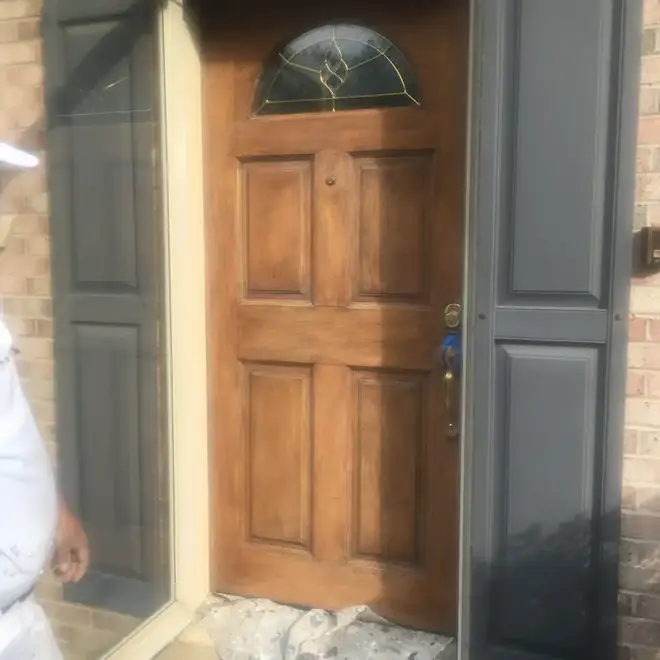
One ZIP code, a lot of separate governments
Mail addressed to 20815 says Chevy Chase. That is a postal convenience and nothing more. Inside that one ZIP you have the Town of Chevy Chase, Chevy Chase Village, the Town of Chevy Chase View, the Village of Chevy Chase Section 3, the Village of Chevy Chase Section 5, the Village of North Chevy Chase, the Village of Martin's Additions and the Village of Drummond, with the Town of Somerset and the Village of Friendship Heights sitting alongside them. Montgomery County's permitting department lists them separately, each with its own office and its own phone number, and states plainly that several municipalities require a municipal permit in addition to the county building permit.
That is not trivia. It is the single most useful thing a contractor working here can know, and it has real consequences on the job:
- Who issues the permit. The county is not always the end of it. On the jobs where a permit is in play, several of these municipalities want their own sign-off as well, and that takes time nobody has budgeted if it gets discovered on day one.
- The curb and the right of way. The street in front of your house is not automatically county street. Several of the villages administer the curb and right of way themselves, which governs where a truck can sit, whether a dumpster or a lift needs municipal permission, and how long it can stay there.
- Street trees. The canopy over these streets is old and it is protected. Staging a lift or a scaffold under one is not a decision to make at seven in the morning with the tailgate already down.
- Start times and quiet hours. These are set locally, not by us. Two houses four hundred feet apart can be under two different sets of them.
So the first thing we establish at an estimate is which of these entities your address falls in, and we make the calls from there. That costs an hour up front and saves a week later.
Why the street grid is shaped this way
Francis G. Newlands assembled over 1,700 acres here in the 1890s and laid out a streetcar suburb running up Connecticut Avenue. The land was developed in sections, and those sections are why the political map looks the way it does today. Chevy Chase Village became a special taxing area in 1914 and incorporated as a municipality in 1951. As of 2020 it held roughly 2,049 people across about 0.42 square miles.
The residue of that history is deep setbacks, a mature planted canopy that was part of the original design rather than an accident, and blocks of houses built within a few years of each other. Chevy Chase Village alone borders the Chevy Chase neighborhood of Washington DC to the southeast, Friendship Heights Village to the southwest, Somerset to the west, the Chevy Chase Club to the northwest, Section Three to the north and Martin's Additions to the northeast. You can walk through four jurisdictions in fifteen minutes.
Connecticut Avenue, Brookville Road, Bradley Lane, Wisconsin Avenue and East West Highway are the arteries. Everything between them is residential and tree covered.
The houses: 1900 to 1930, and what that means for paint
The housing stock here is remarkably consistent, which is unusual and genuinely helpful. It is overwhelmingly early twentieth century: frame houses with wood siding, stucco over frame, shingle, American four-squares and Colonial Revivals. Deep front porches. Original divided-light wood sash. Slate roofs with copper flashing and copper gutters.
A house built in that window behaves in a specific way under paint.
- The framing is old growth lumber. The siding and trim are dense, tight grained and dimensionally stable, and they hold a film far better than anything milled today. That is worth preserving rather than replacing.
- There are a great many coats on everything. Trim profiles have softened under paint build, doors bind against stops, and sash will not run in the channels.
- Nothing is square and nothing is plumb, including the parts that look it. Cut lines here are worked by eye against the actual line of the house, not off a laser.
- Every horizontal surface on the outside is a hundred years old and has drunk water at some point: porch floors, sill noses, the top edge of a water table.
We treat those houses as maintenance work on a good building, not as a surface to cover.
Pre-1978 is not the exception here, it is everything
Because the neighborhood was largely built out before the Depression, essentially every house in 20815 predates 1978. Nobody needs to guess about it.
The federal RRP rule is what governs renovation, repair and painting that disturbs lead-based paint in pre-1978 housing. The thresholds are plain: interior work that disturbs more than six square feet of painted surface in a room, or exterior work that disturbs more than twenty square feet. Maryland is not an EPA-authorized state for that program, so the federal rule applies here directly rather than through a state version of it.
Six square feet indoors is not much. A single door and its casing, one window and its surround, a section of baseboard down a hall: those clear the threshold easily. So on a house here, the realistic assumption is that scraping or sanding any meaningful amount of old paint falls inside the rule, and the scope should be written with that understood from the beginning.
There is also a separate Maryland obligation that catches people out. Maryland's lead risk reduction law applies specifically to pre-1978 rental property, with registration and inspection duties that sit with the property owner. If you rent out a house here, that is your requirement rather than something a painting contractor discharges on your behalf, but it does change what you want done and in what order, so tell us before we schedule.
Ask whoever quotes your job how they handle the rule on a house this age, and check the answer rather than taking it on trust. What we will do is tell you honestly what the rule covers, work the scope around it, and contain and collect debris instead of letting chips go into a flower bed or down a storm inlet.
Old stucco over frame is a materials problem
A significant share of the houses here are stucco over wood frame, and that finish is one of the most frequently mishandled surfaces in the neighborhood.
Original stucco of this era is soft and relatively permeable. The wall assembly behind it was designed to let moisture move through and dry out. When somebody coats that wall with a hard, tight modern product, or patches it with a stiff portland-rich mix, the water that gets in has nowhere to go. It comes back out by pushing the coating off in plates, or it stays in the wood behind and quietly rots the sheathing.
Patching old stucco is a materials-matching job. The repair mix has to be softer than the surrounding wall, not harder, and the texture has to be worked to match what is already there or the patch reads as a scar from the sidewalk for the next thirty years. It is not a caulk job and it is not a bag of premix troweled on flat.
Before we quote stucco we sound the wall, read the cracking pattern for movement behind rather than surface shrinkage, and check the usual water entry points: the base where stucco meets grade, the band below a porch roof, and anywhere a downspout discharges against the wall. Then we tell you what is repair and what is recoating, because they are different sizes of job.
Divided-light wood sash: the slowest part of the job
The original windows on these houses have many small lights, sometimes six over one, sometimes eight, sometimes a diamond-pattern upper sash on a shingle-style house. They are the most skilled and the slowest part of any exterior we do here, and they are the part most often skipped by somebody bidding low.
The arithmetic is simple. A single-light sash has one perimeter to cut. A six-over-one has seven. Multiply by the window count on a four-square and the muntin work alone outweighs the siding.
Glazing putty is the other half of it. Putty shrinks, cracks and falls out, water then sits on the bottom rail behind the glass, and the rail rots from the inside where you cannot see it. Reglazing is slow, unglamorous and the single highest-value thing you can do for a hundred-year-old window. Done right, the sash outlives anything you could buy to replace it.
Painted-shut sash is the related complaint. Cutting a sash free, cleaning the channels and the parting bead, and repainting so it runs again is part of the work, not a favor at the end.
Narrow lots, close neighbors and the tree canopy
These are not acre lots. On many of these streets the gap between your wall and the next house is a few paces, and the practical consequences run through everything we do.
Ladders and planks land on somebody else's grass. Wash runoff crosses a property line before it soaks in. Overspray does not respect a fence. So on side elevations that close we brush and roll rather than spray, we put drop cloths down on the neighbor's side of the line when we are working at the edge, and we knock on the door and say which days we will be there. That last part is not politeness for its own sake. On streets where houses sit this close, the neighbor is going to be part of the job whether anyone plans for it or not.
The canopy is the other constraint. These are old, large, protected street trees, and they change both the work and the access. Limbs sit over the roof line, shade keeps north elevations damp longer into the morning, and getting a lift or a tall ladder into position under a mature specimen is a planning question rather than a strength question. We work out staging at the estimate, including whether equipment on the street needs the local municipality's permission, and we would rather brush a gable from a ladder than force a lift under a tree.
How we actually work here
Fredy Vargas walks the house himself before you get a number. On a hundred-year-old house with original sash, stucco and a deep porch, nobody can price the job from photographs, and the honest version of the estimate is a scope: which substrates are where, what is repaired before paint, the primer for each surface, coats, sheens, and which days you lose the use of which space.
Alongside that we settle the local questions: which municipality the house sits in, whether anything about the job touches the right of way, where the truck goes, and what the start time can be. Several of these villages manage the curb themselves, so asking first is the difference between a normal week and a stopped job.
Beyond painting we handle what these houses need alongside it: carpentry and wood rot repair, drywall and plaster repair, popcorn ceiling removal, crown molding, wallpaper removal, stucco repair, concrete staining and epoxy floors.
Fred General Painting LLC has been in business since 2002, based at 8040 Trevor Place in Vienna, a straight run over the bridge. It is Fredy plus four employees, the same four every day, background checked. Virginia contractor license 2705098145. Licensed, bonded and insured in Virginia. Sherwin-Williams and Benjamin Moore products. Monday to Friday 8 to 5, weekends by appointment, no minimum job size. 5.0 on Google from 40 reviews, 93 five-star Thumbtack reviews, hired 150 times, Thumbtack Top Pro 2021 through 2025. 10% off for veterans and anyone 65 or older. Call 703-869-0593.
Our work around Northern Virginia
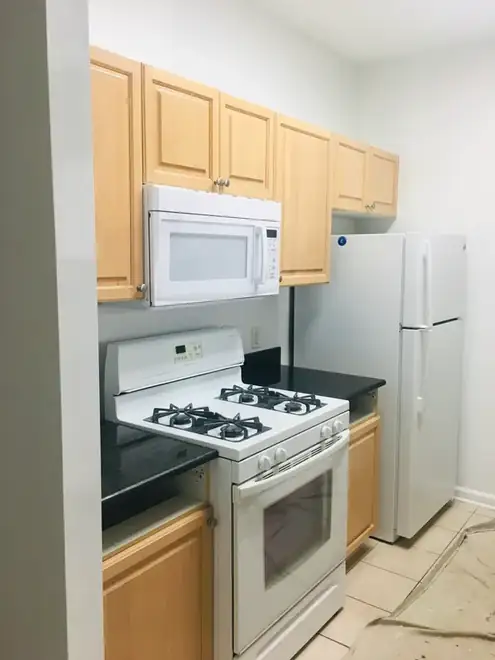
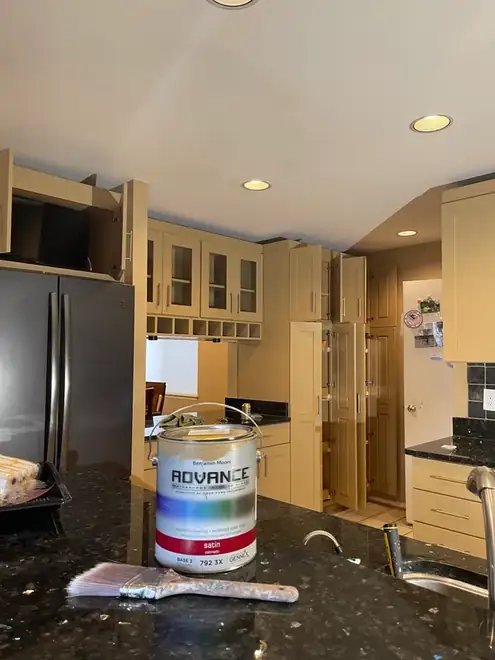
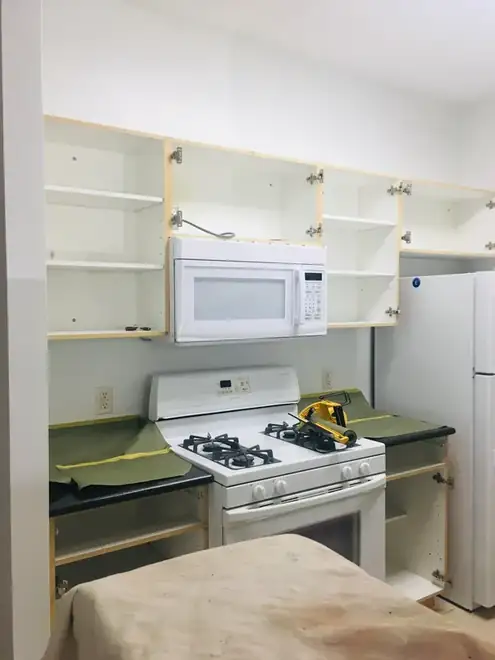
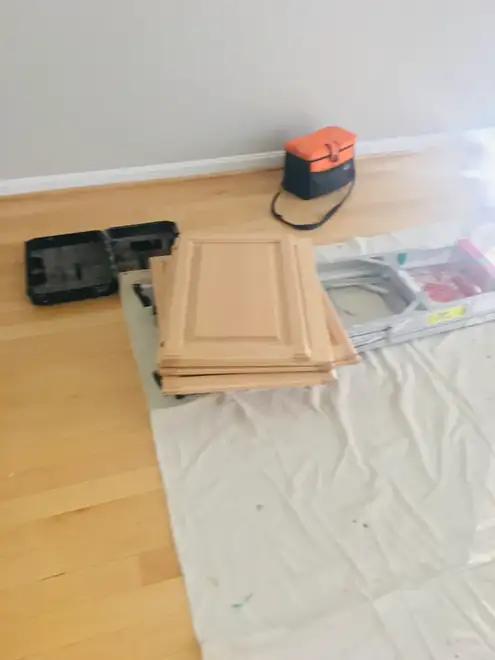
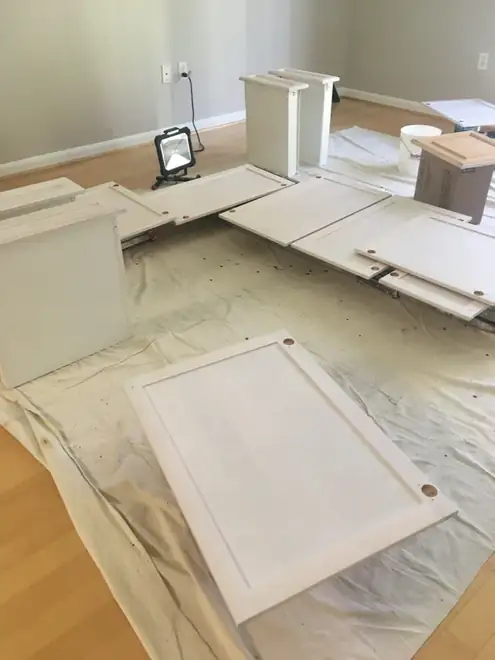
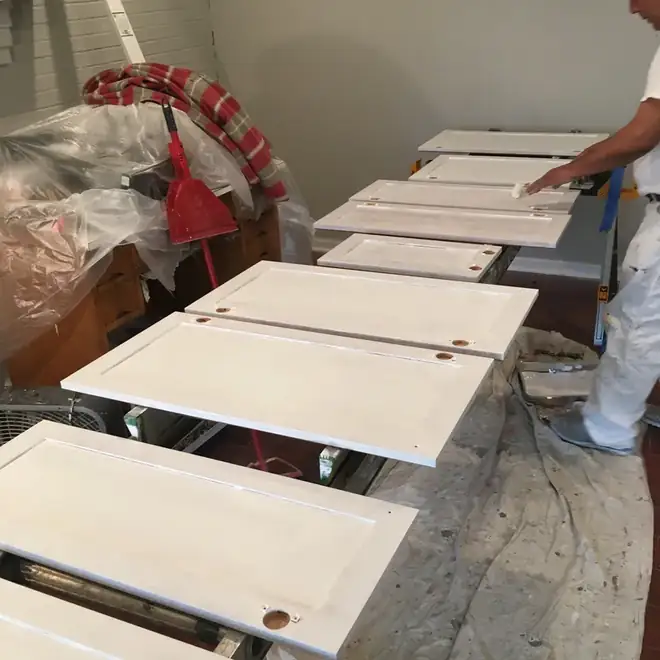
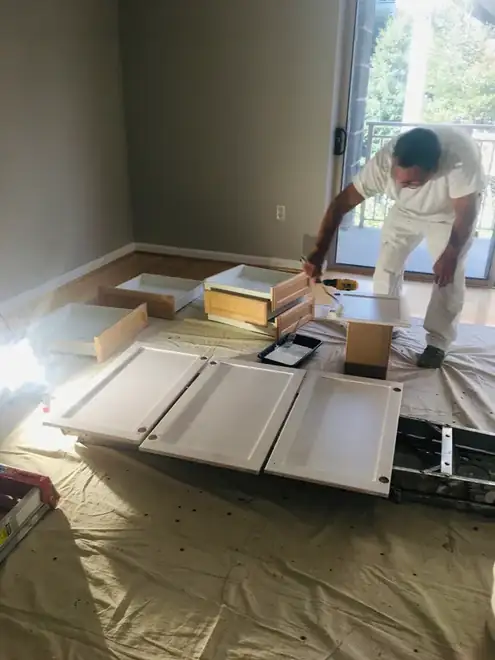
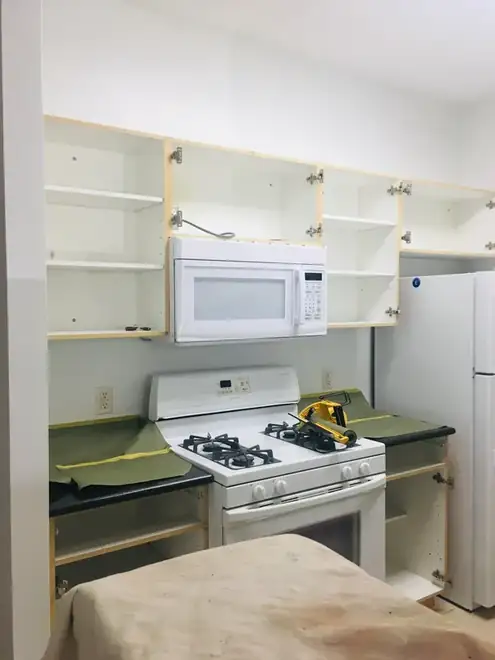
Our own photographs, from jobs across Northern Virginia. See all the project photos.
Where we work in Chevy Chase
Serving Chevy Chase, MD and the surrounding streets, out of the shop at 8040 Trevor Place, Vienna, VA 22182.
- 20815
Chevy Chase, MD on Google Maps ↗opens in a new tab Get directions to the shop ↗opens in a new tab
What we do in Chevy Chase
Questions about painting in Chevy Chase
My address says Chevy Chase. Which government am I actually in?
That is exactly the question, and it often surprises people. The 20815 ZIP covers the Town of Chevy Chase, Chevy Chase Village, Chevy Chase View, Sections 3 and 5, North Chevy Chase, Martin's Additions and Drummond, with Somerset and Friendship Heights beside them. Montgomery County lists them separately, each with its own office and phone number, and notes that several require a municipal permit in addition to the county building permit. We establish which one your house sits in at the estimate and make the calls from there.
Do you need a permit to paint my house?
Straight repainting normally does not, but the pieces around it can. Anything that involves equipment sitting in the street, a dumpster, or work that goes beyond surface finishing may require permission, and here that can mean the municipality as well as the county. Because several of these villages administer their own right of way, we ask the specific office before we schedule rather than assuming the county answer covers it.
Where will your truck park, and for how long?
That depends on whose street it is. Some of these streets are managed by the municipality rather than the county, so parking, standing equipment and anything larger like a lift can carry local conditions. On narrow blocks with no driveway to work from we plan material quantities up front and stage tight rather than spreading out. We settle the parking question before the first morning, not during it.
Can you set up a lift under the street trees?
Sometimes, and sometimes the right answer is no. The canopy here is old and protected, and putting a lift or a scaffold tower under a mature tree is a decision to make in advance with whoever has authority over that tree, not on the day. Often we can reach the same elevation from ladders and planks with a bit more labor, and we will tell you when that is the better trade.
The house is from 1915. How does the lead rule affect my job?
Essentially every house in 20815 predates 1978, so it is a live question on almost any scope. The federal RRP rule applies to work disturbing more than six square feet of painted surface inside a room or twenty square feet outside, and because Maryland is not an EPA-authorized state, that federal rule applies directly here. Six square feet indoors is one door and casing, so most real prep clears it. We explain what it means for your specific scope and contain and collect debris rather than letting it scatter.
Our stucco is cracked and a previous patch looks wrong. Can it be fixed?
Usually yes, and the reason the old patch looks wrong is almost always that it was harder than the wall around it. Original stucco over frame is soft and permeable by design, and a stiff modern mix or a tight coating traps moisture in the assembly behind. We sound the wall, read the crack pattern, repair with a mix compatible with what is there, and match texture deliberately. A hard patch on soft stucco is a problem you see from the sidewalk for decades.
Is it worth restoring the original windows instead of replacing them?
In these houses, generally yes. The sash are old growth wood and the joinery is better than anything at that price today. What fails is the glazing putty, and once it cracks, water sits on the bottom rail behind the glass and rots it from inside. Reglazing, priming the bare wood the same day it is opened, and carrying the finish a hair onto the glass is slow work but it is the highest-value thing you can do to a hundred-year-old window. Many small lights make it slower, and we price that honestly.
Are you licensed, and will you take a small job?
We hold Virginia contractor license 2705098145 and we are licensed, bonded and insured in Virginia. Fred General Painting has been in business since 2002 out of 8040 Trevor Place in Vienna, and it is Fredy plus the same four employees every day, background checked. There is no minimum job size, so one porch floor, a set of front doors or a single stair hall is work we will take. Call 703-869-0593. Veterans and anyone 65 or older get 10% off.
Other towns we paint in
More on this from Fred
- What Actually Drives the Cost of Painting a House in Northern VirginiaHomeowners want a number. What they usually need first is an understanding of why two honest painters can quote the…
- Painting Your Kitchen Cabinets vs Replacing ThemRefinishing is the cheaper path most of the time. But there are kitchens where it is the wrong answer, and…
- The Best Time of Year to Paint the Outside of a Virginia HomeLate spring and early fall are the sweet spots, but the reason has less to do with the daytime high…
Painting in Chevy Chase? Let us take a look.
Fred answers his own phone. If he is up a ladder he calls back the same evening.