
What Actually Drives the Cost of Painting a House in Northern Virginia
Homeowners want a number. What they usually need first is an understanding of why two honest painters can quote the same house and land thousands apart. Here is what moves the price.
August 16, 2026 · by Fredy Vargas
Labor is most of the bill
Paint is a small share of what you pay. On a typical repaint, the material cost is a fraction of the total and the rest is hours. That single fact explains almost every price difference you will see between bids.
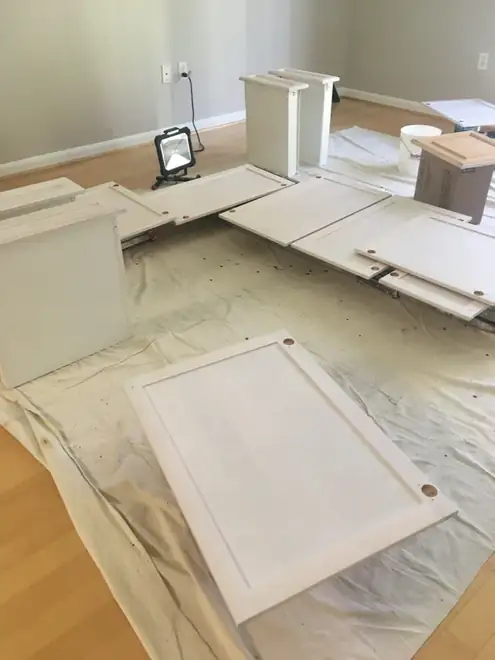
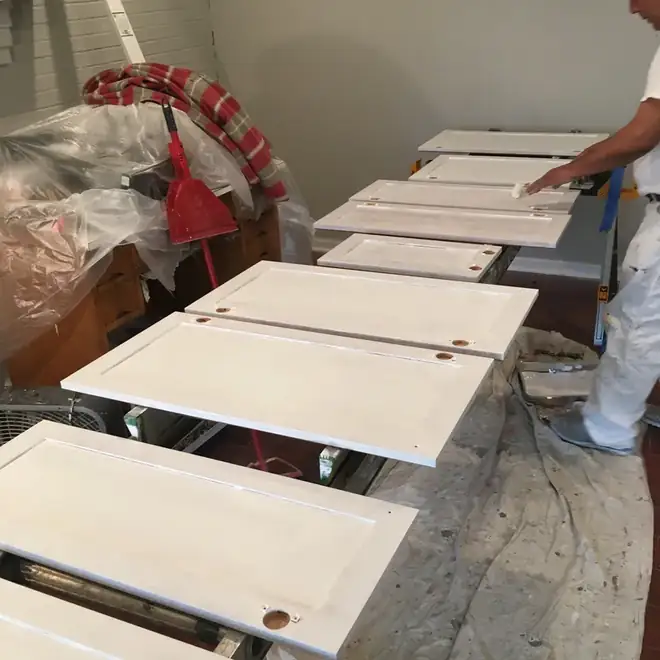
A gallon of premium paint covers roughly 350 square feet. The gallon itself is a modest cost. Getting the surface ready for that gallon – washing, scraping, sanding, filling, taping, caulking, masking, priming – is where the days go. When a bid comes in dramatically low, the painter has not found a cheaper gallon. He has planned fewer hours.
This is why asking about the product line alone does not protect you. Two contractors can both say Sherwin-Williams or Benjamin Moore and be describing completely different jobs.
Condition beats square footage
Two houses of identical size can differ by half on price because of what is under the old finish.
A ten-year-old house with sound siding, tight caulk joints and a finish that is simply tired needs a wash and two coats. An eighty-year-old house in Vienna or Falls Church with layered paint, open miters, chalking on the south wall and three sills gone soft needs scraping, sanding, carpentry, priming and then two coats. Same footprint, completely different job.
Inside, the equivalent is wall history. Smooth drywall in a newer townhouse rolls out quickly. Plaster with hairline cracking, old wallpaper glue, holes from three generations of picture hangers and a ceiling that was patched badly in 2011 all add hours before color goes anywhere.
When you get a quote that seems high, ask which line items are prep and repair. That is usually the answer.
Height, access and staging
Everything gets more expensive the further it is from the ground. A two-story foyer or an open stairwell needs staging or extension planks, and setting that up safely takes time on both ends of the work.
Outside, a three-story rear elevation over a sloped yard is genuinely harder than the same wall over flat ground. Ladders have to be footed and moved constantly. Decks, walkouts, air conditioning units, tight side yards between houses, and mature shrubs against the foundation all slow the work down.
Cathedral ceilings, dormers, gable peaks and second-story window trim are the specific features that push exterior numbers up. If your house has all of them, expect a higher figure than your neighbor’s rambler, regardless of square footage.
Coats, colors and coverage
The number of coats is not a fixed thing, and it is one of the most important details in any estimate.
Going from beige to a similar beige is typically two coats. Going from a dark red accent wall to white can need a primer plus two, sometimes three. Deep saturated colors – true reds, strong blues, deep greens – have less hiding pigment and often need an extra pass even when going onto white.
Multiple colors also cost more than one. Every color change means new cut lines, new trays and rollers, and time waiting for edges to set. A house painted in one wall color and one trim color moves faster than the same house with five different rooms.
Ceilings are their own line. Many homeowners assume ceilings are included and are surprised when they are quoted separately, because ceilings are slow, awkward work. Ask specifically.
Trim, doors and the details that eat days
Trim work is priced by the linear foot in a painter’s head, and it is far slower than wall area. Baseboard, casing, chair rail, crown molding, wainscoting and stair balusters are all brush work, one careful pass at a time.
Doors are the same story. A six-panel door has edges, panels, stiles and rails, and each one takes real time to do without runs or sags. Multiply by twenty doors in a house and it becomes a meaningful part of the estimate on its own.
Windows are the slowest of all, especially older wood ones with divided lights. Glazing, sash edges and muntins are painstaking. Any bid that treats an old wood window as equivalent to a section of siding has not thought about it.
Repairs found along the way
Wood rot is the most common cost surprise on an exterior. Nobody can see behind a sill or under a piece of trim from the driveway, and a scraper often finds soft wood that was invisible before the work started.
The right way to handle that is disclosure. A good contractor tells you the day he finds it, shows you the spot, explains what replacement will take, and prices it before doing anything. The wrong way is a caulk gun and a coat of paint over damp wood, which looks fine at the walkthrough and fails within two seasons.
Interior equivalents are water-stained ceilings that need sealing, drywall seams that have opened and need proper taping rather than a skim of compound, and wallpaper that was hung directly onto unprimed drywall and takes the paper facing with it when removed. Any of these can add a day.
Ask every bidder how they handle discovered damage. The answer tells you a lot about the company.
Local factors specific to Northern Virginia
Our market has its own pressures. Labor costs more here than in most of the country. The building stock is mixed, with 1950s and 60s houses in Vienna, Annandale and Falls Church sitting near new construction in Tysons and rebuilt lots everywhere.
Weather compresses the exterior season. Spring gets rain and pollen, high summer brings humidity that stretches dry times, and late fall closes the window as overnight temperatures fall. That leaves a busy stretch in late spring and early fall when good crews are booked, and demand pushes pricing across the whole market.
HOAs add administrative time on exteriors. Color approval submissions have their own calendars and are often the slowest part of a project.
One practical consequence: booking an interior job in January or February often gets you better availability than the same job in May.
How to compare two very different quotes
Do not compare the bottom lines. Compare the scopes, side by side, and ask each contractor the same short list of questions.
- How many coats, and is primer separate or included?
- What surfaces are included – walls only, or walls, ceilings, trim, doors and closets?
- What prep is being done, specifically? Washing, scraping, sanding, caulking, filling?
- What happens if rotten wood is found? Priced now, priced then, or ignored?
- Which product line, by name, not just which brand?
- Who is on site, and is it the same crew each day?
- Is the contractor licensed, bonded and insured, and will they send a certificate?
- What is written down about payment terms?
Once you have those answers, a bid that looked expensive frequently turns out to be the cheaper one per year of service. A finish that lasts eight years at a higher price costs less annually than one that needs redoing in four.
Where to spend and where to save
If your budget is tight, phasing is smarter than cutting corners. Do the exterior this year and the interior next, or do the high-traffic rooms now and the guest bedroom later. Skipping prep to fit everything into one season means paying twice.
Spend on exterior prep, on the paint line for exposed elevations, and on repairing rot properly. Those three decide how long the whole job lasts.
Save by doing your own furniture moving and picture removal, by picking fewer colors, by leaving ceilings that are still clean, and by grouping work into one visit rather than calling a contractor back three times.
And ask about discounts. We take 10% off for veterans and for anyone 65 or older, and plenty of homeowners never think to ask their contractor whether anything like that exists.
Getting a real number for your house
No article can price your house, and any company giving firm numbers over the phone without seeing it is guessing or planning to revise later.
Fred comes out himself, walks the property with you, measures, and writes up the scope in detail. The visit is free and takes twenty minutes to an hour. You get something in writing you can hold against any other bid.
Fred General Painting LLC has worked in Vienna, Oakton, McLean, Great Falls, Arlington, Falls Church, Tysons, Fairfax, Burke, Reston, Herndon, Annandale, Alexandria and Springfield since 2002. Call 703-869-0593.
Common questions
Why did two painters quote my house so differently?
Almost always prep and coats. One bid includes washing, scraping, sanding, caulking, priming and two full coats, the other does not. Compare the written scopes, not the totals.
Is paint a big part of the cost?
No. Materials are a small share of a repaint. The large majority of what you pay is labor hours, which is why the amount of prep drives the price.
Do dark colors cost more to paint over?
Often yes. A large color change usually needs a primer plus two coats, and deep saturated colors sometimes need a third pass because they hide less.
Are ceilings included in a painting quote?
Not automatically. Ceilings are slow work and are frequently priced separately. Ask directly so you are comparing bids on the same surfaces.
What if the painter finds wood rot after starting?
It should be shown to you, explained and priced before any repair is done. Painting over soft wood buys you one season and costs more later.
Is it cheaper to paint in winter?
Interior work is often easier to schedule in the colder months because the exterior season is quiet. Availability is better, which matters if you are on a timeline.
Can I lower the cost by buying my own paint?
Rarely by much, since materials are the smaller piece. Talk to your contractor first so the product you buy is right for the surface.
Do you offer discounts?
Yes. Fred General Painting takes 10% off for veterans and for anyone 65 or older. Mention it when you call 703-869-0593.