
Interior Painting in Arlington, VA
Most of Arlington is older than the rest of Northern Virginia, and a good share of it is a condo unit in a building with rules. Those two facts decide how an interior job here gets run.
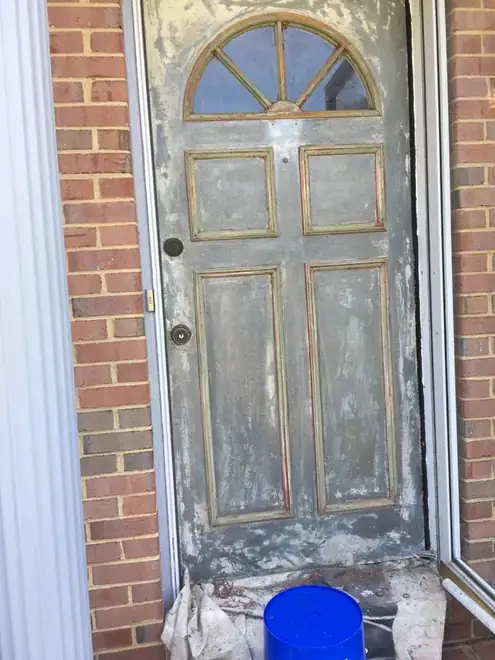
What is behind the paint in a house built before 1955
Ashton Heights, Lyon Park, Lyon Village, Maywood, Cherrydale and the Waverly Hills streets were largely built before the war, and nearly all of that stock is plaster over wood or metal lath.
Plaster fails in ways drywall does not. It cracks along the lath and framing, usually over a door head, along a ceiling junction or out of a corner. A hairline filled with lightweight compound comes straight back, because the crack moves and the filler does not. We cut it out to a V, fill with a setting-type compound, tape where the movement is structural, then skim and sand.
The other failure is separation. Tap a wall and a section that has pulled away from the lath sounds drummy. Painting that is money spent on something about to let go. Those areas get re-secured or cut out and patched first.
These houses also predate 1978, worth naming because old coating layers on trim matter whenever sanding is involved. Where the work is regulated, it gets handled the way the rules require rather than worked around. We avoid unnecessary dry sanding and open scraping, sheet and contain the work, and clean up daily rather than let dust travel. Fred walks the rooms with you first and says what he plans to disturb.
Cape dormers, knee walls and sloped ceilings
The 1940s and 50s brick capes across Arlington Forest, Bluemont and the 22205 streets nearly all have a finished second floor under the roof. That upstairs room is a specific kind of painting job.
You get a low knee wall, a sloped section running up from it, a flat ceiling in the middle and dormer cheeks that are neither wall nor ceiling. Six planes can meet within a few feet with no molding to hide a transition.
There is nowhere to set a ladder against a sloped surface, so most of it is worked from low platforms. Where wall meets slope there is usually just a taped corner, and masking it gives a fuzzy line, so it is cut by hand. If the ceiling and the walls are going different colors, the break has to be decided before we start, because the geometry will not choose it for you. Dormer windows sit in a deep reveal that takes four small cut lines each. Slow work in a small room.
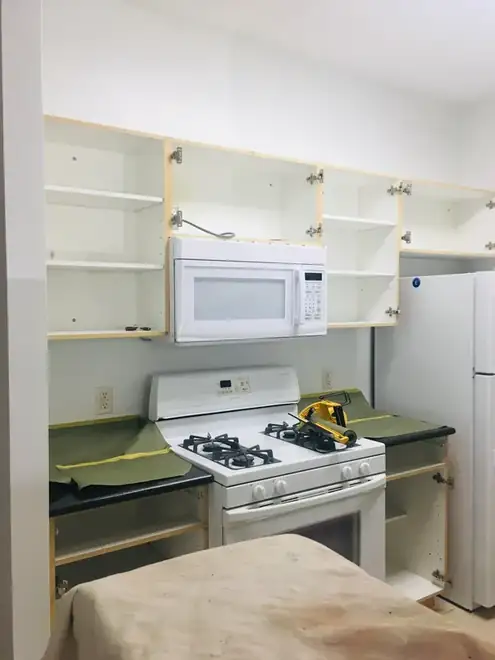
Sheen on a wall that is sixty years out of true
An old plaster wall is not flat and was never meant to be. It has hand-floated waves, a belly between studs and a hundred small repairs from decades of picture hooks, radiator pipes and telephone wire.
Sheen decides whether you see any of it. Higher sheen throws light sideways and turns every wave into a shadow. In a pre-war Arlington living room with a side window running the length of one wall, an eggshell will show you things you did not know were there.
So here we steer people to a matte or flat with real scrub resistance on walls, and keep sheen where it earns its keep: semi-gloss on trim, doors and casing, satin in a kitchen or mudroom. That is a different recommendation than we would make in a ten-year-old house, and it is driven entirely by what the wall is.
If you want a wall genuinely flat rather than forgiving, it can be skim coated first. That is a real job and we price it as one.
A unit in a building is a logistics job first
A large share of Arlington households are in attached or multi-family housing: the garden apartment blocks around Westover, the towers through Ballston, Clarendon, Rosslyn and Pentagon City, and converted condominiums between them.
Before a drop cloth goes down we deal with the building:
- A certificate of insurance issued to the association and the management company, worded the way they require it.
- The service elevator reserved for the load in and the load out, which in most buildings means a booked window rather than turning up.
- Permitted work hours, which rule out early starts and usually rule out Sunday entirely.
- Corridor, lobby and elevator cab protection, because a drip in a common area is the association's problem and then yours.
We have no job minimum, so a one-bedroom repaint before a listing is work we take. Most of it is a full unit, popcorn removal or wallpaper removal, scheduled tight because keys often change hands on a fixed date.
Ventilation in a unit where the windows do not open
In a lot of the newer Arlington towers the glazing is fixed. There is no sash to throw open and the building's air handling is not yours to control. That changes how we paint the place.
We use low and zero VOC lines from Sherwin-Williams and Benjamin Moore anyway, and in a sealed unit we pick the line specifically for odor rather than out of habit. We run air movers toward the door where the building allows the entry cracked and protected, and we stage the rooms so you are not sleeping next to what we finished that afternoon.
It stretches the schedule slightly. A room with no air exchange takes longer between coats than the same room with a window open, and we would rather add half a day than stack a coat onto paint that has not released its moisture.
Built-ins, picture rails and the trim the house came with
Nearly every Arlington bungalow has a pair of built-in bookcases flanking the fireplace, and most of the pre-war houses still carry picture rail, deep baseboard with a cap, and casing with a profile you cannot buy.
The bookcases get skipped and then they show. Shelves out and labeled, the carcass cut and brushed, shelves finished flat and returned in order. Painting around them in place is why they look tired in an otherwise fresh room.
Old trim usually has an oil finish somewhere in its history and fresh latex has nothing to grip on it. It gets deglossed, sanded and given a bonding primer before any enamel, or it peels in sheets the first time a vacuum drags along the base. Doors here are solid, heavy and often painted shut at the stop. We free them, ease where they bind, and finish them so they still close on the latch.
Twelve feet between houses, and where the crew parks
Interior work still has to arrive. In Ashton Heights, Lyon Park or Cherrydale there is often no driveway, street parking is permit-controlled and your front walk is a few strides long.
We plan that before the first morning rather than improvising in front of your neighbors. Where the truck sits is settled in advance, materials come in by the day instead of stacking in your hall, and the path from door to work is run and taped before anything heavy moves along it.
Same four people every day, Fred among them, checking in before the crew leaves. Virginia contractor license 2705098145, bonded and insured. Ten percent off for veterans and anyone 65 or over. Call 703-869-0593.
Every service we offer
Every town we cover
More on this from Fred
- What Actually Drives the Cost of Painting a House in Northern VirginiaHomeowners want a number. What they usually need first is an understanding of why two honest painters can quote the…
- The Best Time of Year to Paint the Outside of a Virginia HomeLate spring and early fall are the sweet spots, but the reason has less to do with the daytime high…
- Refinish or Replace? How to Judge the Real Condition of Your DeckA gray, splintery deck usually looks worse than it is. A deck that looks fine can be the one with…
Ready when you are.
Fred answers his own phone. If he is up a ladder he calls back the same evening.