
Interior Painting in Falls Church, VA
Almost every interior we paint in Falls Church was built before 1965, and the first thing we work out is whether the wall is plaster over lath or drywall. The two want different repairs, and guessing wrong is how a patch comes back through the finish.
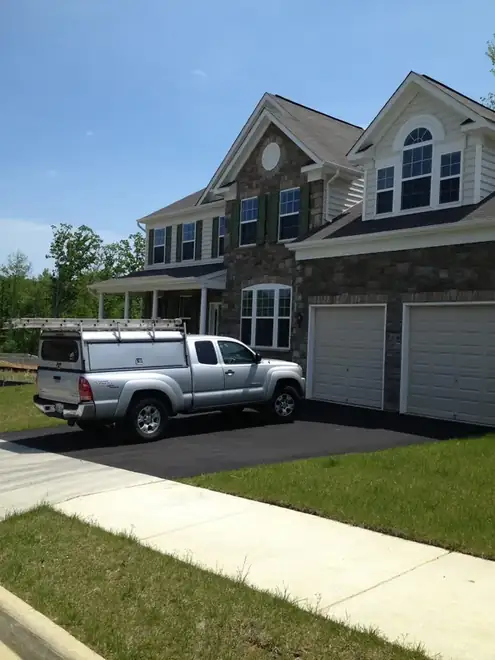
Plaster north of Broad Street, drywall in the postwar tracts
Broadmont and the older blocks around it run 1930s to early 1950s, and a good share of those houses still have their original plaster over wood or rock lath. Pimmit Hills broke ground in 1950 and went up fast in drywall. Greenway Downs, Virginia Forest and most of Lake Barcroft are the same generation as Pimmit Hills.
Tap a wall with a knuckle. Plaster is dense and dead, drywall sounds hollow between the studs. It takes two seconds and it decides the repair.
Plaster cracks at the upper corners of door and window openings and along the ceiling seam, because the whole assembly moves seasonally. Filling that line with lightweight compound and rolling over it buys you one winter. We open the crack, check whether the plaster has let go of the lath behind it, re-anchor it if it has, tape it, then skim wide enough that the repair does not telegraph under a low sheen. A narrow patch on a long plaster wall always shows.
Drywall in the 1950 houses fails differently: nail pops down the stud lines, cracked corner bead in the hallways, torn paper facing where somebody pulled tape off. Quick fixes, as long as they get primed.
Small rooms, eight-foot ceilings and the order we work in
The 1950s Falls Church house is three bedrooms, one bath, and rooms you can cross in four strides. That sounds easy to paint and it is not, because there is nowhere to put anything.
In a house with a large family room we can float furniture to the middle and work around it. In a Pimmit Hills bedroom the bed is most of the floor. So we stage differently: we clear one room completely into the next, finish it out including trim, put it back, then move. Fewer rooms open at once, less time with the house in pieces.
Low ceilings also put the wall and the ceiling in the same field of view. A ceiling five years older than the walls reads as dirty the moment fresh color goes up beside it, so on these houses we usually recommend doing both in the same visit.
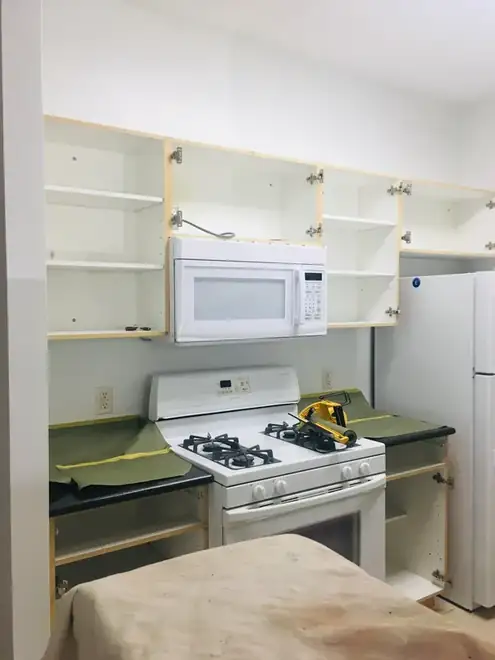
Varnished trim, and what pre-1978 means for it
Plenty of houses here still carry original trim and doors finished in varnish or shellac, sometimes with one coat of latex slapped over it in the 1990s that you can peel with a fingernail.
Latex has almost nothing to grip on aged varnish or on an old oil enamel. The fix is not a better topcoat. It is deglossing, sanding to a dull scratch, and a bonding primer made for slick surfaces, then a hard enamel. We sand between coats on doors and casings, which is the difference between trim that feels like furniture and trim you can feel the grit on.
The age question matters here. Housing built before 1978 may contain lead-based paint, and most of established Falls Church predates that line. We do not dry-sand or power-grind old coatings in an occupied house. We work wet, keep dust contained, sheet the floors, clean up as we go rather than at the end of the week, and if a surface looks like it needs more than that we will tell you to have it tested before anybody disturbs it.
Ceilings that were sprayed in 1958 and never touched since
Textured and popcorn ceilings show up constantly in the postwar stock here, usually in living rooms, hallways and bedrooms, and sometimes over plaster rather than drywall.
Two things we check before quoting removal. First, whether the texture has ever been painted, because a painted popcorn ceiling does not release when wetted and turns into a scraping job two or three times longer than an unpainted one. Second, what is under it. Over plaster the scrape can pull the finish coat, which means skimming the whole ceiling instead of spot repairing it.
We wet the ceiling, scrape it, skim, sand and prime before any finish goes on. Everything below gets sheeted in plastic first. It is genuinely messy work and it changes a small Falls Church living room more than any wall color will.
Brown rings from an old roof or radiator leak get a stain-blocking primer. Water stains come back through waterborne paint, sometimes weeks later, and there is no finish coat that beats them.
The infill houses, three years old and already needing paint
The other half of our interior work here is in the new houses that replaced the ramblers, inside the city limits and along the edges of Idylwood.
They look finished. The paint usually is not. Builder work is commonly one thin coat of flat sprayed over drywall that was never sanded properly, primer only where it was required, and trim sprayed before the floors went in. Two or three years in the walls will not wipe clean, every touch-up has burnished a halo, and the doors show roller texture.
Repainting these is a straightforward job done properly: sand the walls, prime every patch, two full coats, and trim brushed and rolled so it lays flat. Sheen selection carries a lot of the result. On the long open walls these houses have, a flat with real scrub resistance hides drywall waves that an eggshell would light up.
One bathroom, one kitchen, and a family still using both
A house with a single bathroom cannot be out of service for a day, so we do not take it out of service for a day. Bath ceilings and walls get done in a sequence that leaves the room usable overnight, and we work around your morning rather than expecting the house to empty out.
Same with the kitchen. We clean up every evening, not at the end of the job, and you should be able to cook every night we are there.
Bathrooms in these houses want a coating with mildewcide in it, in satin or semi-gloss. If the fan is venting into the attic instead of outside, we will tell you, because no paint solves that and the ceiling will spot again.
What the walk-through settles before we quote
Fredy Vargas comes out himself. On a Falls Church interior he is checking four things: plaster or drywall, whether the trim has ever been primed properly, whether the ceilings are textured and painted, and how much of the house has to stay in use while we work.
Those four answers move the price more than square footage does, and none of them can be judged from a photo.
Fred General Painting has been doing this since 2002, out of Trevor Place in Vienna, about fifteen minutes up Route 7. Virginia contractor license 2705098145, licensed, bonded and insured. Four employees, the same crew at your house every morning. No job minimum, so one bedroom or one hallway ceiling is a normal call. Ten percent off for veterans and for anyone 65 or older. Call 703-869-0593.
Every service we offer
Every town we cover
More on this from Fred
- What Actually Drives the Cost of Painting a House in Northern VirginiaHomeowners want a number. What they usually need first is an understanding of why two honest painters can quote the…
- The Best Time of Year to Paint the Outside of a Virginia HomeLate spring and early fall are the sweet spots, but the reason has less to do with the daytime high…
- Refinish or Replace? How to Judge the Real Condition of Your DeckA gray, splintery deck usually looks worse than it is. A deck that looks fine can be the one with…
Ready when you are.
Fred answers his own phone. If he is up a ladder he calls back the same evening.