
House Painters in Bethesda, MD
Bethesda is not one kind of house, it is three, and they need three different jobs. A 1922 frame house in Battery Park, a 1955 brick rambler in Sumner and a condo on Woodmont Avenue have almost nothing in common once you open the front door. We are twenty minutes away in Vienna and we have been sorting out which one you have since 2002.
Three housing stocks, one town name
The streetcar reached Bethesda in 1890 and the B and O Georgetown Branch was finished in 1910. Farmland got carved into house lots around those lines, and Drummond, Woodmont, Edgemoor and Battery Park went up first. Then the postwar push filled in the land further out toward River Road and Massachusetts Avenue. Then Metro arrived in 1984 and downtown went vertical.
So when somebody calls us about a house in Bethesda, the first question is not square footage. It is which of those three eras you are standing in, because the prep, the lead question and the scheduling all fork there.
- Prewar, close in. Edgemoor, Battery Park, Woodmont, Drummond. Plaster walls, original wood windows, real wood trim, and paint layers that go back before 1978 all the way down.
- Postwar, further out. Sumner, Westmoreland Hills, Glen Echo Heights, Bradley Hills, Wyngate, Greenwich Forest. Painted brick, aluminum and wood trim, and first-generation additions that are now thirty years old themselves.
- Downtown condominiums. 20814 around the Metro station. Interiors only, building rules, service elevator, certificate of insurance, restricted hours, no exterior work at all.
A contractor who quotes all three the same way is going to be wrong on at least two of them.
Plaster, wood windows and paint that predates 1978
On the old streetcar blocks the walls are plaster over wood lath, not drywall, and plaster fails in ways drywall does not. You get hairline map cracking across a whole ceiling, you get a long diagonal off the top corner of a door opening, and you get sections that have lost their keys and sound hollow when you knock. Skim coating a hollow section without re-anchoring it first just buys you a year.
We re-anchor loose plaster with washers where it is worth saving, cut out and patch where it is not, and skim with setting compound rather than premixed joint compound on anything that has to hold an edge.
The trim in these houses is real wood with a deep profile and a great many coats on it. Doors and windows in Edgemoor and Drummond often will not close because of paint build, not because of the hardware. Stripping the latch edge and the stop is part of the job, not a favor.
The original double-hung sashes are worth keeping and they are worth glazing properly. Failed putty is why a hundred-year-old sash rots at the bottom rail.
And because practically everything on these blocks predates 1978, the federal RRP rule is in play on any job that disturbs more than six square feet of painted surface inside or twenty square feet outside. Maryland is not an EPA-authorized state, so the federal rule applies directly here rather than through a state program. We will talk you through what that means for your specific scope before anything gets sanded.
Postwar brick, and additions that are old enough to fail
Out toward Sumner, Westmoreland Hills, Bradley Hills and Wyngate the houses are mostly brick, and a large share of that brick has been painted at some point since the 1970s.
Painted brick is its own decision. Once it is painted it stays painted, and the failure mode is not peeling from the surface, it is moisture pushing out from behind. Brick that was coated with something too tight traps water in the wall and the paint comes off in plates with a skin of masonry stuck to the back. We check what is already on there, because a breathable masonry coating and an elastomeric are not interchangeable and picking wrong costs you the wall.
The trim on these houses is a mix. Wyngate and Greenwich Forest have a lot of original wood fascia and rake board. Others were wrapped in aluminum coil in the 1980s, and chalky oxidized aluminum has to be washed, deglossed and primed for that substrate or nothing sticks.
The other postwar reality is the addition. A great many of these houses got a family room, a two-story rear bump or a garage conversion in the 1990s. Those additions are now thirty years old, which is exactly the age at which the flashing at the connection point, the caulk joint where old meets new, and the trim on the addition itself all start letting water in.
Where 1925 meets 1998: painting across the seam
This is the Bethesda job nobody warns you about. An original prewar house with a rear addition has two different substrates meeting along a line, and they do not behave the same.
Old growth wood trim on the original house is dense, dimensionally stable and holds paint for a long time. The engineered trim or fiber cement on the addition expands and contracts differently, takes primer differently, and often has a factory finish under whatever the last painter put on top. Paint the two with the same product on the same day and in three years one side looks fine and the other does not.
What actually makes the seam disappear:
- Identify each substrate before quoting rather than after starting. We scrape a test patch on both sides of the line.
- Prime each one with the primer that substrate needs, which is frequently not the same can.
- Treat the joint itself as a moving joint. A flexible sealant that can handle differential movement, not a rigid filler that will crack open by next winter.
- Match sheen carefully. Two surfaces the same color in different sheens read as two colors in raking afternoon light, and rear elevations get plenty of that.
Inside, the same seam shows up as plaster meeting drywall along a header. That transition wants tape and a wide feather, not a straight butt.
Downtown condominiums and how the building sets the day
The mid-rise and high-rise buildings that filled in around the Metro station after 1984 are a different trade from house painting, and a lot of the work is in the paperwork before a brush comes out.
We send a certificate of insurance to management before scheduling. Fred General Painting holds Virginia contractor license 2705098145 and is licensed, bonded and insured in Virginia, and we provide that documentation directly to your building.
Then the building tells us the hours. Most downtown associations allow work on weekdays inside a defined window, and that window is the schedule, not our preference. The service elevator gets reserved for the delivery and for the final load out, and materials come up that way rather than through the lobby.
Staging is the other thing people underestimate on Wisconsin Avenue and Woodmont. There is no driveway. There is metered street parking and a loading dock with its own booking sheet. We carry material in rather than working off an open tailgate, which means we plan the quantity up front instead of running out at two in the afternoon.
Inside the unit the common jobs are a full repaint before listing or between tenants, popcorn ceiling removal in the older buildings, wallpaper coming out of a powder room, and a galley kitchen refinish. We use low odor product lines and keep air moving, because a sealed building does not clear the way a house does. There is no job minimum, so a single bedroom is a job we will take.
Exteriors on a tight lot with neighbors close by
Prewar Bethesda lots are narrow. In Battery Park and parts of Woodmont the side yard between your wall and the next house is a few paces wide, and that changes how we work.
We do not spray a side elevation that close to somebody else's cars and windows. It gets brushed and rolled, or it gets masked to a standard that costs more time than brushing would have. Drop cloths go down over the neighbor's side of the line when the work is at the property edge, and we tell them what days we will be there.
Scraping on a pre-1978 exterior is a containment job, not a broom job. Plastic goes down before scraping starts, chips get collected the same day, and nothing gets left to blow into a vegetable bed or the storm inlet at the curb. That matters particularly on the streets that drain toward Little Falls Branch and the Capital Crescent Trail corridor.
Access is real too. Many of these houses have no rear alley, a fence on both sides and a gate too narrow for staging. We walk the perimeter at the estimate and work out how ladders and planks actually get to the back of the house before we commit to a start date.
Kitchens, decks, porches and the rest
Cabinet refinishing is a large part of what we do in Bethesda, and the reason is that the kitchens here are worth saving. A prewar house often has site-built cabinetry and a butler pantry that no manufacturer will match today. A postwar house usually has a 1990s solid wood kitchen that is structurally perfect and just the wrong color. Doors and drawer fronts come off, get labeled and finished at our shop in Vienna, boxes and face frames get done in place with the room masked.
Decks in Bethesda are city decks. Pressure-treated pine, usually built in the 1990s, often stepping down from a kitchen door to a small back yard, plus roof decks and condo balconies downtown. They want a different approach than a big estate deck does, and we refinish them accordingly.
We also do the work that goes with old houses and their newer parts: carpentry and wood rot repair, drywall and plaster repair, popcorn ceiling removal, crown molding, wallpaper removal, stucco repair, concrete staining and epoxy floors. Power washing is its own service and on pre-1978 painted surfaces it is done with judgment, not with the trigger pulled all the way.
How we actually work in Bethesda
Fredy Vargas comes out and walks the house himself before you get a number, because the three-way split above cannot be judged from a photograph. What he writes down is the scope: the substrates, what gets repaired, the primer for each surface, the number of coats, the sheens by room and the days you lose the use of which space.
Scheduling here is a morning problem. The stretch of Wisconsin Avenue and Old Georgetown Road through downtown is slow between about seven and nine, so we set arrival times that are honest rather than optimistic, and on condo jobs we work to the building's permitted hours regardless. On the house side we sequence room by room so you keep a working kitchen and your own bathroom.
Fred General Painting LLC has been in business since 2002, based at 8040 Trevor Place in Vienna, a short run across the American Legion Bridge. It is Fredy plus four employees, the same four every day, background checked. Virginia contractor license 2705098145. Licensed, bonded and insured in Virginia. Sherwin-Williams and Benjamin Moore products. Monday to Friday 8 to 5, weekends by appointment, no minimum job size. 5.0 on Google from 40 reviews, 93 five-star Thumbtack reviews, hired 150 times, Thumbtack Top Pro 2021 through 2025. 10% off for veterans and anyone 65 or older. Call 703-869-0593.
Our work around Northern Virginia
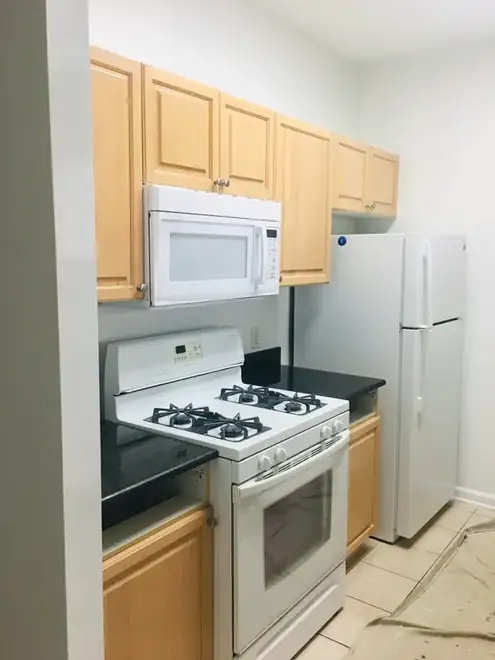
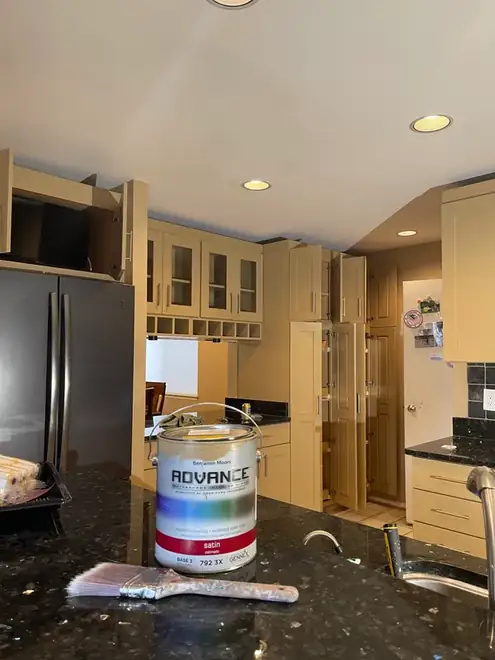
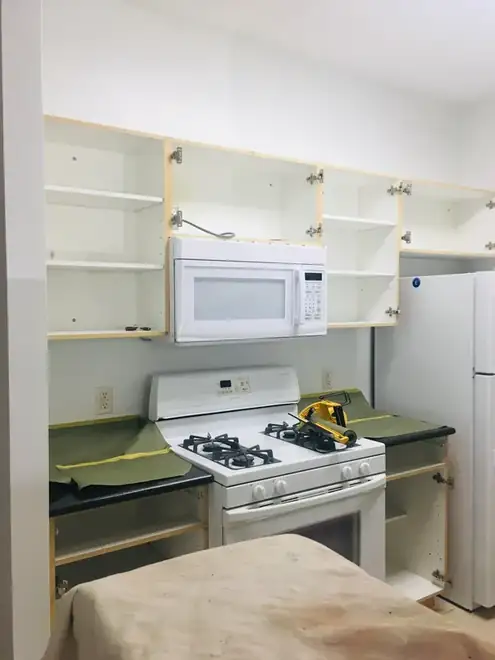
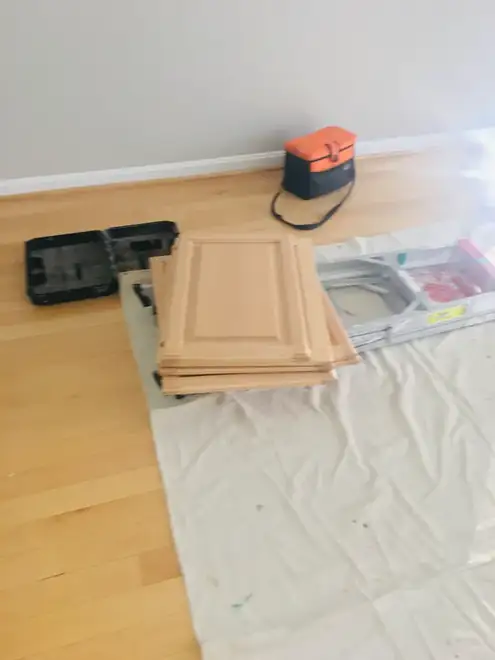
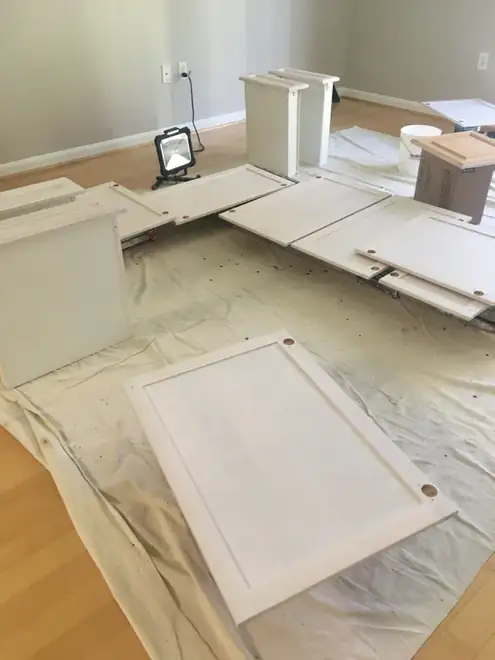
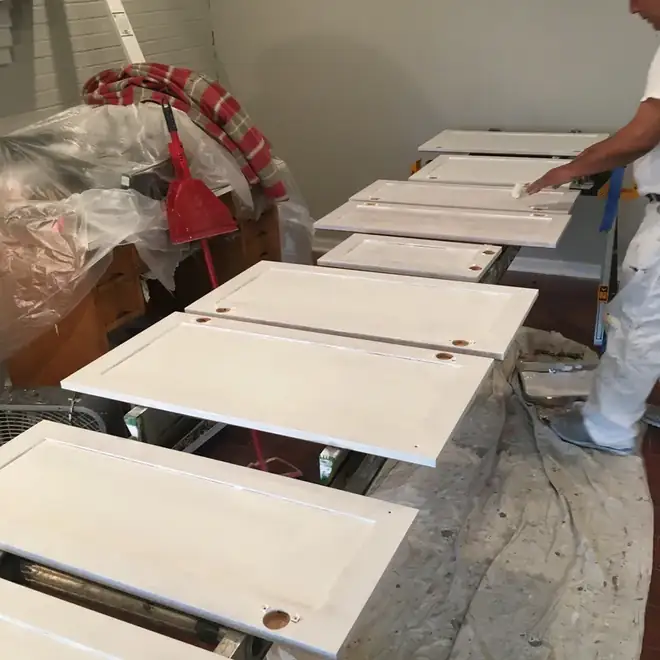
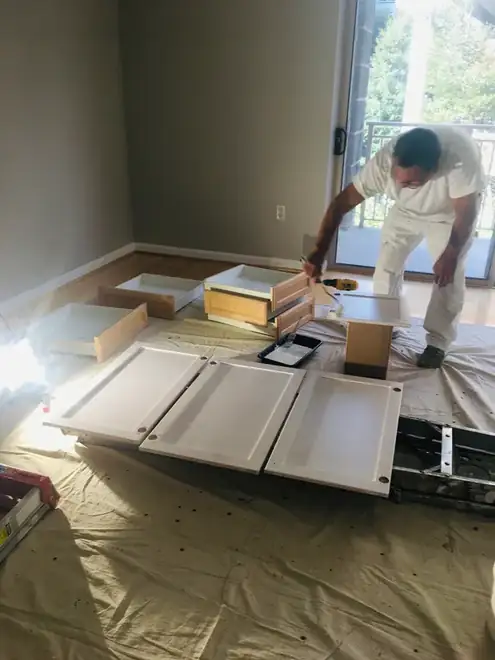
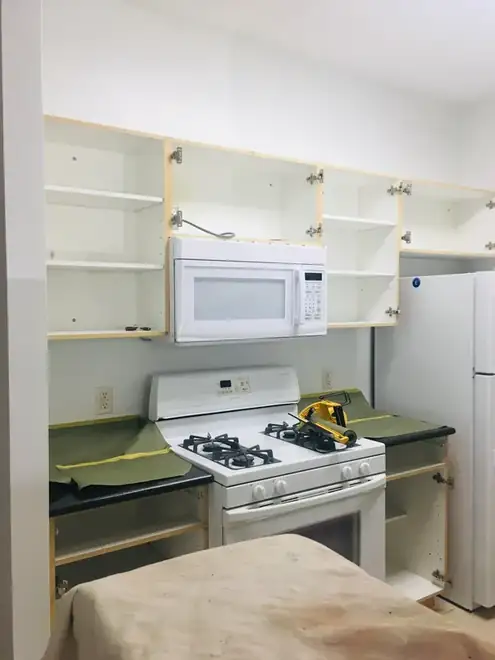
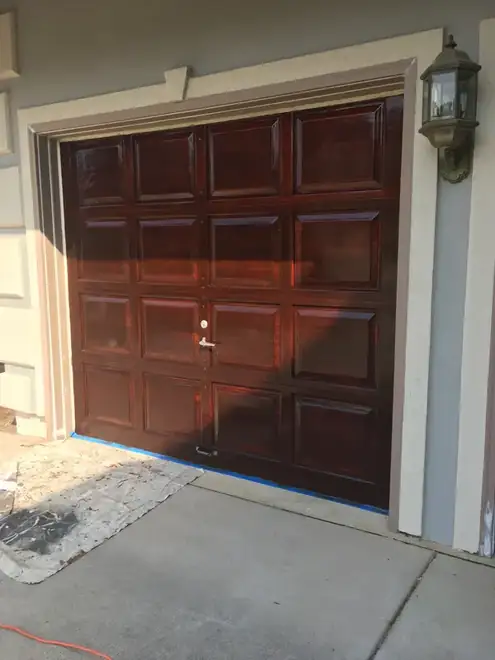
Our own photographs, from jobs across Northern Virginia. See all the project photos.
Where we work in Bethesda
Serving Bethesda, MD and the surrounding streets, out of the shop at 8040 Trevor Place, Vienna, VA 22182.
- 20814
- 20816
- 20817
Bethesda, MD on Google Maps ↗opens in a new tab Get directions to the shop ↗opens in a new tab
What we do in Bethesda
Questions about painting in Bethesda
My house is in Edgemoor and was built in the 1920s. Does the lead rule apply?
Almost certainly, because essentially the whole prewar stock on those streetcar blocks predates 1978. The federal RRP rule is triggered when a job disturbs more than six square feet of painted surface inside a room or twenty square feet outside. Maryland is not an EPA-authorized state, so the federal rule applies directly here rather than through a state program. We will walk you through how it affects your specific scope at the estimate, and we contain and clean up chips rather than letting them go into the yard.
I rent out a pre-1978 house in Bethesda. Is there anything extra?
Yes, and it is separate from the federal rule. Maryland has its own lead risk reduction law that applies specifically to pre-1978 rental property, with registration and inspection obligations that fall on the owner. That is your requirement as a landlord rather than something a painting contractor discharges for you, but it does change what you want done and when, so it is worth raising with us before scheduling so the work fits around it.
Why do my plaster walls keep cracking in the same places?
Because plaster over wood lath moves with the frame, and it cracks where stress concentrates: diagonally off the corners of door and window openings, along ceiling and wall joints, and anywhere the keys behind the lath have broken. Filling the crack alone does not address the hollow section around it. We re-anchor loose plaster where it is salvageable, cut out and patch where it is not, and skim with setting compound so the repair holds an edge instead of shrinking back.
Our 1925 house has a 1998 addition on the back. Can you make it match?
Yes, and it is one of the things we spend the most care on in Bethesda. The original trim is old growth wood and the addition is usually engineered trim or fiber cement, which take primer differently and move differently. We test both sides of the line, prime each with what that substrate actually needs, treat the joint as a moving joint with a flexible sealant, and match sheen as carefully as color. Two identical colors in different sheens will read as a seam in afternoon light.
I live in a condo downtown. What does the building need from you?
Usually a certificate of insurance sent to management before we schedule, a reserved service elevator for material delivery and load out, and agreement to the permitted work hours. We hold Virginia contractor license 2705098145 and are licensed, bonded and insured in Virginia, and we send that documentation to your management office directly. We also protect the common corridor between the elevator and your door, because that is where a drip becomes somebody else's problem.
Where do you park for a job on Woodmont or Wisconsin Avenue?
Metered street parking or the building loading dock, booked in advance where the building requires it. There is no driveway to work out of downtown, so we plan material quantities up front and carry everything in rather than running back to the truck all day. It is a slower setup than a house job and we build that into the schedule instead of pretending it does not exist.
Our brick house in Sumner was painted years ago and it is flaking. What now?
Painted brick usually fails from behind rather than from the surface. If the existing coating is too tight, moisture in the wall cannot get out and it pushes the paint off in plates, often with a thin skin of masonry attached. The fix starts with identifying what is on there and how much has lost bond. Then it is remove the failed material, repoint anything open, and recoat with a breathable masonry product. An elastomeric and a breathable coating are not interchangeable.
Are you licensed, and will you take a small job?
We hold Virginia contractor license 2705098145 and we are licensed, bonded and insured in Virginia. We have been in business since 2002 out of 8040 Trevor Place in Vienna, and it is Fredy plus the same four employees every day, background checked. There is no minimum job size, so one condo bedroom, a set of front doors or a single stair hall is work we will take. Call 703-869-0593. Veterans and anyone 65 or older get 10% off.
Other towns we paint in
More on this from Fred
- What Actually Drives the Cost of Painting a House in Northern VirginiaHomeowners want a number. What they usually need first is an understanding of why two honest painters can quote the…
- Painting Your Kitchen Cabinets vs Replacing ThemRefinishing is the cheaper path most of the time. But there are kitchens where it is the wrong answer, and…
- The Best Time of Year to Paint the Outside of a Virginia HomeLate spring and early fall are the sweet spots, but the reason has less to do with the daytime high…
Painting in Bethesda? Let us take a look.
Fred answers his own phone. If he is up a ladder he calls back the same evening.