
House Painters in Potomac, MD
Potomac covers about twenty-five square miles of large-lot zoning, and the houses on it are closer to small commercial buildings than to anything we paint in town. That changes how a job is staged, how long it takes and what goes on the walls. We have been doing this work since 2002 and we are a short run across the river from the Village.
Twenty-five square miles, and what that does to a paint job
The 2020 count put about 47,018 people across roughly 26.58 square miles here, and almost none of that is dense. Large-lot zoning means long private driveways, houses set two hundred or three hundred feet back behind mature planting, and elevations tall enough that a ladder is the wrong tool on three sides out of four.
So the first thing we work out is not color. It is staging. Where the materials sit so nobody walks the length of the drive forty times a day. Where a lift can actually be set and whether the ground will hold it after rain. Whether a paint delivery truck can turn around at the top of the drive or whether we bring the order in ourselves, which off Glen Road and Persimmon Tree Road is usually the answer.
The honest version of the schedule matters too. An exterior on a house this size is a multi-week job, not a two-day job, and a company that tells you otherwise is either spraying everything or skipping prep. We give you a week-by-week sequence at the estimate: which elevation, which crew day, what happens if we lose two days to weather.
Crew size is deliberate. Fred plus four employees, the same four every day, not a rotating list of subcontractors who each learn your property from scratch. On a big site that consistency is most of the reason the work stays even from the first elevation to the last.
Stucco or synthetic stucco: we find out before we quote
The estate stock built here from the 1980s through the 2000s is full of stucco, and it is not all the same stucco. Hard-coat stucco is cement applied over lath. Synthetic stucco, usually called EIFS, is a thin acrylic finish over foam board. From the driveway they look identical. They behave nothing alike.
Getting that identification wrong is the single most expensive mistake on a house here. Coatings that are fine on cement plaster can seal a synthetic wall tight, and a wall that cannot dry outward holds water in the sheathing behind it. What starts as a paint question turns into a framing question.
So we establish which one is on the house first. That means looking at the depth and hardness of the finish, the way the edges are detailed at windows, doors and the base of the wall, whether there are weep or drainage details at the bottom of the field, and what a firm tap sounds like: cement over lath rings hard, foam does not. Where the answer is genuinely unclear, we say so instead of guessing, and we get it settled before a quote goes out.
Once we know, the product choice follows. Breathable elastomeric and masonry coatings are appropriate in some situations and wrong in others, and on a synthetic wall the sealant joints matter more than the field does. We will walk you around the house and show you what we are looking at.
One elevation, several materials, several products
A typical front here is not a single surface. Fieldstone or brick at the base, stucco above it, wood or composite trim around the openings, a metal or standing-seam roof over a bay, and cedar or composite on a gable.
Each one wants different preparation and a different coating. Painted brick needs a masonry primer and a coating that lets vapor out. Stone is often better left alone and we will say so. Composite trim needs a bonding primer, because the paints that grip wood do not automatically grip PVC or fiber cement. Wood trim needs the rot cut out first.
The junctions between them are where failures actually start: the line where stucco meets the stone water table, the head casing over a window, the corner boards where two materials meet under a roof plane that dumps water. We spend real time on sealant joints at those transitions, because a joint that has gone hard and split is letting water behind a wall whatever the paint on the face looks like.
We do the carpentry and wood rot repair ourselves rather than sending you to a second contractor. Replacement stock gets primed on all sides and both ends before it goes up.
Outbuildings, and why they are half the job
A property here rarely stops at the house. Pool houses and cabanas, detached garages, workshops, garden and equipment sheds, pergolas and covered outdoor kitchens, and along the Glen Road and Travilah Road horse properties, long runs of board fence.
People are often surprised when we ask to walk the whole property before quoting. The reason is simple: on a large lot the outbuildings can add as much painted surface as a second house, and quoting the main structure alone gives you a number you then have to revise.
Outbuildings are frequently easier work than the house, because nothing is planted tight against them and access is open. They are also usually further gone, since nobody looks at the back of a pool house. Doors, jambs and the bottom foot of siding are where we start.
Board fence is its own day. Hundreds of linear feet is a spray job that needs settled wind and careful masking of vehicles and plantings, and we would rather move it to another day than fight a breeze across a paddock.
Pools, pool decks and the coatings on them
There are more pools per house in Potomac than anywhere else we work, and pool work is a trade of its own rather than an add-on.
Pool painting depends entirely on what is already on the shell. Plaster, bare concrete, a previous epoxy, a previous chlorinated rubber: each one narrows what can go on next, and putting the wrong family of coating over the old one is what causes a pool to lift and peel in its first season. The shell also has to be genuinely dry and cured, which on an in-ground pool means patience rather than a favorable forecast. Prep is most of the labor and most of the result.
Around the water, the deck is usually concrete, stone or aggregate, and it has its own problems: sunscreen and body oil ground into the surface, permanent shade growth on whichever side the pool house blocks, and a coating that has worn through in the traffic lane between the steps and the gate. Concrete staining and epoxy coatings are what we use there, along with the same work on garage bays and basement floors.
Coping, waterline tile and anything inside a working pool system is a pool company's job. We tell you exactly where our part ends.
Deer, and the bottom three feet of the house
Anyone who lives here already knows about the deer. What people do not always connect is that browsing and rubbing show up in the paint.
Bucks rub antlers on posts, fence boards, pergola legs and young trees in late summer and autumn, and a rubbed post loses its coating down to bare wood in a single season. Browsing pressure keeps foundation planting chewed back, which exposes the bottom band of siding and trim that used to sit behind shrubs and was never finished to the same standard. Hooves and traffic along a fence line splash mud and grit onto the lowest boards all winter.
The pattern is consistent enough that we quote the bottom three feet of a house differently from the rest of it. That band gets more scraping, more spot priming, and on fence and post work a coating chosen for abrasion rather than for how it looks at eye level.
We also look at what a string trimmer has been doing along the same line, because trimmer damage and deer damage land in exactly the same place and need the same repair.
Inside: volume, millwork, and the farmhouse hiding in the subdivision
Interiors here are a quantity problem. Two-story family rooms, open catwalks, curved stairs, coffered and tray ceilings, paneled studies, back stairs, and a finished lower level built as a full floor with a gym, a theater and a bar in it.
Height is a staging job before it is a painting job. We build platforms rather than reaching off ladders, and a cut line twenty feet up is only straight if the painter is standing level with it. Stone floors, treads and rails get protected underneath.
Because the houses are big, we sequence them so you keep a working house: wing by wing, floor by floor, with bedrooms and bathrooms timed so nobody loses their own bathroom overnight. Fredy sets that schedule at the start and checks it daily.
Then there is the other Potomac interior. Some of the original farmhouses from the Offutts Crossroads era and the Falls Road growth of the 1920s and 1930s survive inside later subdivisions, and their insides are nothing like the house next door: plaster over lath, narrower rooms, wood sash, layered trim profiles, and paint history going back decades. Those rooms get patched and skim coated rather than sanded flat, and they are worth the slower approach. Any house built before 1978 falls under the federal RRP rule for work that disturbs paint, and that is worth knowing before anyone starts scraping.
Water on the property, and how we actually work here
Plenty of properties here run on private well and septic rather than public water and sewer. That is worth two minutes of conversation before an exterior starts. A house wash on a building this size uses real volume, so if the water is coming out of your well we ask about recovery and stage the work across days rather than running flat out. And because rinse water runs downhill, we ask where the drain field and the reserve field sit, then route runoff away from both.
The southern end of town behaves differently from the Village. Properties down toward the C&O Canal, Carderock and Bells Mill sit lower, closer to the river and inside more shade, and they simply stay damp longer in the morning. We start later on those houses rather than putting coating on a wet wall, and near the flood plain we check what restrictions apply before staging anything heavy.
Practically: Falls Road and River Road move badly at rush hour, and we schedule deliveries and crew arrival around that rather than through it. We stage a materials point near the house on a long drive. We work Monday to Friday 8 to 5, weekends by appointment, and there is no minimum job size, so one pool house or a single paneled study is work we will take.
Fred General Painting LLC is based at 8040 Trevor Place in Vienna, Virginia. Fredy Vargas founded the company in 2002 and is on site with the crew. Virginia contractor license 2705098145. Licensed, bonded and insured in Virginia. Sherwin-Williams and Benjamin Moore products. 5.0 on Google from 40 reviews, 93 five-star Thumbtack reviews, hired 150 times, Thumbtack Top Pro 2021 through 2025, background checked. 10% off for veterans and anyone 65 or older. Call 703-869-0593.
Our work around Northern Virginia
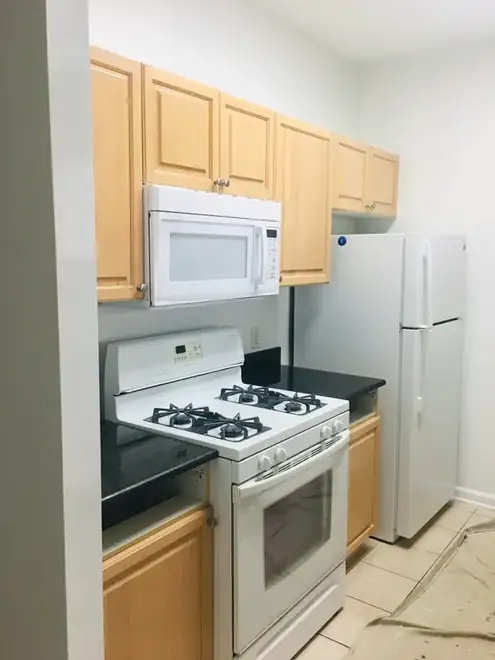
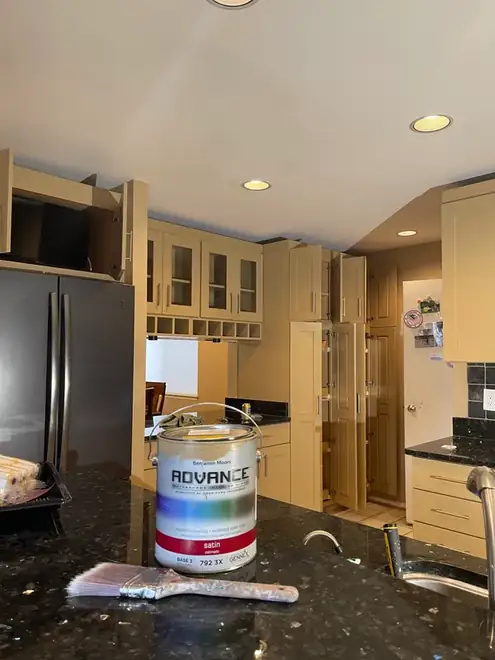
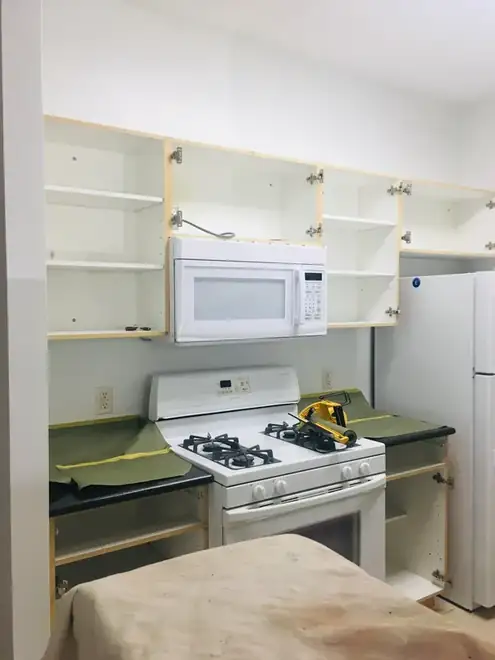
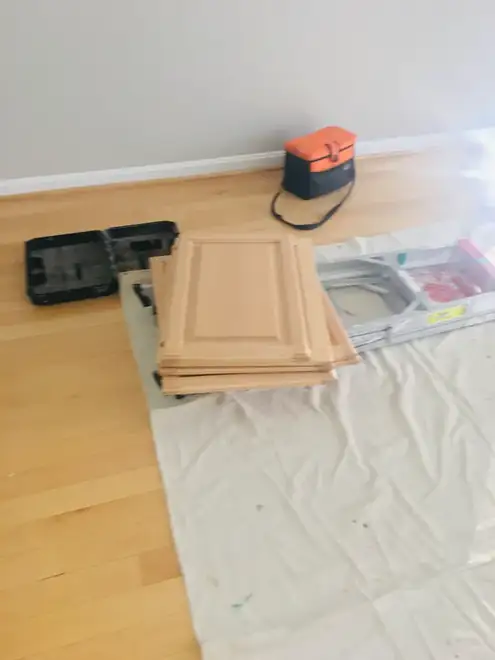
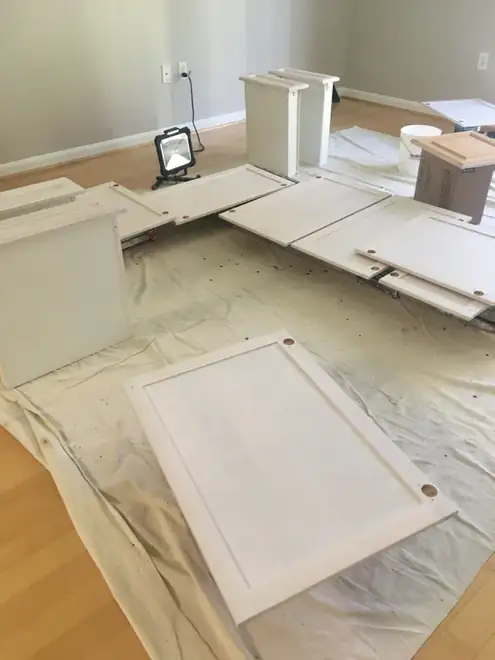
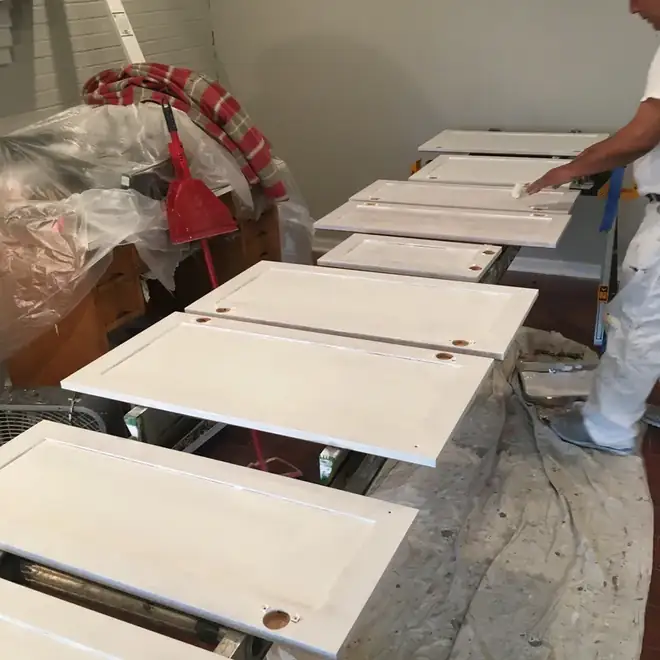
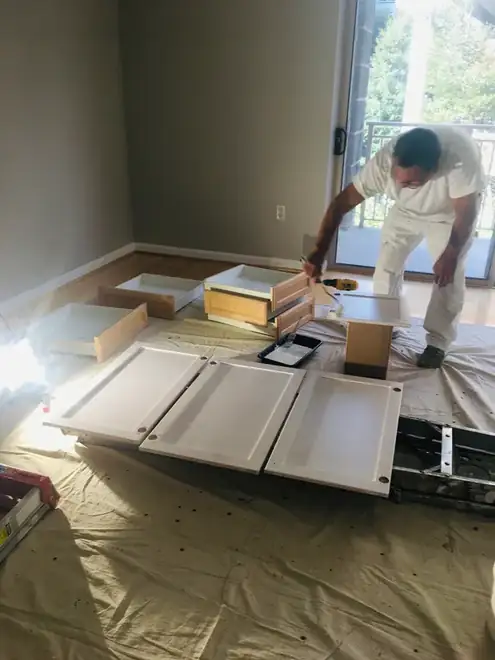
Our own photographs, from jobs across Northern Virginia. See all the project photos.
Where we work in Potomac
Serving Potomac, MD and the surrounding streets, out of the shop at 8040 Trevor Place, Vienna, VA 22182.
- 20854
Potomac, MD on Google Maps ↗opens in a new tab Get directions to the shop ↗opens in a new tab
What we do in Potomac
Questions about painting in Potomac
How do I know whether my house is real stucco or synthetic stucco?
Usually you cannot tell from the driveway, which is the whole problem. Hard-coat stucco is cement over lath and feels and sounds hard. Synthetic stucco, or EIFS, is a thin acrylic skin over foam board and sounds hollow. We look at the finish depth, how the edges are detailed at windows, doors and the base of the wall, and whether there are drainage details at the bottom. We establish it before quoting, because the coating that suits one can trap water in the other.
How long does a full exterior take on a house this size?
Weeks rather than days, and we would rather tell you that up front. A large-lot house here has more elevation, more trim, more outbuildings and more access setup than a house in town, and prep is the majority of the hours. At the estimate you get a sequence: which elevations in which week, where the lift goes, and what a run of bad weather does to the finish date.
My driveway is long and narrow. Can your trucks and deliveries get in?
We walk it before we schedule. On a long or steep drive off Glen Road, Persimmon Tree Road or Norton Road we bring materials in ourselves rather than asking a supplier truck to turn around at the top, and we set a staging point near the house so the crew is not walking three hundred feet each way all day. Where a lift is involved we check the ground will carry it, especially after rain.
Do you paint the pool house, the barn and the fencing as well?
Yes, and we ask to see all of it before quoting. On a large lot the outbuildings can add as much painted surface as a second house, so pricing the main structure alone gives you a number that has to be revised later. Pool houses, cabanas, detached garages, workshops, sheds, pergolas and long runs of board fence are all normal work for us. Fence runs get scheduled as their own day because spraying needs settled wind.
Can you paint the pool itself?
Yes. What matters is what is already on the shell, because plaster, bare concrete, an old epoxy and an old rubber-based coating each limit what can go on next. Putting the wrong family of coating over the existing one is what makes a pool peel in its first season. The shell also has to be fully dry and cured before anything is applied, and the prep is most of the work. Anything inside the working pool system, including coping and waterline tile, stays with your pool company.
The deer have wrecked the bottom of my fence and siding. Is that fixable?
Yes, and we price that band separately. Rubbing takes a post or a fence board down to bare wood, and browsing keeps foundation planting chewed back so the lowest siding and trim are exposed and weathered more than the rest. That zone gets more scraping and spot priming, and on posts and fence we choose a coating for abrasion resistance rather than for looks at eye level. String trimmer damage lands in the same place and gets the same treatment.
We are on a well. Does that affect washing the house?
It does, so raise it at the estimate rather than the first morning. A wash on a house this size uses real volume, so we ask about your recovery rate and stage the work across days instead of drawing the pressure down. We also ask where the septic drain field and the reserve field are, since rinse water runs downhill and a saturated field is an expensive problem, and we route runoff away from both.
Are you licensed, and will you take a small job?
We hold Virginia contractor license 2705098145 and are licensed, bonded and insured in Virginia. Fred General Painting LLC has been in business since 2002 and is based at 8040 Trevor Place in Vienna. There is no minimum job size, so a single pool house, one paneled room or a set of exterior doors is work we will take. Veterans and anyone 65 or older receive 10% off. Call 703-869-0593 and Fredy comes out himself.
Other towns we paint in
More on this from Fred
- What Actually Drives the Cost of Painting a House in Northern VirginiaHomeowners want a number. What they usually need first is an understanding of why two honest painters can quote the…
- Painting Your Kitchen Cabinets vs Replacing ThemRefinishing is the cheaper path most of the time. But there are kitchens where it is the wrong answer, and…
- The Best Time of Year to Paint the Outside of a Virginia HomeLate spring and early fall are the sweet spots, but the reason has less to do with the daytime high…
Painting in Potomac? Let us take a look.
Fred answers his own phone. If he is up a ladder he calls back the same evening.