
House Painters in Vienna, VA
We are based on Trevor Place, a few minutes from Maple Avenue. Fredy Vargas has been painting houses in this town since 2002 and still runs the crew himself.
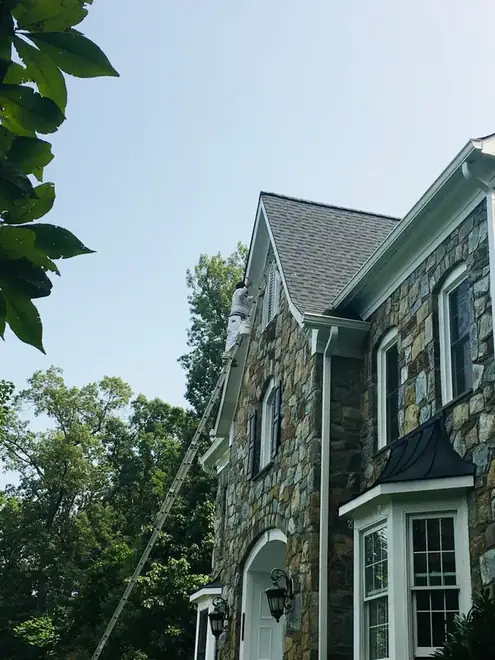
Our shop is a house on Trevor Place
Fred General Painting works out of 8040 Trevor Place, up off Beulah Road on the north side of town. Fredy Vargas started the company in 2002. Twenty-four years later he is still the person who walks your job in the morning and comes back at the end of the day to look at it.
Vienna is about four and a half square miles. That size is the whole reason this works. If you are on Park Street SE and you find a run in the trim at four in the afternoon, we are not routing a truck in from another county. We drive over.
We are licensed, bonded and insured in Virginia, contractor license 2705098145. Four employees. The same faces on your house every day, not a different subcontractor each morning. There is no job minimum. We have painted entire houses in Vienna Woods and we have painted one powder room for a client we have been working with for fourteen years.
The 1950s and 60s houses off Nutley Street and Cedar Lane
A lot of Vienna is ramblers, split levels and modest brick colonials from the postwar building years. Brick or painted brick on the body, wood everywhere it matters: fascia, soffit, rake boards, window casing, garage door jambs, the porch posts.
Those wood details are where the money goes and where the failure starts. On these houses we almost always find the same three things. The bottom two inches of a corner board have gone soft because the gutter above it has been overflowing for years. The glazing putty on an original wood window has dropped out. And the fascia behind a gutter spike has punky end grain nobody can see from the ground.
So we get on a ladder before we quote, not after. Soft wood gets cut out and replaced with new stock, or filled with a two-part epoxy filler if the section is small and structurally sound. Bare wood gets spot primed the same day it is exposed, because bare wood left open over a humid Vienna weekend picks up moisture and the topcoat will not sit right on it.
We do the carpentry ourselves. You are not hiring a carpenter in March and a painter in May and hoping the two of them agree about scope.
Church Street, Windover Heights and the genuinely old houses
Vienna still has real nineteenth and early twentieth century housing stock. There are 1904 houses on Lewis Street NW. There are properties along Walnut Lane and Creek Crossing Road with original wavy glass and square nails. The Windover Heights Historic District takes in dozens of properties around Windover Avenue NW.
Two things are different on these houses.
First, the paint history. Under the current color there may be eight or ten campaigns going back a century, and the older layers can be brittle and chalky. You cannot roll a modern latex over that and expect it to hold. We hand scrape to sound edges, feather the transitions so the repaint does not read as a patchwork, and prime chalky or previously oil-painted trim with a bonding primer before any finish coat goes on.
Second, the paperwork. If your house sits inside Windover Heights, the Town of Vienna Board of Review looks at exterior alterations visible from the street, and color is one of the things they weigh alongside design, texture and materials. Get the certificate of appropriateness sorted before you fall in love with a color. We will pull sample boards and hold them on the wall for you while the application is pending.
Rebuilt lots, additions and factory-finished siding
Plenty of Vienna lots have been scraped and rebuilt, especially the blocks walkable to Maple Avenue and the Metro. Those houses come with fiber cement siding and cellular PVC trim in a factory finish, and homeowners assume that means never painting. It does not. The field of the siding holds up well. The caulk joints at butt seams, window heads and inside corners do not, and once those open the water gets behind the board.
On a six or eight year old house our work is usually joint-focused: cut out failed sealant, back the wide gaps properly, re-seal with a urethane or high-grade elastomeric sealant, then coat. That is a much smaller job than a full repaint and it buys you years.
Additions are the other common call. Somebody adds a family room to a 1962 rancher and now there are two body colors on one house. Matching a twenty-year-old faded body color is not a matter of scanning a chip, because the chip reads the weathered surface, not the original. We usually pull a sample from a protected spot under the eave, match to that, and then decide with you whether to blend to a break line or repaint the whole elevation. Sometimes repainting the whole wall is cheaper than fighting the match.
Inside: kitchens, trim and the popcorn ceilings
Interior work in Vienna skews toward houses people are staying in rather than flipping. That changes how we work. Furniture gets moved and covered, floors get papered and taped, and we clean up every evening because you are cooking dinner in that house tonight.
The most common interior projects we run here:
- Kitchen cabinet refinishing. Doors and drawer fronts come off, get labelled, and get cleaned, degreased, sanded and sprayed. Boxes and face frames are done in place with the room masked off. Oak grain from the 80s can be filled if you want a smooth modern look, or left visible if you like it.
- Popcorn ceiling removal. Very common in the split levels and ranchers. We scrape, skim, sand and paint. On any house of that age we treat the texture as suspect and handle it wet and contained rather than dry-sanding it into the air.
- Crown molding and trim. Installed and finished by the same crew.
- Drywall and plaster repair ahead of the repaint, including the settlement cracks over doorways that come back every few years.
- Wallpaper removal and the wall repair that always follows it.
We use Sherwin-Williams and Benjamin Moore. In an occupied house we lean toward their low-odor waterborne trim enamels, which level well and let you put the room back together the next day instead of the next week.
Decks under Vienna's tree canopy
This town has serious tree cover. Great for July, hard on horizontal wood. A deck shaded by oaks off Courthouse Road stays damp for days after rain, collects leaf tannin, and grows a black film that homeowners think is dirt and is actually mildew.
That changes the product choice. Under heavy shade, a thick film-forming solid stain traps moisture from below and peels in sheets within a couple of seasons. We usually push shaded Vienna decks toward a penetrating oil or a semi-transparent stain that wears rather than peels, so the next maintenance coat is a clean and recoat instead of a full strip.
Order of operations matters more than the can you buy. We clean with a wood-safe cleaner, use a brightener to bring the pH back and reopen the grain, let the boards dry properly, then stain. Staining wet wood is the single most common reason a homeowner's deck job fails in the first year.
We also do a lot of Brazilian hardwood. Ipe and Cumaru are dense and oily, they will not take an ordinary deck stain, and they silver out fast if left alone. Those get a hardwood-specific oil and a different schedule than pine or cedar.
Nothing gets painted before it gets washed
April in Vienna coats everything in yellow-green pollen. By August the north and northeast walls, the ones the sun never reaches, have a gray-green mildew bloom on them. Paint does not stick to either one.
Every exterior we do starts with a wash, and we adjust the pressure to the substrate. Old wood siding and soft cedar get low pressure and chemistry doing the work, because you can chew the soft grain right out of an old clapboard with a turbo nozzle and no one will notice until the paint fails over it. Brick and hardboard tolerate more. Mildewed areas get a cleaning solution and dwell time, not just a blast of water, because mildew that is only knocked back grows straight through the new coat.
We also do power washing as its own job. Driveways, walkways, fences, patios, and the siding wash people book in late spring after the pollen drops. Plenty of Vienna clients have us wash in May and paint in September.
How a job runs here
You call 703-869-0593 and Fredy comes out and walks the house with you. You get a written scope that says what is being prepped, what is being repaired, how many coats and which product. If we find rot once the ladder is up, we show you the board before we cut anything.
We work Monday through Friday, 8 to 5, and weekends by appointment when a family needs the interior done around a schedule. Same crew each day, and Fredy checks in daily. Our Google rating is 5.0 from 40 reviews. On Thumbtack we have 93 five-star reviews, have been hired 150 times, and have been named a Top Pro every year from 2021 through 2025.
We take 10% off for veterans and for anyone 65 or older. Ask when you call so we build it into the estimate.
Beyond paint we handle carpentry and wood rot repair, drywall, popcorn ceiling removal, crown molding, wallpaper, stucco repair, concrete staining and epoxy floors, and pool painting. Bundling the rot repair with the paint is not upselling, it is the only way to make an exterior last. Painting over bad wood buys you one season.
Our work around Northern Virginia
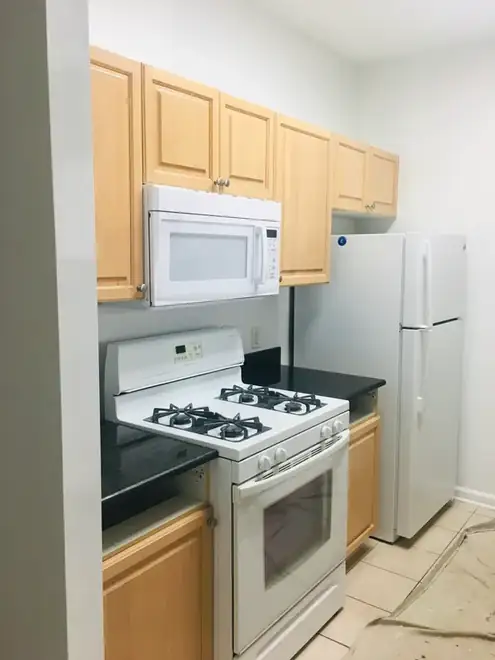
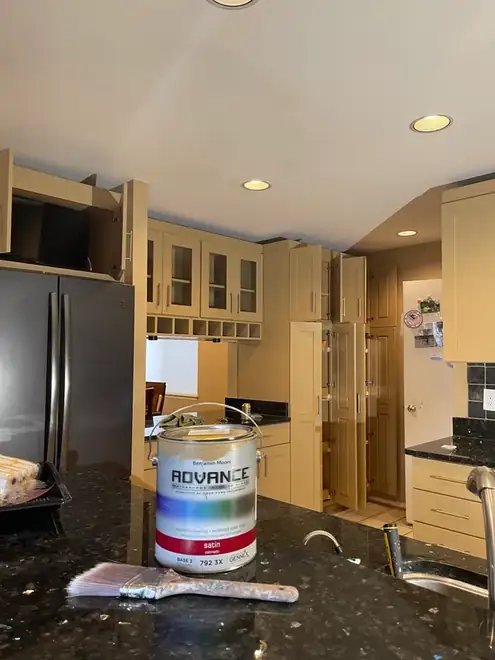
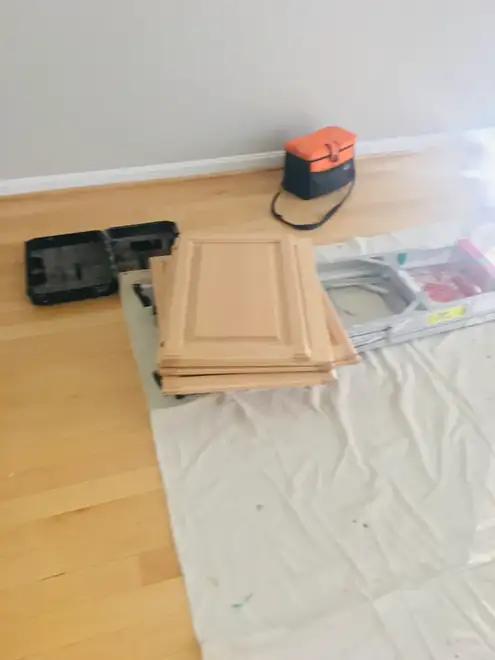
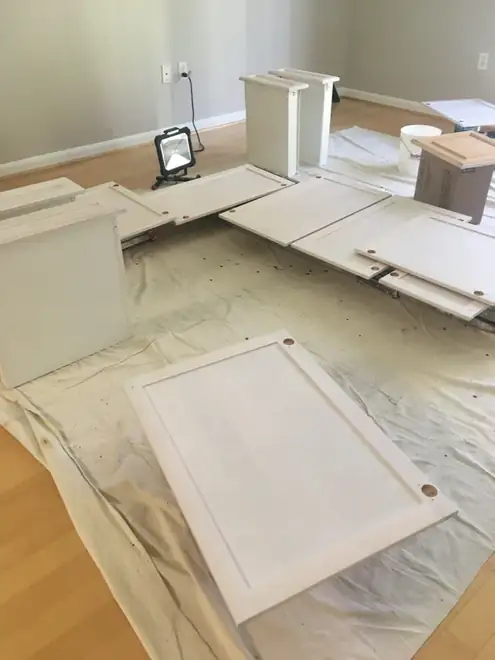
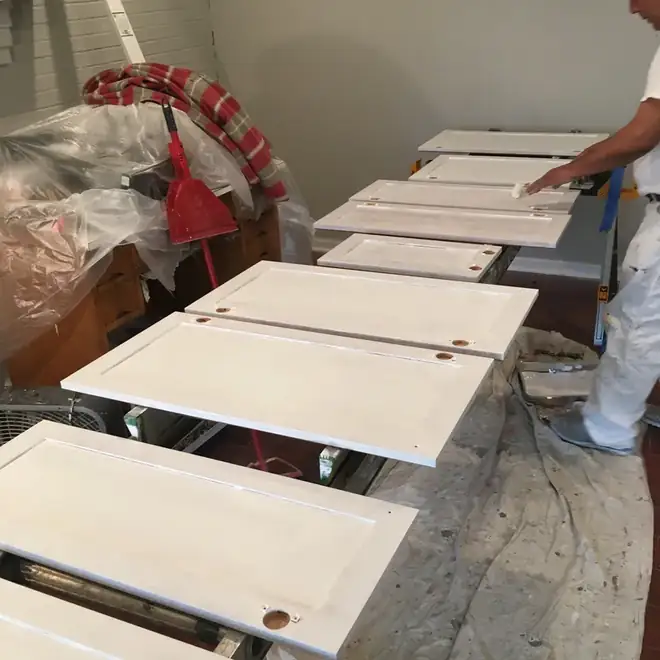
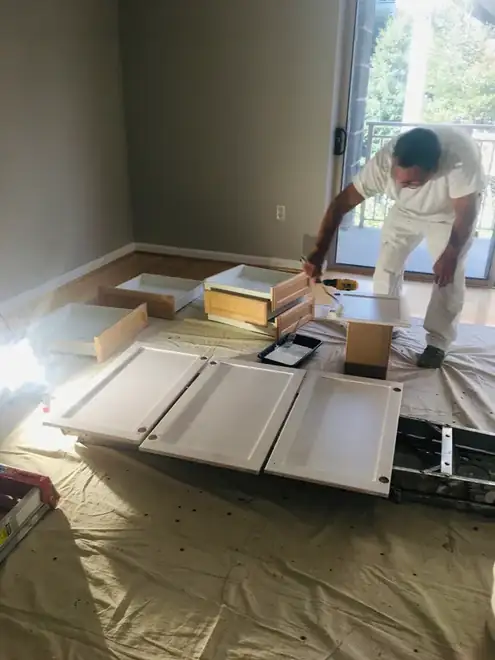
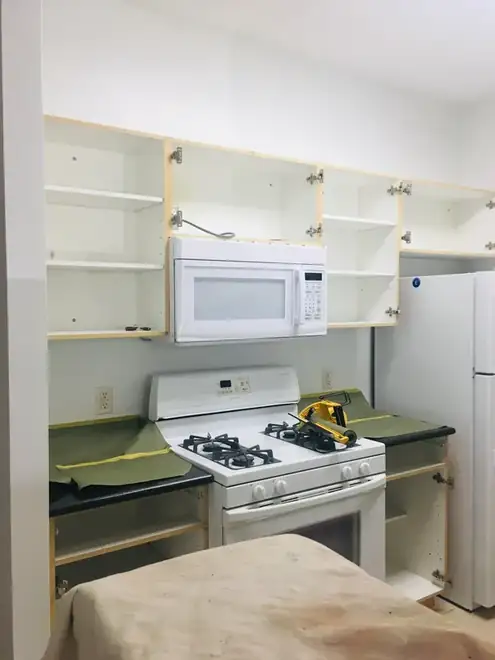
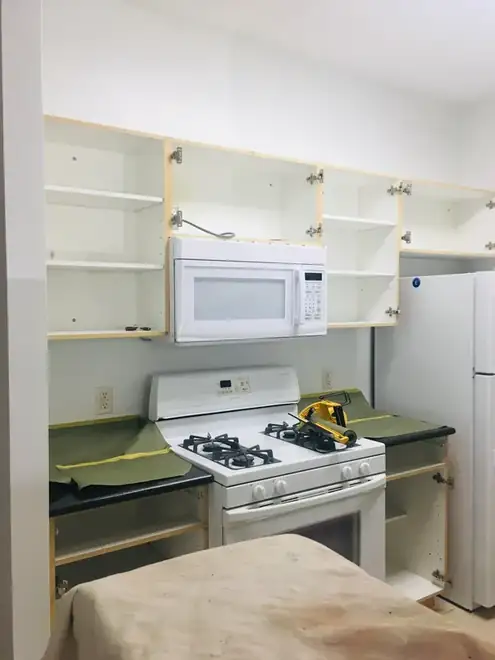
Our own photographs, from jobs across Northern Virginia. See all the project photos.
Where we work in Vienna
Serving Vienna, VA and the surrounding streets, out of the shop at 8040 Trevor Place, Vienna, VA 22182.
- 22180
- 22181
- 22182
Vienna, VA on Google Maps ↗opens in a new tab Get directions to the shop ↗opens in a new tab
What we do in Vienna
Questions about painting in Vienna
How much of Vienna do you actually cover?
All of it, plus the Vienna mailing addresses outside town limits. That means 22180, 22181 and 22182, so everything from Vienna Woods and the blocks off Church Street out to the Wolf Trap and Trap Road side, along Beulah Road, and down toward Nottoway Park and Courthouse Road. We are headquartered on Trevor Place, so most of the town is under ten minutes from our door.
My house is in the Windover Heights Historic District. Can you still paint it?
Yes, and we have worked in that part of town before. The Town of Vienna Board of Review looks at exterior changes visible from the public street, and color is one of the criteria they consider. The practical advice is to start the certificate of appropriateness early. We will brush out real sample boards so you are submitting an actual color on an actual surface rather than a paper chip.
When is the best time of year to paint the outside of a house in Vienna?
Late April through early June, and then September into early November. Mid-summer is workable but the west and south elevations get hot enough that coatings flash off faster than they should, so we chase shade around the house through the day. We avoid painting right after heavy pollen drop unless we have washed first, and we stop when overnight temperatures fall below what the product allows.
Do I have to move out while you paint the interior?
No. Almost all of our Vienna interior work happens in occupied houses. We work room by room, mask the floors and doorways, move and cover furniture, and clean up at the end of each day so you have your kitchen back. We mostly use low-odor waterborne enamels on trim and doors, which cuts the smell considerably compared with the oil products these houses were originally finished in.
My deck is shaded by big oaks and the stain keeps peeling. What should I do differently?
Stop using a thick film-forming solid stain. Under Vienna's tree canopy those boards stay damp, moisture pushes up from underneath, and the film lets go in sheets. A penetrating oil or a semi-transparent stain wears down instead of peeling, so maintenance is a clean and recoat rather than a full strip. The other half of the fix is drying time. Staining wood that is still wet from washing is what causes most first-year failures.
Do you do the wood rot repair too, or do I need a carpenter first?
We do it. Carpentry and wood rot repair are part of our normal exterior work, so you are not coordinating two trades and two schedules. We replace soft fascia, rake boards, corner boards, sills and trim, and use two-part epoxy filler where a section is small and sound. You see the damaged board before we cut it out, and the repair is primed the same day it goes up.
Can you refinish my kitchen cabinets instead of replacing them?
Usually, yes. If the boxes are solid and the doors are not delaminating, refinishing is a far smaller disruption than a new kitchen. Doors and drawer fronts come off and get sprayed off site, boxes and face frames are finished in place with the room masked. Oak grain from the 1980s can be grain-filled for a smooth modern finish or left showing. Your kitchen stays usable through most of it.
Is there a minimum job size, and do you offer any discounts?
No minimum. One hallway, one ceiling, one exterior door, we will come do it, and a lot of our repeat Vienna clients started with something small. We take 10% off for veterans and for anyone 65 or older. Mention it when you call 703-869-0593 so it goes into the written estimate rather than getting sorted out later at the invoice.
Other towns we paint in
More on this from Fred
- What Actually Drives the Cost of Painting a House in Northern VirginiaHomeowners want a number. What they usually need first is an understanding of why two honest painters can quote the…
- The Best Time of Year to Paint the Outside of a Virginia HomeLate spring and early fall are the sweet spots, but the reason has less to do with the daytime high…
- Painting Your Kitchen Cabinets vs Replacing ThemRefinishing is the cheaper path most of the time. But there are kitchens where it is the wrong answer, and…
Painting in Vienna? Let us take a look.
Fred answers his own phone. If he is up a ladder he calls back the same evening.