
Power Washing in Alexandria, VA
Most of what people want washed in this city is masonry, and most of that masonry is older than any pressure washer was built for. The pressure question gets settled before the hose comes off the truck.
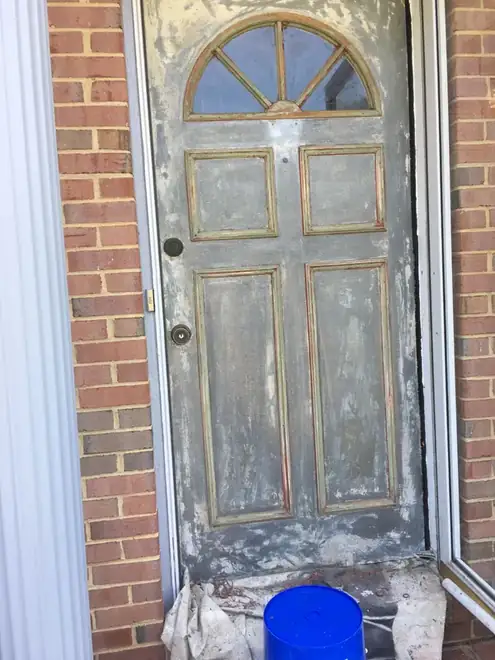
Old brick is softer than the machine that cleans it
Brick fired in the eighteenth and nineteenth centuries has a hard skin on the outer face, and that skin is the only part of it that resists water. Modern extruded brick is dense all the way through. On a wall the two look alike and they behave nothing alike under a wand.
Take the fire skin off soft brick with a narrow tip and you have opened the body of the brick. It shows up the following winter as spalling, the face flaking away in coin-sized pieces, and it does not go back. Mortar is the other half of it. Lime mortar on a Prince Street or Parker-Gray wall is softer than the brick by design, and a turbo nozzle run along a joint washes it out. Old brick gets low pressure, a masonry cleaner, dwell time and a soft brush where something is stubborn. We do not blast brick and we do not chase a dirty joint with pressure.
Washing a rowhouse with no spigot and nowhere to stand
A rowhouse on Queen, Duke or Royal has no driveway, no side yard and often no hose bib at the front at all. The only spigot is in the rear courtyard and the only route to it runs through your hall. We plan that rather than improvise it: hose sheeted through the house or fed from the rear and worked forward, and where there is no usable supply we bring water in.
The front is its own problem. The facade sits a foot or two off a public brick sidewalk, so we do that side early, cone the area, and rinse downward off a ladder rather than arcing water across the walk. Brick sidewalk damages easily: a ladder foot chips an edge and a low-angle tip lifts the sand from between the bricks. We pad the feet and keep the tip off the bedding.
Courtyards, flagstone and the joints holding it together
The walled rear courtyard is the wash we are asked for most in Old Town, and the one homeowners most often damage themselves.
- Dry-laid brick pavers. There is sand in those joints and nothing else. Pressure enough to strip moss strips sand too, and then the pavers rock underfoot. We clean with chemistry at low pressure and say honestly whether it needs re-sanding after.
- Flagstone and bluestone. Thin stone on a mortar bed lifts where the bed has already failed. A wash finds those spots rather than causing them, and we note them instead of working them loose.
- Areaways. A drain in a front areaway or a basement window in a light well is usually half full of leaves. Water driven at it on a party-wall house comes out in a basement that may not be yours.
- Walled shade. Three brick walls and no moving air means the courtyard never dries. Moss on worn brick treads is a footing hazard before it is an appearance problem.
The white bloom on a garden wall comes back
Somebody calls every spring about a white powdery haze on a garden wall or the lower courses of a brick house. That is efflorescence, mineral salt carried out of the masonry by moisture moving through it, and it is the one item here that washing does not solve. Rinse it and it returns in weeks, because the water that brought it is still moving.
The useful conversation is where that water comes from. On Alexandria walls it is usually a planting bed built up against the brick, a downspout discharging at the base, open joints in a capping course, or a hard cement repointing job that now forces moisture out through the brick instead of the joint. We will brush and treat it so it looks right, and we will tell you it is a water problem in a cosmetic disguise.
Del Ray, Rosemont and the concrete out front
North of the Parkway the lots open up and the work changes. These blocks have alleys behind them, two-strip concrete driveways, detached garages and a public sidewalk square in front of every house. The walks take the worst of it. Commonwealth and the streets off it are lined with mature trees, and the litter stains concrete dark brown. People read that as dirt when it is tannin, and tannin lifts with the right cleaner rather than with more pressure.
Flatwork gets a surface cleaner, not a bare wand, because no hand holds an even arc across a sidewalk square. We also stay off your neighbor's square unless they have said yes, since half a clean stretch looks worse than none.
Kingstowne, Franconia and the wide concrete
An Alexandria mailing address past the city line is a different wash. Kingstowne, Rose Hill, Franconia, Groveton and Belle View are postwar and later: full-width driveways, garage aprons, concrete patios, vinyl siding and stoops. That is where real pressure belongs, and even there it is a surface cleaner on the flatwork.
Garage floors are worth booking as their own job: degreaser, dwell time, agitation, then rinse, with the apron done in the same visit so there is no clean line at the door. Oil that has sat in bare concrete for ten years lightens and rarely vanishes. If your townhouse association has written to you about mildewed siding or a green fence, send the letter along. It usually names the elevation, and a soft wash that kills the growth on that wall is the difference between a clean house and another letter next summer.
What a wash will not do to a house this old
Worth saying before we quote, because these come up every season.
- Faded paint. Washing takes the chalk off and the wall looks better for it, but the color that has gone is gone.
- Silvered wood. Weathered gray shutters, fences and porch rails lighten, then stop. Gray wood is damaged surface fiber, and the tone comes back with a cleaner, a brightener and usually sanding.
- Open mortar joints. If water is entering the wall through a failed joint, cleaning the face of it changes nothing. Pointing comes first.
- Your roof. No pressure washer goes on asphalt shingles. The granules are the roof, and once they are in the gutter the shingle is felt. Streaking is algae and wants a low-pressure soft wash. Plenty of rowhouses carry low-slope membrane roofs instead, and those we look at and usually hand back to a roofer.
Runoff on these blocks has a short trip to the river, so shrubs and beds get soaked with clean water before any solution goes up and rinsed afterward, and cleaner stays out of the street grate.
Fredy Vargas has worked on these houses since 2002 and looks at the property himself before pricing it. Virginia contractor license 2705098145, licensed, bonded and insured. Call 703-869-0593.
Every service we offer
Every town we cover
More on this from Fred
- What Actually Drives the Cost of Painting a House in Northern VirginiaHomeowners want a number. What they usually need first is an understanding of why two honest painters can quote the…
- The Best Time of Year to Paint the Outside of a Virginia HomeLate spring and early fall are the sweet spots, but the reason has less to do with the daytime high…
- Refinish or Replace? How to Judge the Real Condition of Your DeckA gray, splintery deck usually looks worse than it is. A deck that looks fine can be the one with…
Ready when you are.
Fred answers his own phone. If he is up a ladder he calls back the same evening.