
Power Washing in Bethesda, MD
On a lot of Bethesda houses the right pressure is much lower than the machine can deliver. Close to downtown the paint on the outside of the house goes back before 1978, and blasting it into the yard is not cleaning, it is making a mess somebody has to live with.
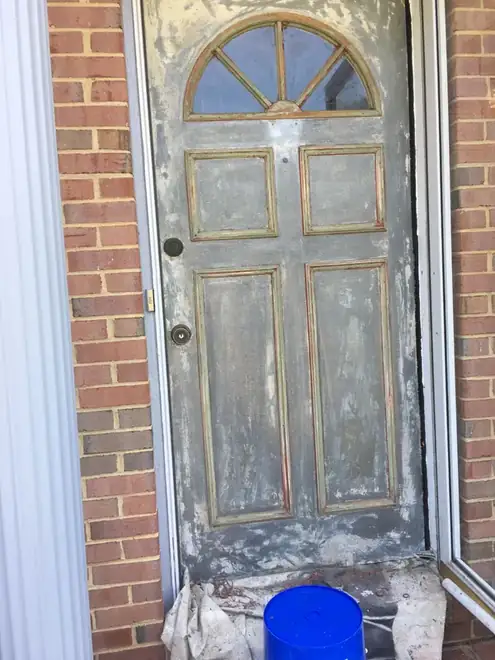
Why we turn the pressure down here
The houses on the old streetcar blocks in Drummond, Edgemoor, Battery Park and Woodmont went up between the 1910s and the 1930s. Every one of them has been painted many times, and the layers at the bottom of that stack predate 1978.
A pressure washer aimed at that wall removes loose paint. That sounds useful until you think about where the removed paint goes: into the flower bed, into the lawn where a child sits, into the gap under the fence and eventually into the storm inlet at the curb.
The federal RRP rule treats disturbing more than twenty square feet of exterior painted surface as a regulated activity, and Maryland is not an EPA-authorized state, so that federal threshold applies here directly rather than through a state program. Twenty square feet of an elevation is not a lot of wall.
So on a pre-1978 house we wash rather than blast. Low pressure, a cleaning solution that does the work chemically with real dwell time, soft brushing where a surface needs agitation, and a rinse that is controlled. The objective is to remove mildew, algae film, pollen and dirt. It is not to strip the house, and a wash that strips the house has failed.
If the paint is failing badly enough that a gentle wash takes it off, that is a prep and repaint conversation, done with containment, not a washing job.
Aluminum wrap, vinyl and the chalk problem
The postwar houses that were wrapped in aluminum coil stock in the 1980s, and the ones re-sided in vinyl since, wash easily and are the most frequently damaged.
Oxidized aluminum sheds a chalk layer. Washing removes some of it and leaves the rest, which is fine if you just want the house to look clean and a serious problem if painting is next, because paint over chalk peels in sheets. If a wash is the first step toward a repaint, we test with a dark cloth and keep working until the cloth comes back clean.
Vinyl and aluminum both dent, and both have open seams and butt joints that will take water behind the panel if the wand is aimed upward. We wash downward, keep the tip moving, and stay off the seams. Water driven behind siding does not come back out quickly, and it rots the sheathing quietly.
Where the water ends up on a narrow lot
Prewar Bethesda lots are tight. The gap between your wall and the next house is often a few paces, and everything we rinse off your siding lands either in your yard or in theirs.
What that changes in practice:
- We put plastic down under the working elevation before washing a pre-1978 wall, so what comes off is caught rather than soaking into the ground.
- Vegetable beds and anything edible along a fence line get covered, not just rinsed afterward.
- Ornamentals get pre-wet before any solution goes up and rinsed again after, on both sides of the property line.
- We tell your neighbor which day we will be in the side yard, because their windows and their car are within reach of a stray rinse and a closed window is an easy favor to ask in advance.
The drainage matters too. A lot of these streets run toward Little Falls Branch and the Capital Crescent Trail corridor, and a storm inlet at the curb is not a treatment plant. We keep chips and solution out of it, and we use the mildest chemistry that will actually kill mildew instead of the strongest thing on the shelf.
Painted brick, and the mortar behind it
Out through Sumner, Westmoreland Hills, Bradley Hills and Wyngate, the housing stock is largely brick and a great deal of it has been painted.
Brick invites people to use high pressure because it feels indestructible. It is not. The mortar between the courses is softer than the brick, and on a house built in the 1950s that mortar has had seventy years of weather. High pressure erodes joints, and eroded joints let water into the wall, which is how you get efflorescence on the inside of a basement wall the following spring.
Painted brick adds a second problem. Any coating on masonry is holding back moisture that wants to move outward. Drive water in at pressure and you help it along, and the paint comes off in plates months later with a skin of masonry attached.
We wash brick, painted or bare, at low pressure with a solution and dwell time. Before that we look for open joints, a failing parge coat at grade, and coating that has already lost bond, because washing over those makes a small repair into a large one. Chimneys get looked at specifically. They take weather on four sides and they are usually the worst masonry on the house.
Decks, walks, patios and the things that actually need pressure
Not everything gets the gentle treatment. Concrete walks, driveway aprons, brick and flagstone patios and steps can take real pressure, and on the shaded side yards common in these neighborhoods they usually need it, because algae film on a walk is a slipping hazard as much as an appearance problem.
Even there, technique matters. Concrete washed with an unsteady wand keeps the stripes forever, so we use a surface cleaner on flatwork rather than a stick, and overlap consistently.
Wood decks are the opposite case again. On thirty year old pressure-treated pine, high pressure erodes the soft spring wood and leaves a furred, ribbed surface that will take stain unevenly. Deck cleaning is a low pressure chemical job, and if the deck is being refinished afterward it is the first step of that process rather than a separate service.
Fences, garage doors, porch ceilings, downspouts and the concrete pad under a condensing unit round out most jobs.
Downtown, where there is no spigot
If you are in one of the buildings around the Metro station, the exterior is the association's responsibility and the building washes its own facade on its own cycle. There is nothing for us to wash on the outside of your unit.
What does come up is a balcony or a roof terrace, and it is a constrained job. There is no hose bib on most balconies, water and dirty runoff cannot go over the edge onto the units below, and the association has to confirm in writing that owner maintenance of that surface is permitted before we schedule. We bring water and containment, collect rinse rather than letting it drain off the slab, and work inside the building's permitted hours with the service elevator reserved. Certificate of insurance goes to management first. We hold Virginia contractor license 2705098145 and are licensed, bonded and insured in Virginia.
What we ask before we start
Age of the house, because that decides the method before anything else. Whether the gutters are clear, since washing a house with packed gutters just sends several hundred gallons over the lip and down the fascia. Where the outdoor outlets and the hose bibs are. Whether any basement window wells leak. And whether the wash is cosmetic or the first step of a repaint, because those are two different standards of clean.
Fredy comes and looks. He will tell you if the answer is that your house does not want a pressure washer at all. Monday to Friday 8 to 5, weekends by appointment, no minimum job size, and 10% off for veterans and anyone 65 or older. Call 703-869-0593.
Every service we offer
Every town we cover
More on this from Fred
- What Actually Drives the Cost of Painting a House in Northern VirginiaHomeowners want a number. What they usually need first is an understanding of why two honest painters can quote the…
- The Best Time of Year to Paint the Outside of a Virginia HomeLate spring and early fall are the sweet spots, but the reason has less to do with the daytime high…
- Refinish or Replace? How to Judge the Real Condition of Your DeckA gray, splintery deck usually looks worse than it is. A deck that looks fine can be the one with…
Ready when you are.
Fred answers his own phone. If he is up a ladder he calls back the same evening.