
Power Washing in Tysons, VA
Washing one townhouse in a row of eight is a strange job: it works, and it makes the seven next to it look worse. Most of what we plan for in Tysons comes out of that, and out of the fact that in the towers the outside is not yours to hire for.
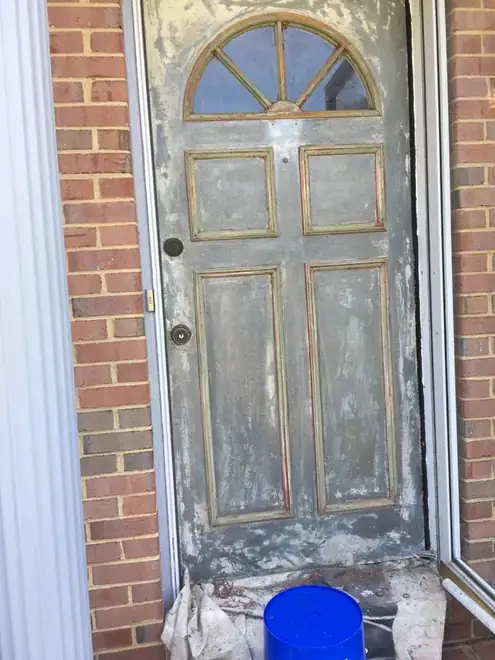
Cleaning one front in a row of eight
This is the conversation we have most often here. Somebody in a brick row near the Greensboro station wants their front cleaned. We can do it, the result is obvious, and the units either side now look dirty in a way nobody had noticed the week before.
Sometimes that is what the customer wants. More often they find out when a neighbor mentions it, so we raise it at the estimate. The practical answer is to ask the neighbors: washing three or four units in a run at once costs each household less than doing one, because the setup, the water run and the protection are most of the work on a small front. And if the row has an association that maintains the fronts, the washing may already be theirs to schedule and yours to ask for.
A party wall means there is no edge to stop at
On a detached house a wash has four sides and a boundary. In an attached unit the wall continues into somebody else's property and the surfaces at the join are shared.
- The fence or screen panel between two rear yards has two owners and two faces. Cleaning one leaves a line down the middle.
- A continuous front stoop or a shared set of steps cannot sensibly be half cleaned.
- A common gutter and downspout running the length of the row is a row item, not yours, and the streaking down its face will still be there after your walls are clean.
- Overspray and runoff reach the neighbor whether anybody planned for it or not. On a twenty foot wide unit there is nowhere for it to go but sideways.
So the plan starts with where the water lands. A rear yard here is often fifteen feet deep with a fence on three sides, so the runoff leaves across the neighbor's gravel or their bed whether anybody planned it or not. We cover next door's furniture, plantings and any open window before we open a valve, and we tell them when we are coming. Noise is the same problem: a gas machine between two occupied units is loud through the walls, so those hours run in the middle of the day, and some associations set the window for us.
When there is no spigot to work from
A fair number of attached units here have no usable outside hose bib, or one only at the rear with no front access, or one fed through a shut-off somebody closed for the winter and cannot find. On a detached house this is never an issue. Here it decides whether the job can run.
So we check the bib flow rather than its existence, because a washer wants steady supply and a half-blocked bib starves the pump. If the front has no access we run hose through the unit, which means protecting the floor properly and doing it once rather than three times. Where there is genuinely no water we bring it, and that caps how much surface a visit covers, so the quote reflects it. Power is the smaller version of the same problem, sorted at the walk-through rather than at eight in the morning.
In a tower, the washing is the building's to order
Residents in the Rotonda, One Park Crest and the newer buildings around the Boro ask us about washing, and most of the time the surface is not theirs.
Exterior walls, common corridors, the lobby surround, the entrance pavers and the walkways are association property. A resident cannot buy a wash of them. The management company can, and we work for associations here and handle that paperwork, including the insurance certificate naming the association before the start date.
If you are not sure which side of the line your surface is on, ask the management office and get it in writing. We would rather lose a small job than clean something the building then has an opinion about.
Garage aprons, ramps and parking deck surfaces
The flatwork here is mostly structured rather than poured on grade, which changes the approach.
A garage entrance ramp and its apron carry the heaviest soiling on the property: tire rubber, oil drip, salt residue and the gray deposit off the road. They drain somewhere specific, usually a trench drain, and that is the first thing we look at, because a wash that dumps solids into a blocked trench drain creates a problem the building remembers.
On a parking structure the slab is usually sealed or coated, and that sets the pressure. A coated deck takes a surface cleaner at moderate pressure and will not take an aggressive tip without the coating lifting at any edge already marginal. We keep water off expansion joints and away from any penetration with daylight under it, because what you drive into a joint lands on a car or a wall below.
Townhouse garage aprons are simpler and are yours. Those clean well with a surface cleaner, and oil dripping in the same spot wants degreaser and time rather than force.
Brick fronts, efflorescence and the mortar line
Most of the townhouse stock here is brick, and brick looks like the one material you can be rough with. It is not, and the reason is the mortar.
Joints on a 1970s or 1980s row are soft enough that a narrow tip held close cuts the mortar back behind the face of the brick, and you do not notice until water is getting into the wall. So brick gets moderate pressure at most, worked across the joints rather than into them, with a masonry cleaner doing the work on anything organic.
Two conditions we explain constantly here:
- Efflorescence. The white bloom is mineral salt arriving at the face with moisture moving through the wall. It can be treated and it comes back, because the water is still coming.
- A dark band at the bottom course. Splash off a hard surface with nowhere to drain. It cleans, then returns on the same schedule unless the grading or the downspout discharge changes.
Booking a wash around building access
Fredy Vargas comes out and looks at it himself, and on an attached unit that walk-through is mostly logistics: water, access, runoff, what belongs to the association and who the neighbors are. The pressure settings are the easy part.
Tell us if a management company is involved and we will deal with them directly. If the wash is going ahead of a listing, say so, because access approvals in these buildings take longer than the work does.
We are on Trevor Place in Vienna, a short run out Route 7, so coming back to finish a neighbor's unit is not a production. Virginia contractor license 2705098145, licensed, bonded and insured. No job minimum. Ten percent off for veterans and for anyone 65 or over. Call 703-869-0593.
Every service we offer
Every town we cover
More on this from Fred
- What Actually Drives the Cost of Painting a House in Northern VirginiaHomeowners want a number. What they usually need first is an understanding of why two honest painters can quote the…
- The Best Time of Year to Paint the Outside of a Virginia HomeLate spring and early fall are the sweet spots, but the reason has less to do with the daytime high…
- Refinish or Replace? How to Judge the Real Condition of Your DeckA gray, splintery deck usually looks worse than it is. A deck that looks fine can be the one with…
Ready when you are.
Fred answers his own phone. If he is up a ladder he calls back the same evening.