
Esta página tiene el resumen en español. El texto largo todavía está en inglés. Fredy habla español, así que para cualquier pregunta llame al 703-869-0593 y le atiende directamente.
Interior Painting in Herndon, VA
A Herndon interior is either a century-old plaster house near Elden Street or a 1970s and 80s subdivision house with popcorn ceilings. We quote them as two different jobs, because they are.
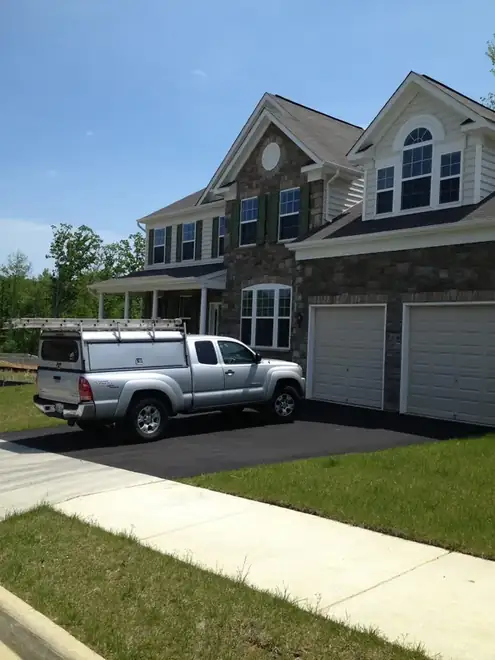
Inside the old frame houses near Station Street
The buildings in the historic district mostly went up between 1890 and 1920, and inside they are plaster on wood lath, deep window and door casings, tall baseboard, and trim profiles that were run on site.
Plaster of that age has usually lost its grip on some of the lath. Press a wall and if it flexes, the keys behind it have broken. Skimming over a section that moves is money wasted, so we re-anchor it first, then tape and skim wide.
The trim is the other thing worth knowing. Those profiles carry a hundred years of paint, and the detail is already half filled. Machine sanding takes the bead and the reveal off and you cannot put them back. We scrape by hand, feather the edges so the repaint does not look patched, and spot prime for whatever is underneath rather than assuming.
One honest note on age. Anything built before 1978 may contain lead-based paint, and downtown Herndon is well on the wrong side of that date. We work wet, contain debris, do not power-sand old coatings, and clean up daily. If a surface needs more disturbance than that, get it tested before anybody starts.
Windows that have been painted shut since the eighties
Old wood sash is part of interior painting whether anyone wants it to be. In the downtown houses we routinely find double-hung windows locked solid by successive paint jobs, with the meeting rail and the parting bead glued together.
Freeing a sash is careful work: score the seam, break the bond, clean the run, then paint the stop and the jamb in a way that does not weld the window shut again. A sash painted closed and then forced is how a hundred-year-old rail splits.
Interior glazing putty is worth a look at the same time. When it has shrunk and cracked, paint over it lasts about a season. On the inside face we reglaze or at least re-bed where it has failed, then prime the putty properly before finish coats.
Radiator alcoves, window seats and the backs of shutters get done while we are there. Those get skipped and then look wrong beside a fresh wall.
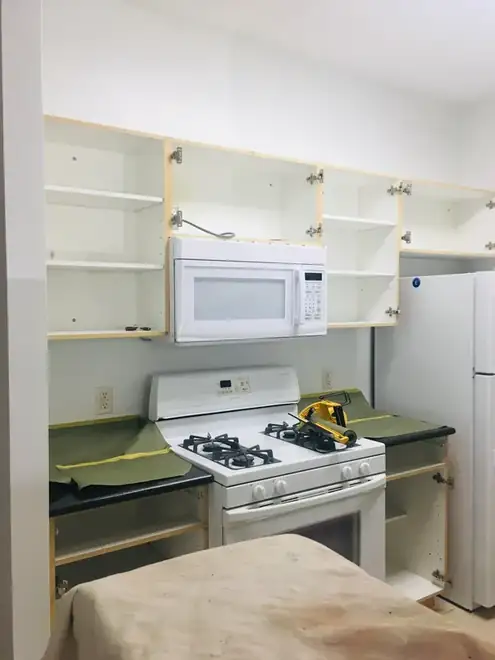
Layer on layer of wallpaper in the older rooms
A house that has been lived in for a century has usually been papered more than once, and in these rooms we often find two or three layers with paint over the top of the last one.
Painted wallpaper is the difficult version. The film on top stops water reaching the paste, so it has to be perforated before steaming or it will not release. What comes off after that is uneven, and plaster underneath is frequently gouged where somebody has already tried with a scraper.
Our sequence is strip, wash the adhesive off completely, repair, skim, then seal with an oil or shellac based primer before color. Old paste bleeds through waterborne paint weeks later if it is not sealed, and by then the room is furnished again.
We will tell you at the estimate if a room is likely to need full skimming rather than spot repair. It is the single biggest variable in an old Herndon interior, and we would rather overestimate it than discover it on day two.
Fox Mill, Kingstream and the 1970s ceilings
Out past the town line the houses are drywall and the ceilings are sprayed texture. Fox Mill Estates was built between 1972 and 1985, Kingstream and Herndon Chase are the same era, and in most of those houses the popcorn is still up there.
What decides the price of removing it is whether it has been painted. Unpainted texture wets through and scrapes off cleanly. Painted texture resists the water and turns a one-day ceiling into a two- or three-day one, plus more skimming afterward.
We sheet the room, wet the ceiling in sections, scrape, then skim, sand and prime before the finish. Handled wet and contained, not dry-scraped into the air.
The walls in these houses are almost always original builder flat. Forty-year-old flat is chalky, it will not wipe, and it does not take a touch-up invisibly. We wash, prime the repairs, and plan on full coverage instead of pretending a spot job will blend.
Hollow-core doors and finger-jointed trim
The subdivision houses came with hollow-core flush or six-panel doors and finger-jointed pine casing and base. Both paint fine, with two cautions.
- The glue lines in finger-jointed trim telegraph through a light color over time. Priming the whole piece rather than spot priming the fills keeps it even for longer.
- A hollow-core door hung for forty years is often out of square and rubbing the jamb. Painting a sticking door makes it stick more. We ease and adjust before we coat rather than after.
On the stained oak handrails and the stained trim packages in some of these houses, the decision is whether to paint or keep. Painted is cleaner and it is not reversible in any practical sense. We degloss, use a bonding primer and finish with a hard enamel, and we say plainly that stripping back to stain later is a much bigger job than painting it now.
Two-story foyers on the late eighties and nineties houses
Herndon Chase, Monroe Manor and the newer end of McNair Farms brought the open entry with a wall running up past the second-floor landing. It is a staging job, not a painting one.
We set a plank across the stairwell so the painter stands level with the surface, and we protect treads, the rail and the floor below. Working off a leaning ladder on a stair nosing is how you get a wavering cut line and a marked handrail.
Those houses often have a family room ceiling at the same height with can lights and a fan in it. Doing the ceiling, wall and trim in one setup beats building staging twice.
Scheduling out at this end of our run
We are based at 8040 Trevor Place in Vienna, and Herndon sits at the western edge of what we cover. Lead times here can run a little longer than in Vienna or Tysons, and we tell you that at the estimate rather than letting you find out. Once we start, the crew stays until it is finished.
Interior work is not weather dependent the way exteriors are, so winter is a good time to book a Herndon interior. The one thing we do watch is temperature: a cold room slows curing badly, so we allow proper time between coats rather than stacking them.
Fredy Vargas founded the company in 2002 and comes out to look at the rooms himself. Four employees, the same crew each day. Virginia contractor license 2705098145, licensed, bonded and insured. No job minimum. Ten percent off for veterans and anyone 65 or older. Call 703-869-0593.
Todos nuestros servicios
Todas las ciudades que cubrimos
Más sobre esto, de Fredy
Estos artículos están en inglés
- What Actually Drives the Cost of Painting a House in Northern VirginiaHomeowners want a number. What they usually need first is an understanding of why two honest painters can quote the…
- The Best Time of Year to Paint the Outside of a Virginia HomeLate spring and early fall are the sweet spots, but the reason has less to do with the daytime high…
- Refinish or Replace? How to Judge the Real Condition of Your DeckA gray, splintery deck usually looks worse than it is. A deck that looks fine can be the one with…
Cuando usted diga.
Fredy contesta su propio teléfono. Si está en una escalera, le devuelve la llamada esa misma tarde.