
House Painters in Great Falls, VA
Great Falls is acre lots, old oaks and long driveways off Georgetown Pike. Painting a house here is mostly an exterior problem, and we have been solving it since 2002.
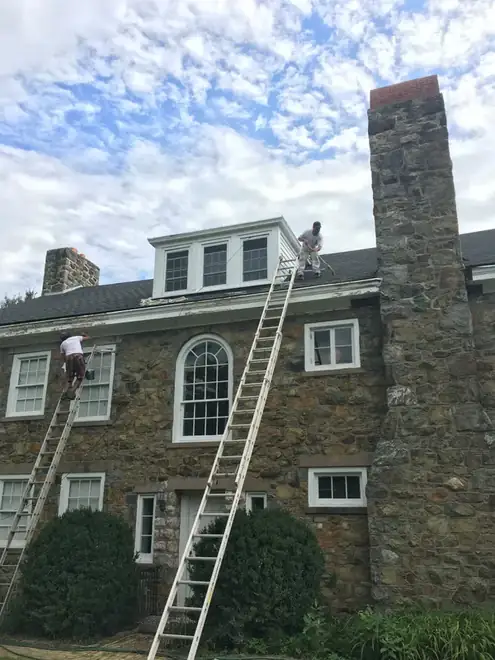
An acre of trees changes the whole job
Fairfax County zoning keeps most of 22066 on lots of an acre or more, and almost every one of those acres has mature hardwoods on it. That single fact drives everything we do out here.
Trees mean shade, and shade means slow drying. A north or east elevation under oaks in Forestville or off Leigh Mill Road can stay damp for two days after a storm while the south wall is bone dry. Mildew grows there. So does the algae film that homeowners scrub at and cannot shift.
Trees also mean debris. Leaf litter packs the gutters, gutters overflow, and the water sheets down the fascia and behind the trim. Nine times out of ten when we find rot on a Great Falls house, the failed board is directly under a gutter joint or an inside corner where two roof planes dump together.
And trees mean sap, tannin staining on horizontal surfaces, and pollen every spring that coats a whole west-facing wall in a week.
None of that is a reason to cut the oaks down. It is a reason to prep differently than you would on an open lot, and to choose coatings that tolerate a wall that spends half its life damp.
Cabinets, built-ins and paneled rooms
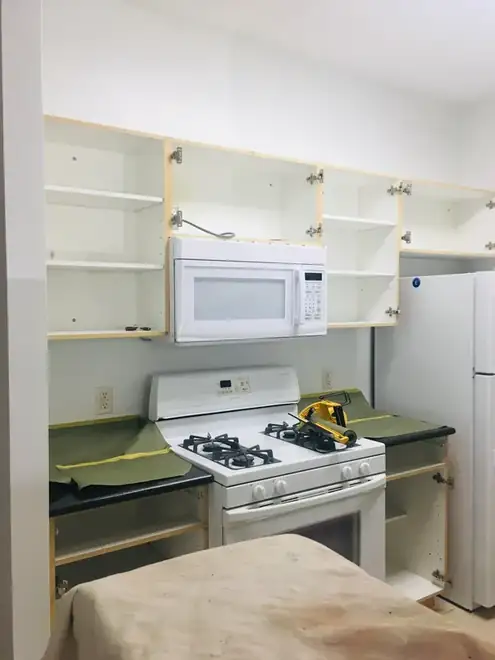
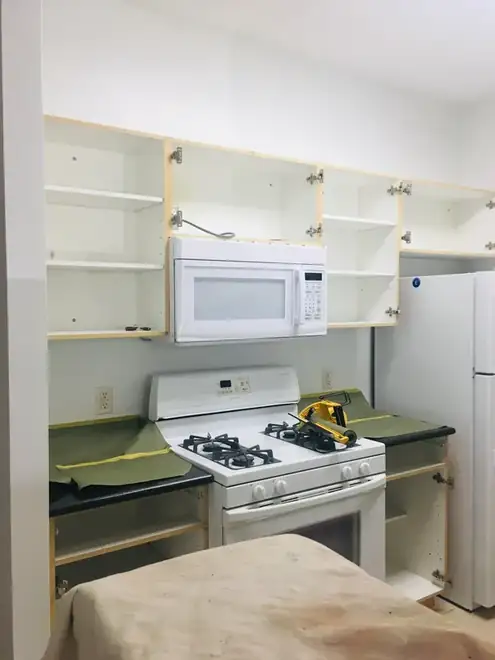
Kitchens in Great Falls tend to be large and solidly built, which makes refinishing worth doing rather than replacing. Doors and drawer fronts come off, get labelled, cleaned, degreased, sanded and sprayed off site. Boxes, face frames and island paneling get finished in place with the room fully masked.
Beyond the kitchen, these houses are full of finished woodwork that people forget can be refinished: butler pantries, wet bars, mudroom lockers, laundry cabinetry, library shelving, and the paneled study that was stained dark in 1998 and now makes the room feel like a cave. All of it can be painted or refinished, and it changes a room more than wall color does.
Cherry and mahogany need a conversation first. They darken with age, unevenly, so partial work rarely matches. Usually we do a whole run.
Well water, septic fields and how we wash a house here
Many Great Falls properties are on private wells and septic rather than public water and sewer. That is a real constraint on exterior work and most painting companies never think about it.
Power washing a large house uses a great deal of water. If it is coming out of your well, we talk to you first about draw rate and recovery, and we stage the wash across the day or across two days rather than running continuously and pulling the pressure down. On properties where the well is marginal, we bring water in.
The septic side matters just as much. Wash water and rinse from a house wash runs downhill, and a saturated drain field is a genuinely expensive problem. Before we start we ask where the drain field is and we route runoff away from it. Same for the reserve field, which people often forget is even there.
The other habit worth having is checking the gutters before we wash rather than after. On a wooded lot they are usually packed, and a house wash that pours several hundred gallons into a blocked gutter simply sends it over the lip and down the fascia we are about to paint.
We also keep cleaning solutions off ornamental plantings and out of the stream valleys. Difficult Run, Nichols Run and their feeders cut through a lot of these properties, and a lot of lots back directly onto woods. We tarp and pre-wet plant material and use the lightest chemistry that will actually kill mildew rather than the strongest thing available.
Ipe, Cumaru and decks that face the woods
Great Falls has more high-end decking per house than anywhere else we work, and a lot of it is Brazilian hardwood. Ipe and Cumaru are dense enough to sink in water and oily enough to reject ordinary deck products. This is our specialism.
What goes wrong with them:
- Someone applies a standard film-forming deck stain. It sits on top, never penetrates, and flakes off within a year.
- Nobody applies anything, and the deck silvers to gray. That is cosmetic, not structural, and it is recoverable, but it takes a proper strip and brighten to get the color back.
- The deck gets oiled but never washed first, so the oil seals in the mildew and tannin sitting on the surface.
Our sequence is clean, brighten, dry, then a hardwood-specific penetrating oil worked in and the excess wiped off. Excess oil left on the surface of Ipe will stay tacky and collect dirt for months.
We also do a lot of pressure-treated pine and cedar decking, plus railings, pergolas, screened porch ceilings, and the long stair runs that come with a walkout basement on a sloped lot. On shaded decks we steer people away from heavy solid stains, because moisture pushing up from beneath is what peels them.
Cedar siding, board and batten, and the rot underneath
Beyond the newer stone-and-stucco estates, a lot of Great Falls housing is the wood-clad kind: cedar siding, board and batten, shakes on gables, deep overhangs, exposed rafter tails, and generous trim. It is handsome and it is high maintenance.
Cedar bleeds tannin. If it was ever topcoated without a stain-blocking primer, brown streaks come through and no number of finish coats will bury them. We prime bare and weathered cedar with a blocking primer specifically, and we prime the same day the wood is exposed rather than leaving it open over a wet weekend.
Board and batten fails at the battens first, where water sits on the top edge. Shakes fail at the butt ends. Rafter tails and the ends of exposed beams fail at end grain, always, because end grain drinks.
We do the carpentry and wood rot repair ourselves. Soft sections come out and get replaced with new stock, small sound areas get two-part epoxy filler, and everything gets primed on all six sides before it goes back up. Priming the back and ends of a replacement board takes ten extra minutes and doubles how long it lasts. Most crews skip it because nobody can see it.
Interiors in houses with a lot of volume
Inside, the Great Falls challenge is height and quantity. Two-story great rooms, open catwalks, curved stairs, coffered and tray ceilings, and a great deal of millwork.
Working at that height inside a finished house is a staging job. We build proper platforms rather than reaching from a ladder, and we protect stone floors, stair treads and rails underneath. A cut line along a twenty-two foot wall is only straight if the painter is standing level with it.
Because these houses are large, we sequence them so you keep functional rooms. Wing by wing, floor by floor, with the schedule set at the start and Fredy checking it daily. Same crew every day, so nobody has to be re-briefed on which rooms are off limits or where the dogs are.
The other common interior request out here is repainting after a long stretch of no change. Twenty-year-old builder beige across nine thousand square feet, with drywall settlement cracks over every doorway and nail pops down the long walls. We repair drywall, remove wallpaper, take down popcorn texture where it is still present, and install and finish crown molding. Sherwin-Williams and Benjamin Moore products throughout.
Outbuildings, fences, pool houses and pools
An acre lot comes with more than a house. We regularly paint and stain barns, run-in sheds, detached garages, workshops, pool houses and cabanas, and the long stretches of board fence that come with horse-friendly properties along the Springvale and Beach Mill side.
Fences are worth planning. Hundreds of linear feet of board fence is a spraying job, not a brushing one, and it needs wind conditions to be right and neighboring cars and plantings masked. We would rather move a fence day than fight a breeze.
We also do pool painting, which is a specific trade of its own. Plaster and concrete pools need the right coating for the existing surface, the shell has to be fully cured and bone dry, and the prep is most of the work. Getting the substrate identification wrong is what causes a pool coating to lift in the first season, so we establish what is on there before we quote.
Concrete staining and epoxy floors round it out: garage bays, basement floors, patios and pool decks.
Working out here, practically
Georgetown Pike, Walker Road and Springvale Road are two-lane and unforgiving at rush hour, and many driveways are long, steep and gravel. We plan access and staging with you rather than parking wherever. On big exteriors we set up a materials point near the house rather than walking three hundred feet each way all day.
Deliveries are worth a thought too. If a paint order has to come up a quarter-mile gravel drive, we bring it in ourselves rather than having a truck try to turn around at the top.
Season matters. We push exteriors in Great Falls toward late spring and early autumn, because heavy shade means dew sits later into the morning and returns earlier in the evening than it does on an open lot. Some days we simply start later here than we would in town, and we would rather tell you that than paint over damp siding.
Fred General Painting is based at 8040 Trevor Place in Vienna, about fifteen minutes away. Fredy Vargas founded the company in 2002. Virginia contractor license 2705098145, licensed, bonded and insured. Monday to Friday 8 to 5, weekends by appointment. 5.0 on Google from 40 reviews, 93 five-star Thumbtack reviews, hired 150 times, Top Pro 2021 through 2025. 10% off for veterans and anyone 65 or older. Call 703-869-0593.
Our work around Northern Virginia
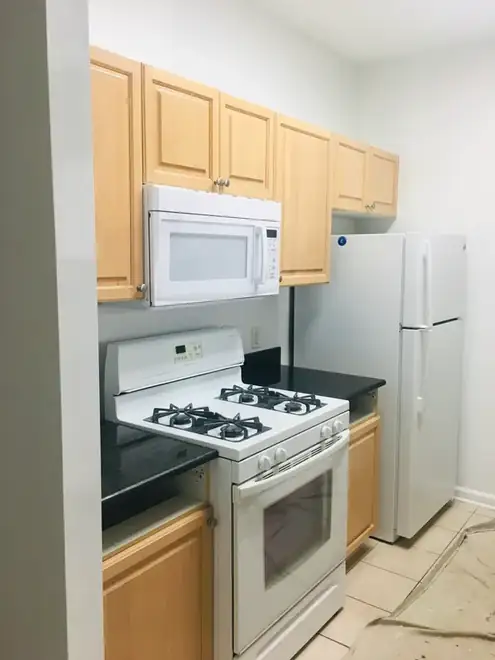
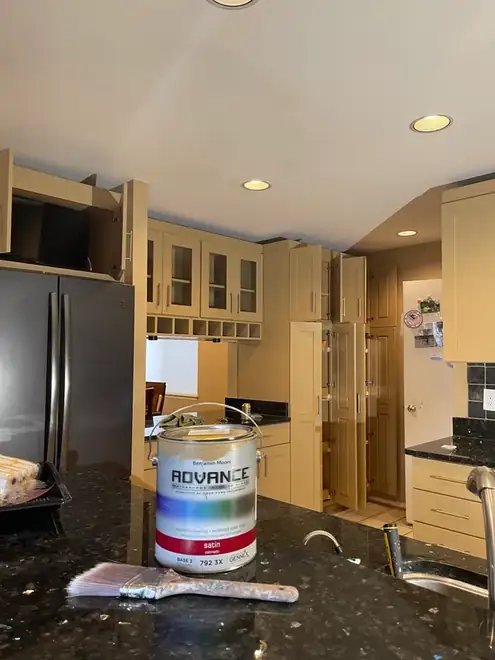
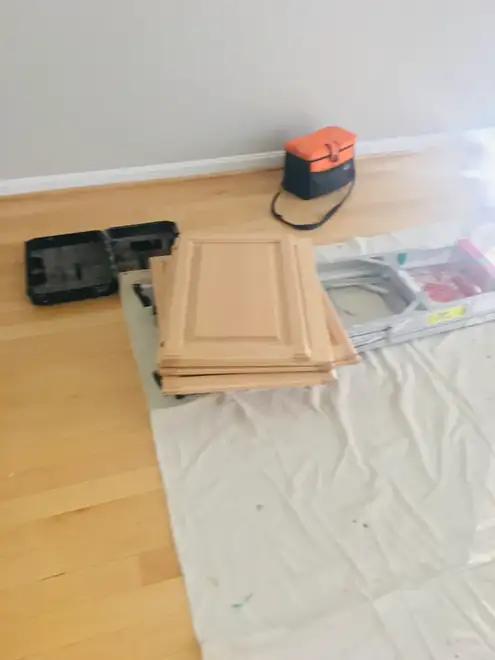
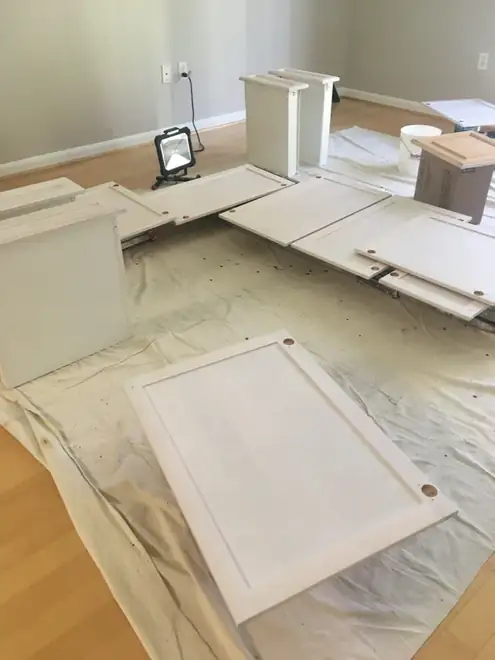
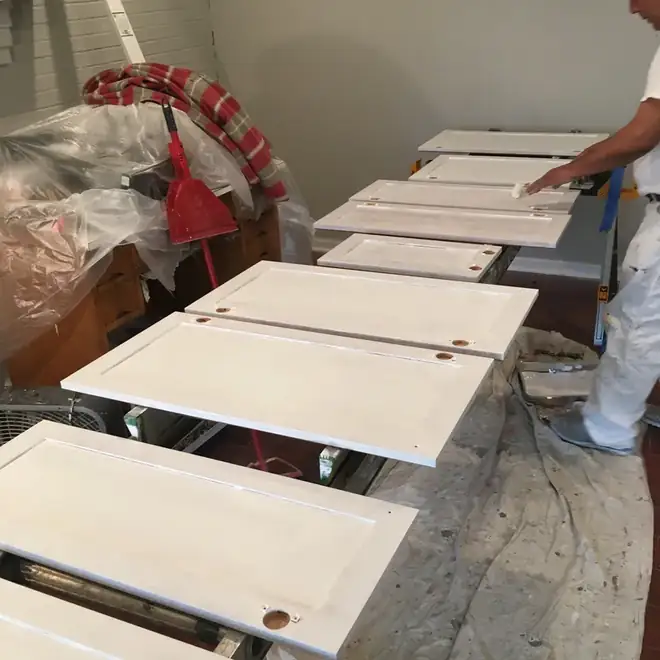
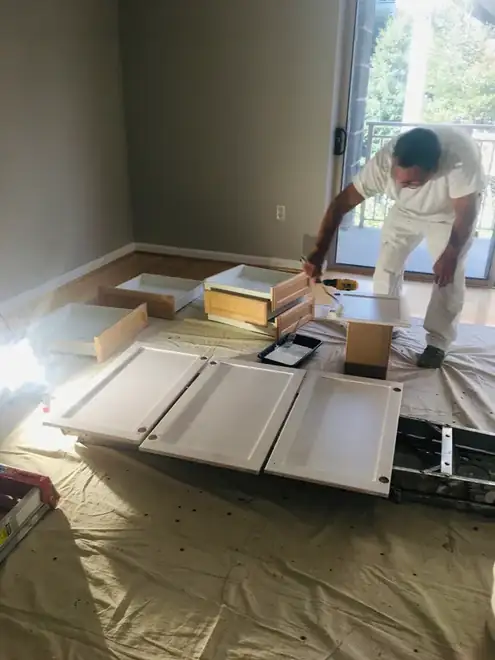
Our own photographs, from jobs across Northern Virginia. See all the project photos.
Where we work in Great Falls
Serving Great Falls, VA and the surrounding streets, out of the shop at 8040 Trevor Place, Vienna, VA 22182.
- 22066
Great Falls, VA on Google Maps ↗opens in a new tab Get directions to the shop ↗opens in a new tab
What we do in Great Falls
Questions about painting in Great Falls
I am on a well. Can you still power wash the house?
Yes, we just plan for it. A full house wash uses a lot of water, so we ask about your well's recovery rate and stage the wash across the day or across two days instead of running flat out and drawing the pressure down. On properties where the well cannot support it, we bring water in. It is worth raising at the estimate rather than the morning we arrive.
Will washing the house hurt my septic drain field?
It can if nobody thinks about it, which is why we ask where the drain field and reserve field are before we start. Wash and rinse water runs downhill and a saturated field is an expensive problem. We route runoff away from it, keep chemistry off ornamental plantings, and use the mildest cleaner that will actually kill mildew rather than the strongest product on the shelf.
My deck is Ipe and it has gone gray. Can it come back?
Yes. Gray is surface oxidation, not damage. It takes a proper strip or aggressive clean, then a brightener to correct pH and reopen the grain, then full drying, then a hardwood-specific penetrating oil worked in with the excess wiped off. Ordinary deck stains and any film-forming product will fail on Ipe and Cumaru. Brazilian hardwood decking is a specialism of ours, so we do these regularly.
Why does my north-facing wall keep growing mildew?
Because it never gets direct sun and never fully dries. On wooded acre lots in Great Falls that wall can stay damp for two days after rain. Painting over the growth just feeds it through the new coat. We clean it with a solution that gets dwell time rather than a quick blast, then use a coating with mildewcide in it, and we check whether an overhanging limb or an overflowing gutter is making it worse.
Do you handle the wood rot as well as the painting?
Yes. Carpentry and wood rot repair are part of our normal exterior work, so you do not hire two contractors. Out here it is usually fascia under a gutter joint, batten tops, shake butts, exposed rafter tails and beam ends. We cut out and replace with new stock or use two-part epoxy on small sound areas, and we prime replacement boards on all sides and ends before installing them.
Can you paint outbuildings, fences and pool houses too?
Yes, and we do it often on acre-plus properties. Barns, detached garages, workshops, sheds, cabanas and long runs of board fence. Fencing is a spray job that needs the right wind conditions and careful masking of neighboring plantings and vehicles, so we schedule it as its own day. We also do pool painting, concrete staining and epoxy coatings for garage and pool deck surfaces.
When is the best time to paint an exterior in Great Falls?
Late spring and early autumn work best. Heavy tree cover means dew sits on siding later into the morning and comes back earlier in the evening than it does on an open lot, so our usable window is genuinely shorter here. Some days we start later than we would in town. Painting over damp siding is the fastest way to a failure, so we will move a day rather than push it.
How far are you from Great Falls and do you take smaller jobs?
We are at 8040 Trevor Place in Vienna, roughly fifteen minutes down Route 7 or across on Georgetown Pike. There is no job minimum, so a single deck, one paneled study or a set of exterior doors is a job we will take. Call 703-869-0593 and Fredy comes out himself. Veterans and anyone 65 or older receive 10% off.
Other towns we paint in
More on this from Fred
- What Actually Drives the Cost of Painting a House in Northern VirginiaHomeowners want a number. What they usually need first is an understanding of why two honest painters can quote the…
- Painting Your Kitchen Cabinets vs Replacing ThemRefinishing is the cheaper path most of the time. But there are kitchens where it is the wrong answer, and…
- The Best Time of Year to Paint the Outside of a Virginia HomeLate spring and early fall are the sweet spots, but the reason has less to do with the daytime high…
Painting in Great Falls? Let us take a look.
Fred answers his own phone. If he is up a ladder he calls back the same evening.