
Deck Refinishing, Staining and Sealing in Vienna, VA
Decks take more sun and water than any other surface on a house. We strip them properly, replace what has rotted, and finish them to last.
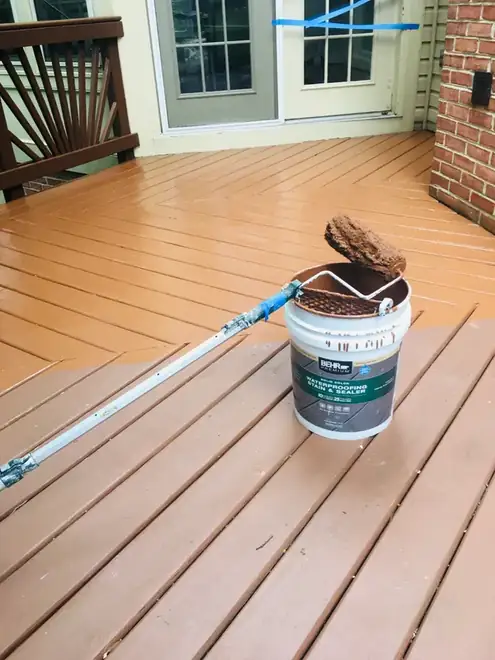
A deck is the hardest working surface you own
Think about what a deck absorbs. Full sun most of the day. Rain that sits on a flat surface instead of running off a wall. Snow that melts into the grain and refreezes. Furniture dragged across it, a grill dripping on it, planters holding a wet ring in one spot for a whole summer. Nothing else on a house takes that combination.
That is why decks need attention every few years while your siding goes a decade or more. It is also why deck work rewards the right products and punishes shortcuts faster than any other painting job. We have been refinishing decks in Vienna, Oakton, Great Falls and McLean since 2002, and we have seen how each type of wood ages here.
Fred works on the deck himself with the crew. There is no minimum job, so a small landing and a set of stairs is real work to us. Some of the decks we maintain we have been coming back to for over a decade, which is the honest way to learn what actually lasts on a west-facing board.
Pressure-treated pine and cedar
Most decks around Fairfax, Burke and Springfield are pressure-treated southern yellow pine. It is soft, it takes finish readily, and it moves a lot: cupping, checking along the grain, and splitting at the board ends are all normal aging, not defects.
Two things matter with pine. First, brand new pressure-treated lumber is usually still wet with treatment chemicals and has to dry out before it will take a stain. Depending on the season that can be several months. A stain applied to a saturated board sits on the surface and peels. Second, the mill process leaves a glazed, burnished surface on new boards that repels finish. It has to be sanded or chemically opened before the first coat, and skipping it is why a brand new deck can look blotchy after its first staining.
Cedar is softer still and prone to tannin bleed and dark water staining around fasteners. It cleans up beautifully with the right brightener and takes a semi-transparent stain well.
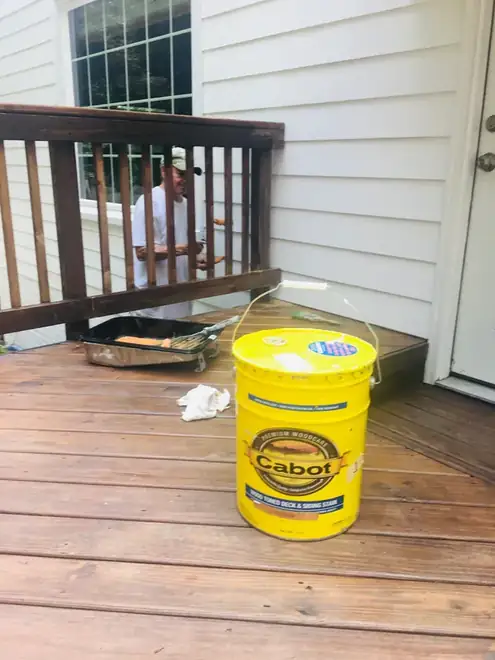
Brazilian hardwood: Ipe, Cumaru and the dense tropicals
This is our specialism and it is genuinely different work. Ipe, Cumaru, Tigerwood and Garapa are extremely dense, oily, and close-grained. Ipe is dense enough that it sinks in water and will blunt a saw blade fast. That density is why the wood lasts decades outdoors, and it is also why most deck finishes fail on it.
The mistake we get called to fix is a film-forming stain or a sealer applied to hardwood. It cannot penetrate a closed, oily surface, so it sits on top, then flakes off in sheets after one season and leaves a mess that has to be stripped and sanded before anything else can be done.
Hardwood wants a penetrating oil finish with ultraviolet inhibitors, applied thin, into a clean and properly opened surface, with the excess wiped so nothing sets up on the surface. That is the whole method: less product, more patience, more wiping.
The other thing about these woods is what they do if you leave them alone. Ipe left unfinished does not rot, it silvers to a driftwood gray, which some people love. Once you have decided to keep the brown, you are on a maintenance cycle, because ultraviolet light will pull the color out of the top surface every year. Horizontal boards need refreshing more often than the rails and skirting, and a hardwood refresh coat is a light job compared to a full restoration.
Cumaru moves more than Ipe with humidity and it will show more fastener movement over time. Tigerwood fades faster. We tell people which of these to expect on their specific deck rather than treating all hardwood as one thing.
How we refinish a deck
The order matters and the drying time between steps is not padding.
- Inspect the whole structure first, including the joists underneath, the ledger connection to the house, the posts at grade, and every stair stringer.
- Replace rotted or split boards and reset or replace popped and rusted fasteners.
- Clean the deck with a wood cleaner to lift dirt, mildew and gray weathered fiber. Pressure is kept low and controlled so we do not furrow the wood.
- Strip failed coatings where an old film-forming stain has to come off entirely.
- Apply a wood brightener, which neutralizes the cleaner and restores the wood pH and its natural color. This step is skipped constantly and it changes the final result.
- Let the deck dry all the way through, usually a couple of days depending on weather.
- Sand the surface to remove raised grain, mill glaze and any remaining film, and to smooth splinters on walking boards and rail tops.
- Apply stain or penetrating oil, working full boards end to end, and wipe back any excess before it sets.
Stain, sealer, and what the choice actually costs you
People use these words loosely, so here is the practical difference.
Clear sealer repels water and does almost nothing about ultraviolet light. Your deck will still go gray. It has its uses, mostly on hardwoods where you like the natural tone.
Transparent and semi-transparent stain carries pigment, which is what actually blocks ultraviolet damage, while letting the grain show. It penetrates rather than forming a film, so when it wears it wears thin and even, and recoating is straightforward. This is where most of our deck work lands.
Solid stain is essentially paint. It hides gray and damaged wood and gives you a uniform color. The problem is that it forms a film on a horizontal surface that people walk on and water sits on, so it eventually peels, and once a deck has been solid stained it is very hard to go back. We will do it, and we will make sure you know what future maintenance looks like before you choose it.
One general rule: more pigment means more ultraviolet protection and longer life, and less visible wood grain. That is the trade, every time.
Railings and vertical surfaces last far longer than the deck floor because they shed water and take less sun and no foot traffic. It is completely normal to refresh the walking surface twice for every time the rails need attention, and we will tell you when your rails do not need doing.
Rot, boards and the parts you cannot see
We do carpentry, so board replacement and structural repair happen in the same visit with the same crew instead of you finding a second contractor.
Where rot shows up on decks around here is predictable. Board ends over a beam, where end grain wicks water. Anywhere two pieces of wood are face to face and stay wet: the joint between a post and the framing, under a stair tread, behind a planter that has not been moved in three years. Stair stringers at the bottom, where they meet a wet patio or the ground. The ledger board where the deck attaches to the house, which is the most important connection on the whole structure and the one people never look at.
When we replace a board we prime or seal the cut ends before it goes down. End grain absorbs many times more water than a face, and an unsealed cut end is where the next failure begins.
Something worth knowing: the underside of a deck usually never dries as fast as the top. If your deck sits low to the ground with poor airflow, the boards are taking on moisture from below the whole time, and that shortens the life of any finish on top. It is not a coating failure. Where it is practical we treat the accessible undersides and we will point out drainage or grading that is working against you.
Composite decking, and what we will tell you no about
Composite and PVC decking is not meant to be stained, and we will not sell you a finish for it. What composite does need is cleaning, because the wood flour in older composite boards feeds mildew and the surface goes dull and streaky. We clean composite at low pressure with the right product and leave it at that.
We also will not stain over a failing solid stain without stripping it. Coating over a peeling film just gives you a peeling film in a new color, and it will let go in bigger sheets the second time.
We do not stain wet wood to hit a party date. If your deck needs another day, it needs another day, and we would rather move the schedule than hand you a finish that goes blotchy in three weeks.
And if a deck has structural problems beyond board and rail repair, a ledger pulling away from the house or posts rotted through at grade, we will tell you plainly that it needs a deck builder before it needs a finish. It is not the answer anybody wants, and it is the right one.
Weather, and why we will not rush your deck
Deck finish needs dry wood, and dry means dry through the board, not dry on the surface. After a wash or a rain we wait. In humid Northern Virginia summers that is often two days, sometimes more for dense hardwood or a shaded deck under trees.
We do not stain in direct midday sun. A hot board flashes the finish off before it can penetrate, which leaves lap marks and an uneven color that only shows up once it dries. Early morning and later afternoon are better, and like our exterior work we follow the shade.
Dew ends the day earlier than people expect in spring and fall. A fresh oil finish that gets soaked by heavy overnight condensation before it sets can go blotchy. We watch the forecast and stop with time to spare rather than get one more section down.
Furniture, grills and planters stay off for at least a couple of days, longer in cool or humid weather. Putting a heavy planter back on a fresh finish leaves a permanent ring. Same for anything with a rubber foot, which can bond to a curing oil and mark the board.
Getting your deck looked at
Fred comes out and walks the deck himself. He will check the boards, sound out the posts and ledger, look at what finish is on there now and how it is failing, and tell you what the wood is. That last part matters more than people expect, since plenty of homeowners inherited a hardwood deck from a previous owner and were never told.
We work Vienna, Oakton, McLean, Great Falls, Falls Church, Arlington, Tysons, Fairfax, Burke, Reston, Herndon, Annandale, Alexandria and Springfield. Monday through Friday, 8 to 5, weekends by appointment. Licensed, bonded and insured, Virginia contractor license 2705098145. If you are a veteran, or 65 or older, take 10 percent off the job.
Call 703-869-0593.
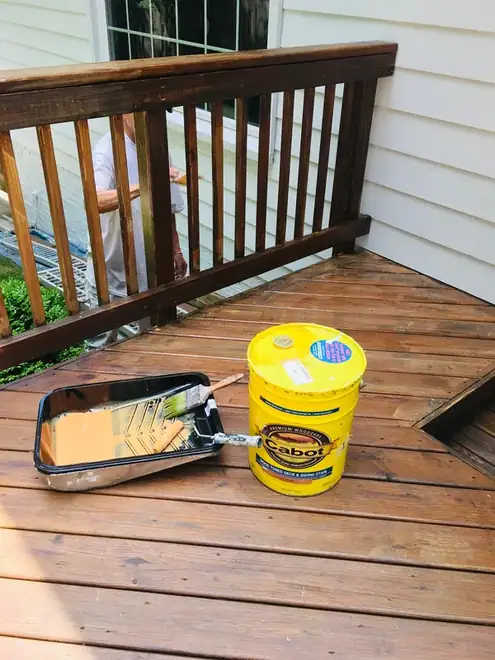
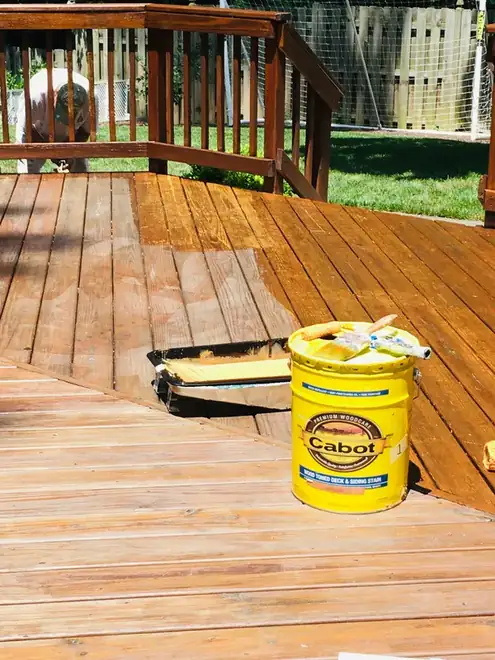
Recent deck refinishing work
Our own photographs, from jobs around Northern Virginia.
Questions about deck refinishing
Do you work on Ipe and other Brazilian hardwood decks?
Yes, and it is one of the things we are known for. Ipe, Cumaru, Tigerwood and Garapa are dense and oily, so ordinary deck stains and film-forming sealers cannot penetrate and will flake off within a season. These woods need a penetrating oil with ultraviolet inhibitors, applied thin into a properly cleaned and opened surface, with excess wiped back. It is slower, more careful work than a pine deck.
My new deck was just built. Can you stain it now?
Usually not right away. New pressure-treated lumber is still wet with treatment chemicals and needs to dry, which can take several months depending on the season. New boards also carry mill glaze, a burnished surface from the planing process that repels finish and causes blotching. We sand or chemically open the surface first. We will test your boards and tell you whether they are ready.
How often does a deck need to be refinished?
The walking surface needs attention far sooner than the railings, because it takes the sun, the rain and the foot traffic. Full-sun decks go faster than shaded ones, and horizontal boards go faster than anything vertical. Rather than a fixed calendar, look for color fading toward gray and water soaking in instead of beading. A refresh coat caught early is much less work than a full strip and sand.
Can you replace rotted deck boards?
Yes. Carpentry is part of what we do, so board replacement, stair repair, post and railing work happen in the same visit with the same crew. We seal the cut ends of every new board before it goes down, since end grain absorbs many times more water than a face and is where the next rot starts. We also check the joists and the ledger while we are under there.
What is the difference between semi-transparent and solid stain?
Semi-transparent carries enough pigment to block ultraviolet damage while letting the grain show, and it penetrates rather than forming a film, so it wears thin and evenly and recoats easily. Solid stain is effectively paint. It hides damaged wood and gives uniform color, but it forms a film on a walking surface and eventually peels. Going back from solid to semi-transparent is a hard, expensive strip.
Do you power wash the deck first?
We clean it, but pressure alone is not the method. Deck boards are soft, and high pressure carves furrows into the grain and leaves permanent wand marks that show through any finish. We use a wood cleaner to lift dirt, mildew and gray fiber, then a brightener to neutralize it and restore the wood tone, with pressure kept low and controlled throughout, and then we sand.
How long before I can use the deck again?
Light foot traffic is usually fine the next day. Keep furniture, grills and planters off for at least a couple of days, and longer in humid or cool weather. Heavy items set on a finish that has not hardened leave permanent rings, and rubber feet can bond to a curing oil and mark the board. We give you a specific timeline based on the weather during your job.
Will refinishing get rid of the gray on my deck?
Mostly, yes. Gray is ultraviolet-damaged surface fiber, and cleaning followed by a brightener and sanding removes it and brings back the wood tone underneath. Deep black staining around fasteners is tannin reacting with metal and does not always come out completely. Boards that are cracked or cupped will still be cracked or cupped, since a finish restores color, not shape.
Deck refinishing near you
Every town below has its own page with what we run into on those houses.
Our other services
More on this from Fred
- Refinish or Replace? How to Judge the Real Condition of Your DeckA gray, splintery deck usually looks worse than it is. A deck that looks fine can be the one with…
- Painting Your Kitchen Cabinets vs Replacing ThemRefinishing is the cheaper path most of the time. But there are kitchens where it is the wrong answer, and…
- Wood Rot on Trim and Siding, and the Price of WaitingRot is not an event. It is a slow process that begins somewhere you cannot see, and the paint failing…
Ready when you are.
Fred answers his own phone. If he is up a ladder he calls back the same evening.