
Exterior House Painting in Vienna, McLean and Northern Virginia
Northern Virginia weather is hard on a paint job. We prep properly, watch the forecast, and repair the rotted wood before a brush ever touches it.
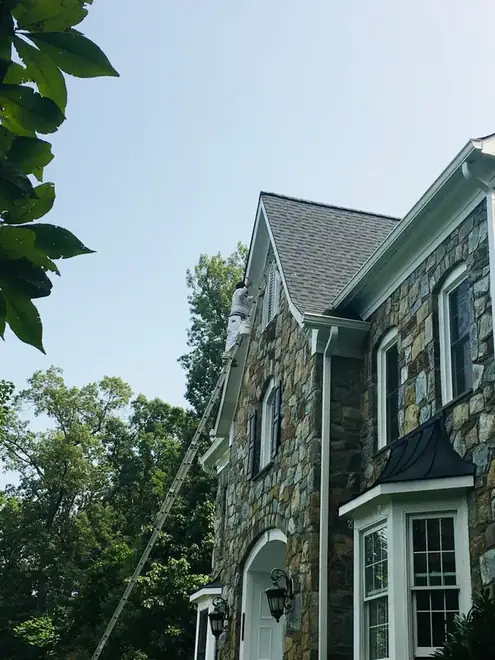
Twenty-four years of houses in this climate
Fred started painting houses here in 2002. The crew is four people plus Fred, who works on site rather than driving between estimates while somebody else does your house. That matters more outside than inside. Exterior work involves a hundred small judgment calls a day about whether a board is sound, whether a surface is dry enough, whether the sun has moved onto the wall you were about to coat.
We paint wood siding, vinyl, stucco, brick and composite siding, plus shutters, soffits, fascia, porch ceilings, railings, garage doors and front doors. We work across Vienna, Oakton, McLean, Great Falls, Falls Church, Arlington, Tysons and out to Reston, Herndon, Burke and Springfield. Some of these houses we have painted twice, ten or twelve years apart, which is a useful way to learn what actually holds up on a given elevation.
We are licensed, bonded and insured under Virginia contractor license 2705098145, background checked, and a Thumbtack Top Pro every year from 2021 through 2025. Google has us at 5.0 across 40 reviews. Veterans and homeowners 65 and older get 10 percent off.
Our exterior sequence, in order
Every house gets the same five steps. What changes is how long each one takes, and on an older cedar-sided house in Great Falls the middle three take most of the schedule.
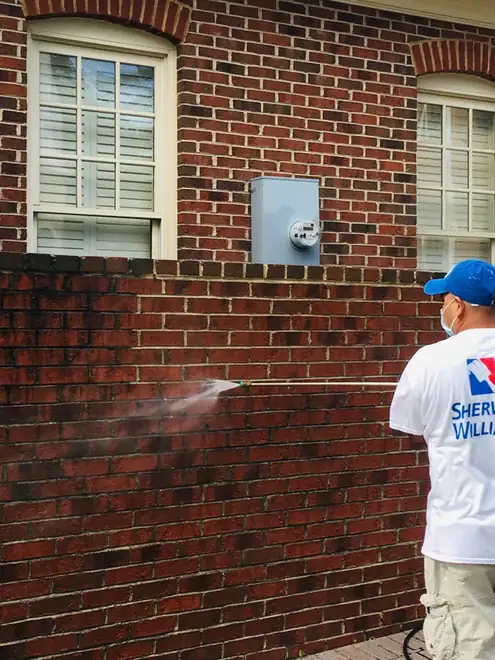
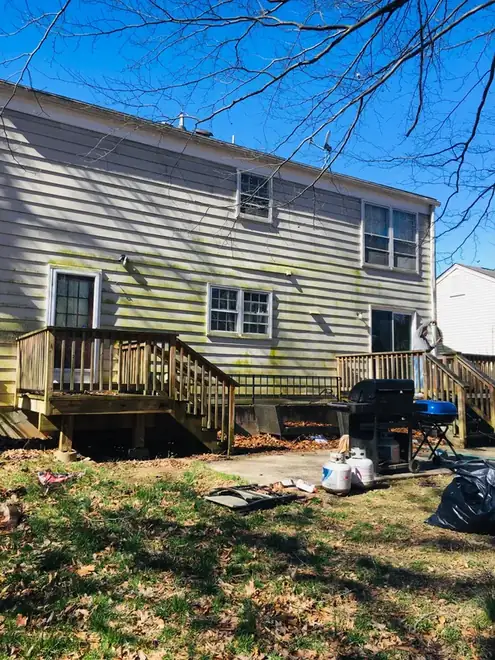
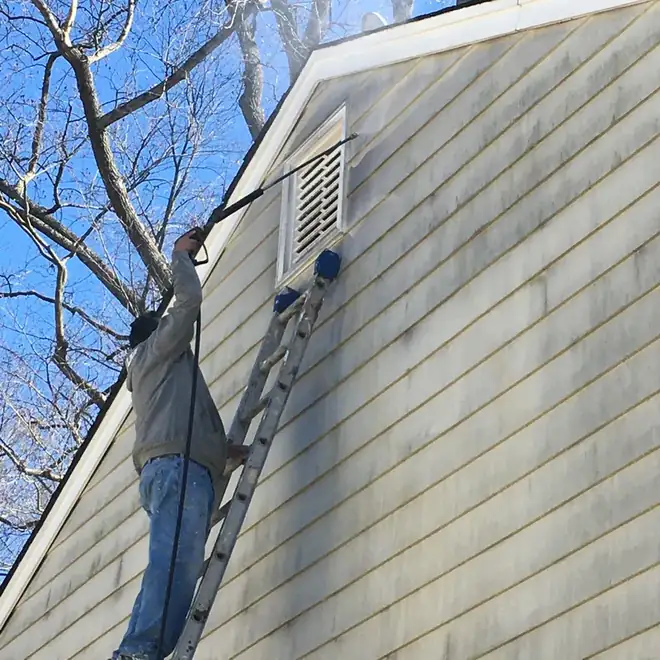
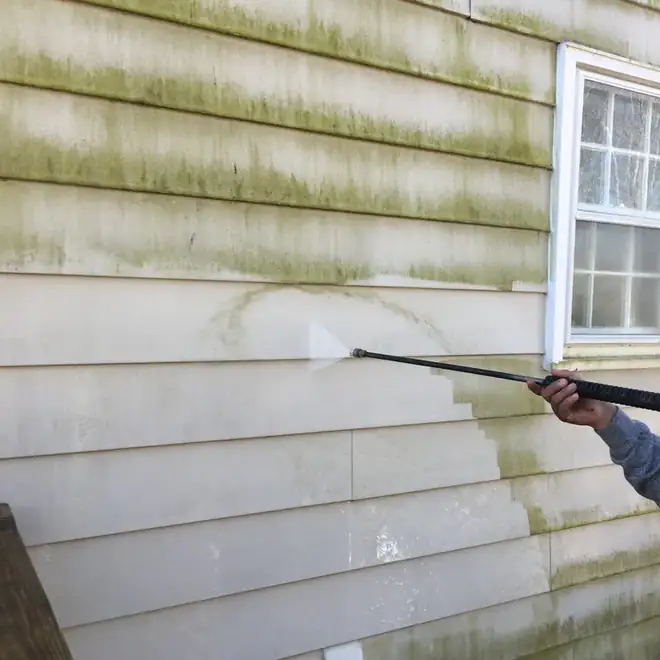
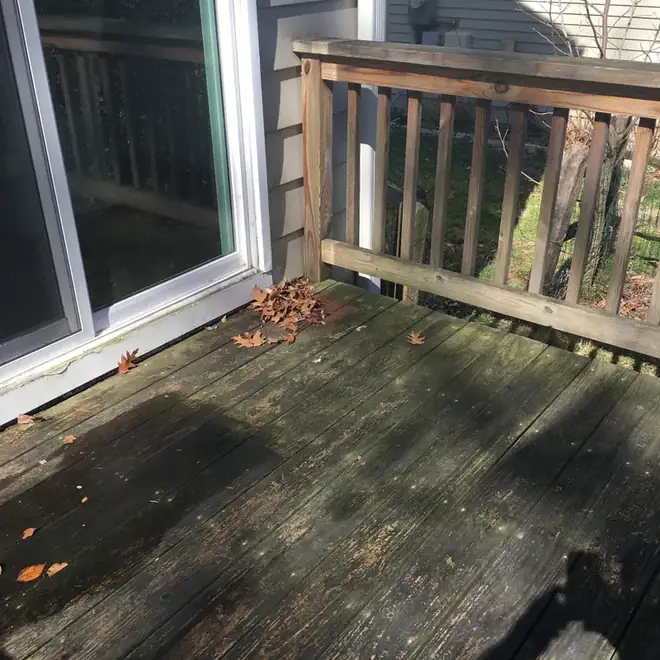
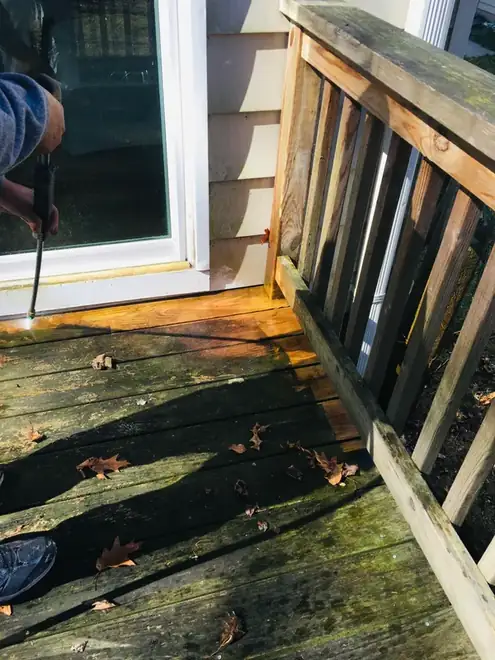
- Power wash the whole envelope to strip dirt, pollen, chalk and mildew. Paint does not stick to a dirty wall, and this area produces a green film on north-facing walls every single year.
- Scrape every loose edge back to something sound. Not the visible flakes, the whole failing area, until the scraper stops finding a lifted edge.
- Sand the scraped margins so the transition from bare wood to old paint is feathered flat. Skipping this leaves a ridge you will see through the finish for the next decade.
- Prime all bare wood and every exposed nail head, plus any tannin-prone or stained area. Bare wood left unprimed under a finish coat is a failure with a date on it.
- Caulk the joints that should be sealed, then two finish coats where the surface needs it, cut in by hand at every trim line.
Wood rot and carpentry, handled by us
Most exterior repaints in this area turn up rot somewhere. Bottom corners of window casings, the ends of fascia boards where two pieces meet, the trim behind a downspout that has been dripping for three years, the bottom course of siding where mulch is piled against it. We do the carpentry ourselves, so you do not have to find a second contractor and coordinate two schedules around one weather window.
We cut out the bad wood back to solid material and replace it in kind. On small isolated damage in a solid piece of trim we will use an epoxy consolidant and filler, which is a legitimate repair when the surrounding wood is sound. On a board that has gone soft through its thickness, filler is a cosmetic delay and we will say so and replace the board.
Anything new gets primed on all six sides before it goes up, including the cut ends and the back face. End grain drinks water like a straw, and an unprimed cut end is where the next round of rot starts. This is the kind of step nobody sees, which is exactly why it gets skipped.
While we are up there we will tell you what we see: a gutter pitched wrong, a downspout dumping against the foundation, flashing that has pulled away above a door. We do not upsell repairs we cannot do well, but you deserve to know what is feeding the damage.
Weather, and why we chase the shade
Air temperature is what the app tells you. Surface temperature is what the paint feels. A south-facing wall in July in Vienna can be thirty degrees hotter than the air, and paint applied to a hot wall skins over before it can level or bond. You get lap marks, poor adhesion, and sometimes blisters where trapped solvent pushes the film off the surface.
So we start on the shade side and follow the shade around the house through the day. In practice that means an east elevation early, north through the middle of the day, west in the late afternoon. It looks like we are wandering. We are not.
The cold end has its own rules. Most exterior acrylics need surface temperatures above roughly fifty degrees, and they need to stay there for hours after application, not just at the moment the brush touches. An October afternoon in Oakton that reads sixty at three o'clock can be in the low forties by nine that night, and paint that has not formed its film by then may never harden correctly.
Dew is the quiet one. Late spring and early fall mornings here drop condensation onto siding well after sunrise. Painting onto a wall with invisible surface moisture causes adhesion problems and, on darker colors, surfactant leaching, which shows up as brown streaks running down a fresh wall after the first heavy dew. We wait for the wall, not the clock.
Rain is simple. We need dry surfaces going in and generally several hours of dry weather after. If a storm line is coming we stop early and stage the day around it rather than gambling on a wall.
Different siding, different work
The prep changes completely depending on what your house is wearing.
- Wood and cedar: the most prep and the best results. Watch for tannin bleed, which shows as amber stains coming through light colors, and needs a stain blocking primer, not another coat.
- Vinyl: it can be painted, but only in colors at or lighter than the original. A dark color on vinyl absorbs heat, and vinyl expands and warps. There are vinyl-safe formulations and we stay inside them.
- Stucco: we repair cracks first. Hairline cracking can take an elastomeric patch, larger structural cracking needs to be understood before it is covered. Stucco also holds moisture long after rain, so it dictates the schedule.
- Brick: painting brick is permanent for practical purposes, and it changes how the wall dries. We will talk you out of it if your brick is in good shape, and do it properly with a breathable masonry system if you are set on it.
- Composite and fiber cement: usually the easiest repaint. Clean, spot prime any cut edges and factory-finish failures, and coat.
How exterior paint fails around here
When we look at a peeling house we are trying to figure out which of four things happened, because the repair is different for each.
Peeling down to bare wood in large sheets usually means moisture pushing from behind, not paint failing from the front. Bathroom or kitchen humidity with no vent path, a leak, or a wall that never dried out. Repainting without fixing the source buys you a season.
Peeling that leaves old paint underneath is adhesion between coats. Something was painted over a chalky, dirty or glossy surface without washing or sanding. This is the most common one we see, and it is entirely preventable with a proper wash and scuff.
Cracking and alligatoring, that dry lakebed pattern, is usually many coats of old oil paint that have gone brittle and can no longer move with the wood. Sanding and priming buys time; sometimes the honest answer is heavy scraping across a whole elevation.
Rust dots bleeding through are uncoated nail heads. They need spot priming with a rust blocking primer, and no amount of finish coat will hide them otherwise.
One more thing worth knowing: caulk does not belong everywhere. Vertical joints and trim-to-siding joints get sealed. The bottom horizontal edge of lap siding should stay open so any water that gets behind the board can drain and the wall can breathe. Sealing that edge traps water in the wall, and we have opened up plenty of rot that started with a well-meant bead of caulk.
Coats, coverage and how long it lasts
Two finish coats is standard on wood and stucco. On a repaint in the same color family over a sound, well-adhered existing finish, one coat over full prep can be genuinely adequate, and we will tell you when that is true instead of selling you a coat you do not need. Going lighter over a dark body color, or coating a house that has been bare for a while, is a two coat job and sometimes needs a tinted primer first.
Sheen outside behaves differently than inside. Flat hides siding imperfections and is the traditional look on older wood bodies, but it holds dirt and cannot be washed hard. Satin is where most of our body coats land now: it sheds water and pollen and cleans up. Trim, doors, shutters and railings go satin or semi-gloss, which handles hands, rain and sun better and gives the house its edges.
Realistic life expectancy in Northern Virginia depends almost entirely on exposure. A shaded north wall can look good for a long time while the south and west elevations chalk and fade first, because ultraviolet exposure is what breaks down the resin. Deep reds and blues fade sooner than earth tones for the same reason. It is normal, and it is also why touching up one elevation years later never quite matches.
Picking a color that works outside
Color behaves differently outdoors. A chip that looks right under kitchen lights will read two shades lighter and more saturated on a sunlit wall, because there is roughly a hundred times more light hitting it and it is bouncing off the lawn, the driveway and the sky. People are surprised by this every time.
So we put real samples on the actual house, in two spots, and we look at them at three different times of day before anyone commits. A north wall and a south wall on the same house will not read the same, and that is not a paint problem.
The other practical note is that your body color has to sit next to things you are not painting: a roof with brown or gray undertones, brick, stone, a copper gutter, the neighbors' houses on either side. Roof color is the constraint most people forget, and it is the one thing on the house nobody is changing. We will bring options and we will give you an opinion when you ask for one.
What it is like having us on your house
We work Monday through Friday, 8 to 5, weekends by appointment. The same crew comes each day at the same time. Fred checks in with you every day, not just at the start and the end, so if a color reads differently on the wall than it did on the chip, we know on day one.
Before we start we cover shrubs, walkways and driveways, move grills and furniture off the deck, and take down what needs to come down. Windows and doors get masked. We ask you to keep pets in during working hours and to let us know which windows you need to open. At the end of each day the site gets cleaned, ladders get laid down or secured, and nothing is left where a kid can climb it.
We do the walkthrough with you at the end, in daylight, standing back and then up close. We would rather you point at something now than live with it.
Call 703-869-0593 for a look at your house. Our exterior crews cover Vienna, Oakton, McLean, Great Falls, Arlington, Falls Church, Tysons, Fairfax, Burke, Reston, Herndon, Annandale, Alexandria and Springfield.
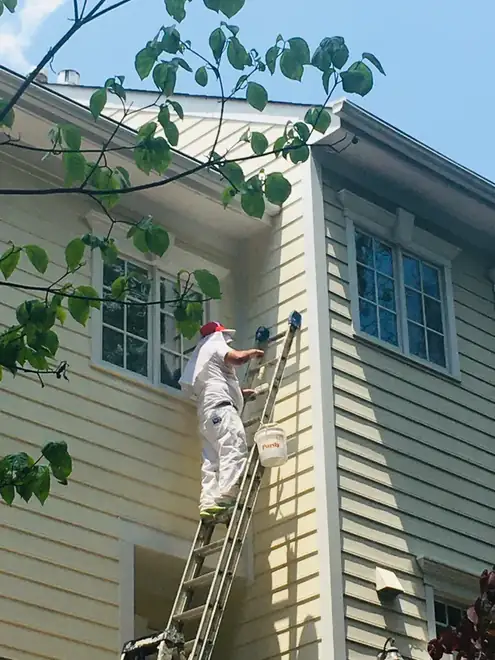
Recent exterior painting work
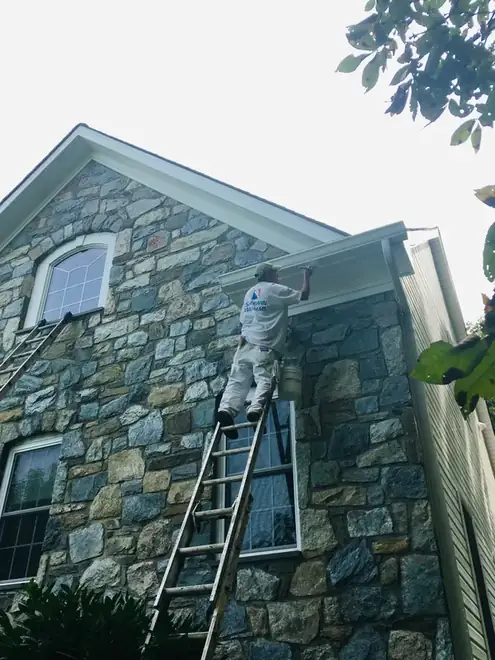
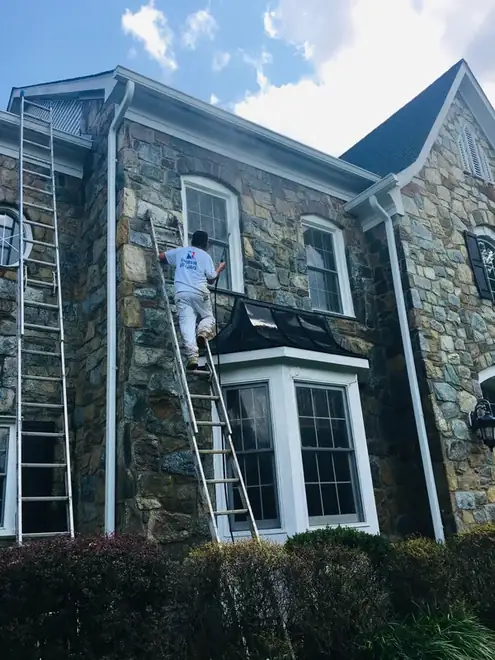
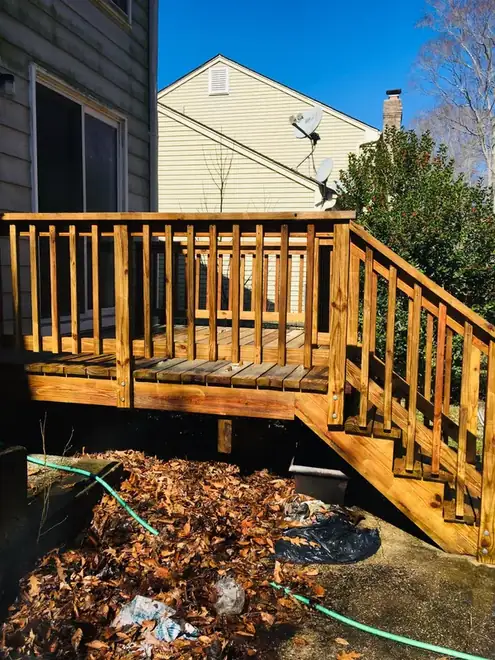
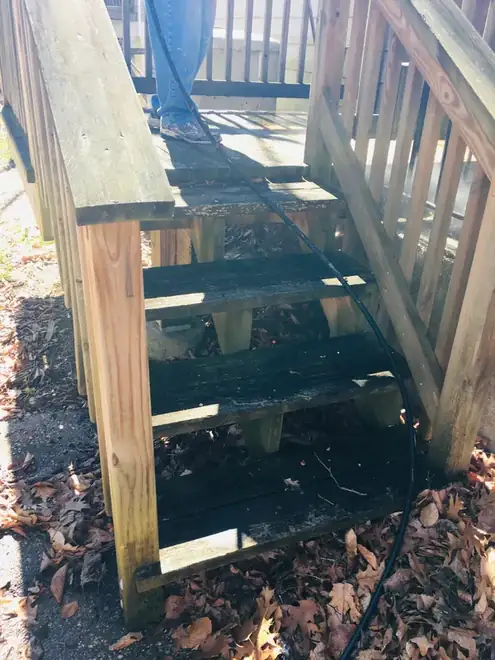
Our own photographs, from jobs around Northern Virginia.
Questions about exterior painting
What time of year is best for exterior painting in Northern Virginia?
Late April through October is the wide window. May, June, September and early October are the best of it, with mild surface temperatures and lower humidity. July and August are workable if we start early and stay on the shade side. We can paint into November on warm stretches, but short days and cold nights limit how much film can form before temperatures drop.
How long will an exterior paint job last?
It depends far more on prep and exposure than on the brand in the can. South and west elevations take the ultraviolet beating and will chalk and fade first, while a shaded north wall stays looking good much longer. Wood needs recoating sooner than fiber cement or vinyl. Rather than quote you a flat number of years, we would rather walk your specific elevations and tell you what each one is likely to do.
Do you fix rotted wood, or do I need a carpenter?
We do it. Fred does carpentry alongside painting, so rotted casings, fascia, soffit and siding get cut out and replaced by the same crew, in the same schedule. Small isolated damage in otherwise solid trim can be repaired with epoxy. New wood gets primed on all six sides, including the cut ends, before it goes up.
Can you paint vinyl siding?
Yes, with two conditions. The color has to be as light as or lighter than the existing siding, and the coating has to be a vinyl-safe formulation. Dark colors absorb heat, and vinyl expands and can warp or buckle permanently. We wash it thoroughly first, because vinyl holds a chalky oxidized film that nothing sticks to.
Do you spray or brush and roll?
Both, depending on the surface. Spraying lays a consistent film on siding, shutters and railings quickly. Trim lines, cut-ins and detail work get brushed by hand. On some surfaces we spray and then immediately back-roll or back-brush to push the coating into the grain, which is where adhesion comes from. Everything nearby gets masked either way.
What happens if it rains in the middle of my job?
We stop, secure the site and come back when the surfaces are dry. We watch the forecast a few days out and stage the work so we are not leaving a half-coated elevation exposed to a storm line. Rain on paint that has not formed its film can leave streaking or washed areas, and that gets corrected, not covered over.
Why is my paint peeling in big sheets down to bare wood?
That pattern almost always means moisture coming from inside the wall rather than a paint defect. Common sources are a bath fan venting into the attic, a roof or gutter leak, or a wall that never dried after water intrusion. We will find the pattern and tell you what is feeding it, because repainting over an active moisture source only buys you a season.
Do you take small exterior jobs, like just the trim or the front door?
Yes, and we say so plainly because homeowners get turned away for this constantly. Shutters, a front door, garage doors, a porch ceiling, one elevation that gets the worst sun. There is no minimum. We schedule small work around the larger projects so it does not sit for weeks waiting on us.
Exterior painting near you
Every town below has its own page with what we run into on those houses.
Our other services
More on this from Fred
- What Actually Drives the Cost of Painting a House in Northern VirginiaHomeowners want a number. What they usually need first is an understanding of why two honest painters can quote the…
- The Best Time of Year to Paint the Outside of a Virginia HomeLate spring and early fall are the sweet spots, but the reason has less to do with the daytime high…
- Wood Rot on Trim and Siding, and the Price of WaitingRot is not an event. It is a slow process that begins somewhere you cannot see, and the paint failing…
Ready when you are.
Fred answers his own phone. If he is up a ladder he calls back the same evening.