
Interior Painting in Vienna and Northern Virginia
We paint rooms, trim, ceilings and stairwells across Northern Virginia, and Fred is on site with the crew every day. Small jobs welcome, no minimum.
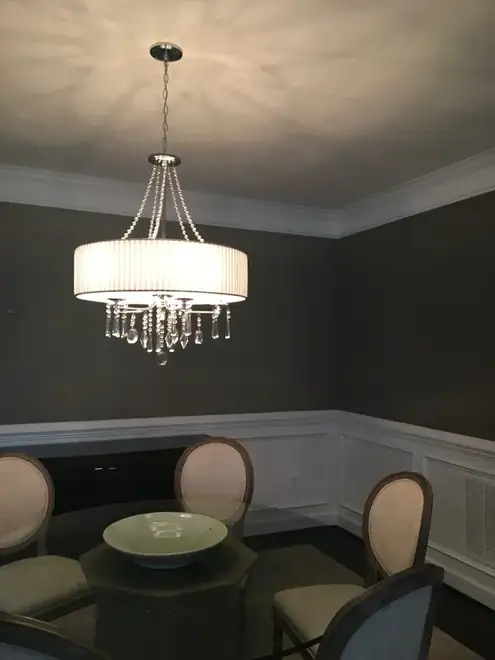
The same crew, every morning, until it is finished
Fred General Painting has been painting the inside of homes here since 2002. Fredy Vargas runs a crew of four and works alongside them, so the person whose name is on Virginia contractor license 2705098145 is the person cutting the line where your ceiling meets the wall. The crew arrives at the same time each day and it is the same faces all week. Nobody gets handed off to a sub halfway through.
We take small work. One hallway. One nursery before a baby arrives. A stairwell that got skipped when the rest of the house was done. There is no minimum job for us, and we say that because homeowners ask constantly and get turned down elsewhere. We also take whole houses. A five bedroom in Oakton with a three car garage ran four weeks and we were there every one of those days.
A lot of our interior work is repeat work. We have families in Vienna and McLean whose houses we have painted three and four times across more than a decade, as kids moved out, as rooms changed use, as a color they loved in 2012 stopped feeling right. Fred checks in with you at the end of each day, before the crew packs up, so nothing waits until the walkthrough to get fixed.
Prep is most of the job, and most of the price
Rolling paint is the fast part. Everything before it is where a room is won or lost. We start by taking the room apart: switch plates and outlet covers off, curtain rods down, picture hangers pulled, furniture moved to the middle and covered, floors run with drop cloths and taped at the baseboard.
Then the walls get looked at closely under a work light held at a low angle, which shows every dent and roller ridge that overhead light hides. Nail pops get set and patched. Drywall dings get filled, sanded flush, and dusted off. Old caulk that has split away from trim gets cut out and replaced, because painting over a split caulk line just gives you a painted split caulk line.
Every patch gets primed. This is the step people skip and then wonder why their finished wall has dull spots that show up in daylight. Bare joint compound drinks paint at a different rate than the surrounding painted wall, so the sheen lands unevenly. Painters call it flashing. Spot priming kills it. If a wall is heavily patched we prime the whole wall rather than fight it in patches.
Glossy surfaces get scuff sanded. Fresh latex has almost nothing to grip on an old semi-gloss trim board, and it will peel off in sheets a year later when someone drags a vacuum along the baseboard.
Sheen, room by room
Sheen is not decoration. It changes how a wall wears and how much of the wall you can see through the paint. Higher sheen is tougher and easier to wipe, but it also throws light sideways and shows every imperfection underneath it. Flat hides, gloss reveals. That is the whole tradeoff.
Here is how we usually steer people, and we will talk it through with you rather than just handing you a chart.
- Flat or matte on ceilings, always. A ceiling has more visible bounce light than any surface in the house and flat is the only thing that hides the drywall seams.
- Eggshell on most walls: living rooms, bedrooms, dining rooms. Enough sheen to wipe a fingerprint off, soft enough to forgive an old wall.
- Satin in kitchens, kids rooms, hallways and mudrooms, where hands and backpacks hit the wall daily.
- Semi-gloss on trim, doors, window casings and railings. It takes the abuse and it gives you the crisp visual break between trim and wall.
- Bathrooms get a paint with mildewcide in it, in satin or semi-gloss. A regular flat wall paint above a shower will grow spots no matter how well you ventilate.
How many coats it actually takes
Two coats is our standard on walls, over a clean and properly primed surface. We do not count primer as a coat and we do not quote one coat work, because a single coat over an existing color looks fine while it is wet and blotchy once it flattens out.
Some jobs need three. Going from a dark red or deep navy to an off white is the common one. Red pigments in particular are thin and keep bleeding through, so we tint the primer gray rather than fighting it with extra finish coats, which is cheaper for you and gives a better result. Going the other direction, light wall to a saturated color, also often takes three, because deep base paints carry less white pigment and simply cover less per coat.
Trim gets a different treatment. We sand lightly between coats on doors and casings. It takes an extra pass and it is the difference between trim that feels like furniture and trim that feels gritty when you run a hand along it. New trim and new drywall get a dedicated primer, not a self-priming wall paint.
We use Sherwin-Williams and Benjamin Moore. We are not loyal to one brand for its own sake, we pick the line that fits the surface, and we will tell you when a cheaper line is genuinely fine for a closet or a rental turnover.
What happens to your furniture and your floors
We move furniture ourselves. Small and medium pieces go to the center of the room and get covered with plastic; heavy pieces get slid on pads and put back where they were. We ask you to take down anything fragile, personal or irreplaceable before we start, because we would rather you handle your own grandmother's china than trust our packing of it.
Floors get canvas drop cloths, not just plastic. Plastic alone is slick underfoot on hardwood and it traps drips wet so a footstep spreads them. Canvas absorbs. On carpet we run cloth and tape the edge at the base shoe.
Dust is the other half of it. Sanding drywall compound produces a fine powder that travels through a house and settles on everything two rooms away. We sand with a vacuum where the work allows it, seal doorways with plastic on bigger jobs, and clean up at the end of each day rather than at the end of the week. You should be able to use your kitchen every night we are there.
At the end we put the switch plates back, pull the tape, do a walkthrough with you and mark anything you see. Touch ups happen then, not on some future visit.
Dry time is not cure time
This is the single most useful thing a homeowner can learn about paint. Modern latex is dry to the touch in an hour and recoatable in about four. It is not cured for two to four weeks. Curing is the coating cross linking and hardening, and it keeps going long after the room looks finished.
What that means in your house: do not scrub a fresh wall. Do not tape anything to it. Do not press furniture backs flat against a newly painted wall for a few days, because soft paint and a hard surface will bond to each other and pull off when you move the sofa. If you must clean a mark in the first month, use a damp cloth and no pressure, no cleaner.
Cold and humidity stretch all of it. A room in the low sixties in February with the windows shut takes noticeably longer between coats than the same room in May. We plan around it. We would rather add half a day than stack a second coat onto paint that has not released its moisture, because that is how you get a finish that stays soft and marks with a fingernail months later.
Why interior paint fails, and how we avoid it
Interior failures are boring and predictable. Almost all of them trace back to the surface, not the paint.
Peeling on trim and doors is adhesion. Somebody painted latex over an old oil finish without sanding or priming. It looks fine for a season and then comes off in a sheet. The fix is deglossing and a bonding primer, and it is not optional.
Peeling on bathroom ceilings is moisture. Steam gets behind the film through an unprimed patch or a bad fan and lifts it. We prime and use the right coating, but if a bath fan vents into the attic instead of outside we will tell you, because paint will not solve that.
Roller marks and picture framing, where the edges of a wall look darker than the middle, come from cutting in with a brush and then letting it dry before rolling into it. We keep a wet edge and roll close to the corner, which is a technique thing, not a product thing.
Stains bleeding through, usually brown rings from an old roof or plumbing leak, need a stain blocking primer. Water based paint over a water stain will let it come right back through, sometimes weeks later.
The rest of what we do inside
We do carpentry alongside painting, which means you are not chasing a second contractor to fix rotted window sills or a split baseboard before we can start. Fred came up doing both. If a door is not closing right or a piece of casing has to come off to do the work properly, we handle it.
We also take on popcorn ceiling removal, crown molding installation, wallpaper hanging and removal, stucco repair, concrete staining and epoxy floors, and pool painting. Popcorn removal in particular pairs naturally with an interior repaint, because the ceiling has to be skim coated, sanded and primed afterward anyway and the room is already emptied and covered.
We work Monday through Friday, 8 to 5, and weekends by appointment if a work schedule makes weekdays impossible. Veterans and anyone 65 or older get 10 percent off. We are licensed, bonded and insured, background checked through Thumbtack, and rated 5.0 on Google across 40 reviews. We cover Vienna, Oakton, McLean, Great Falls, Arlington, Falls Church, Tysons, Fairfax, Burke, Reston, Herndon, Annandale, Alexandria and Springfield. Call 703-869-0593 and Fred will come look at the rooms himself.
Recent interior painting work
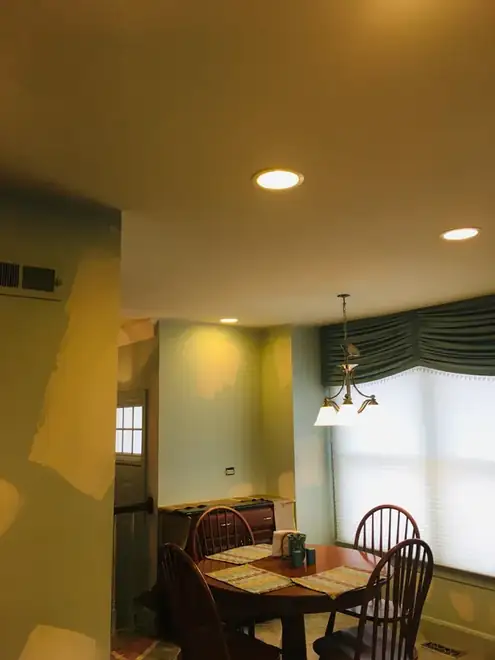
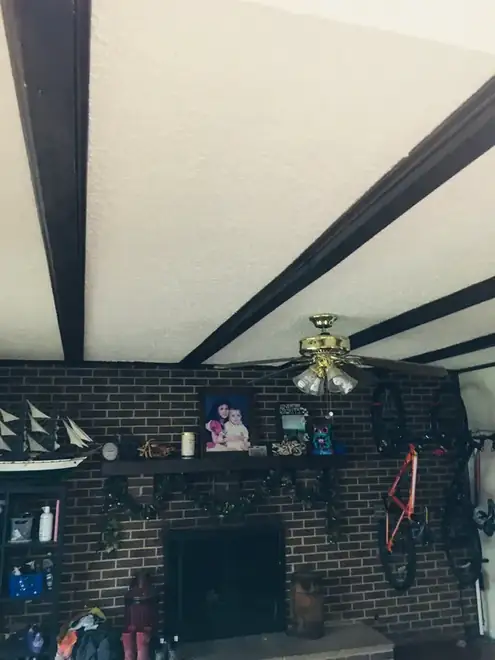
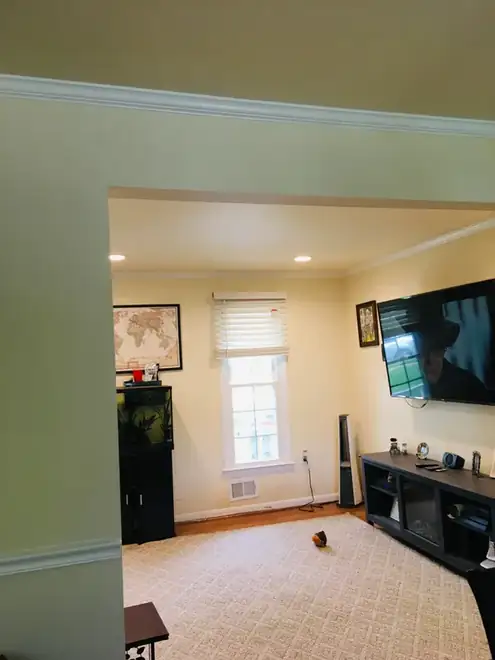
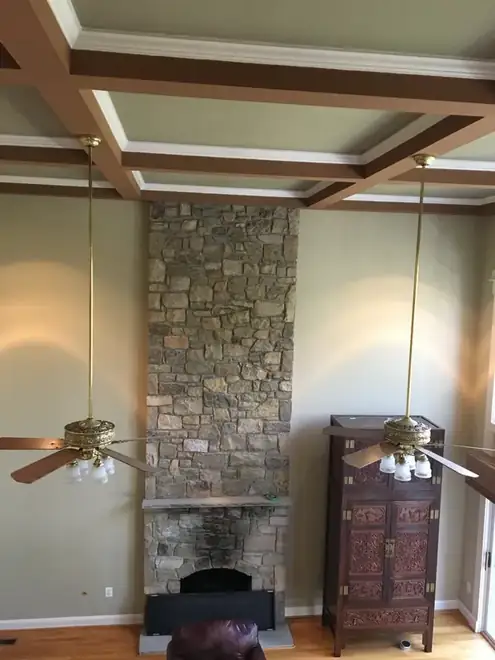
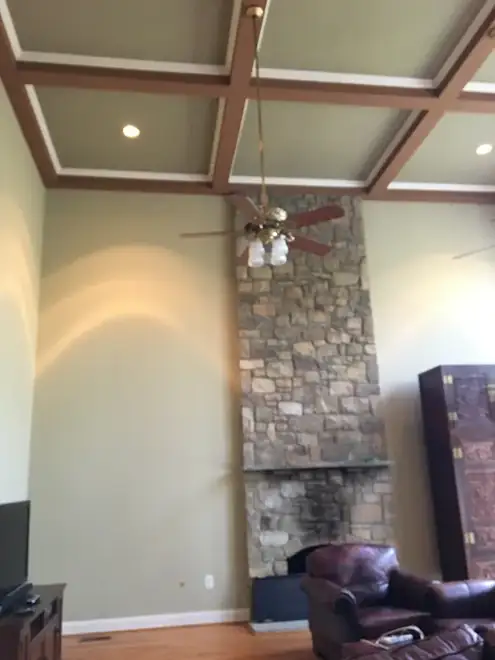
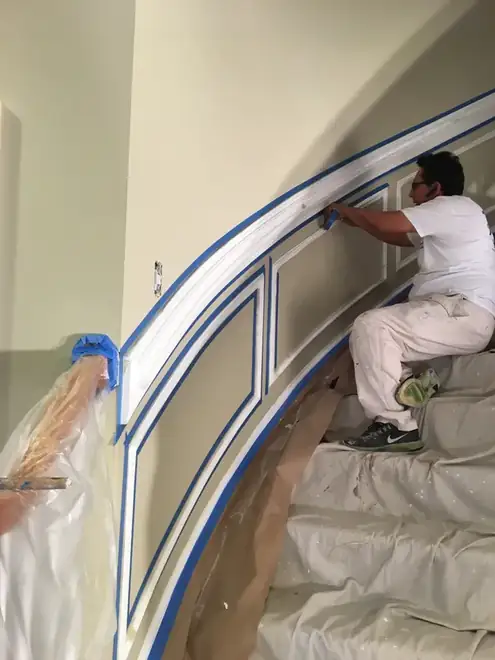
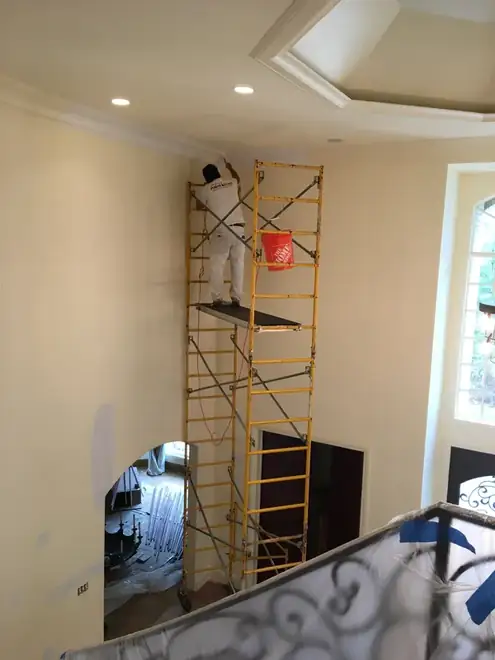
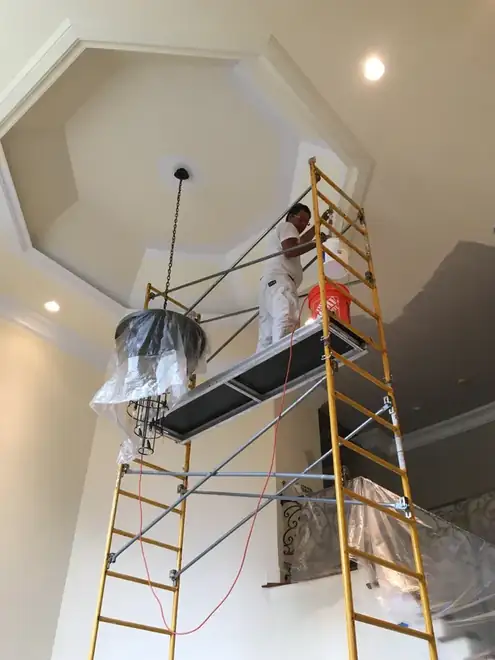
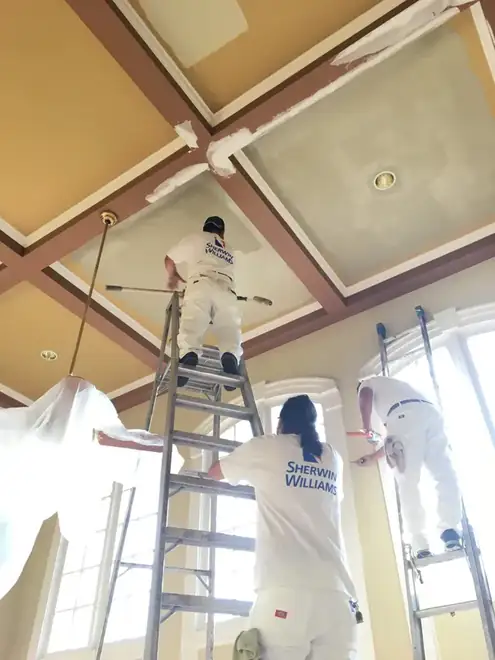
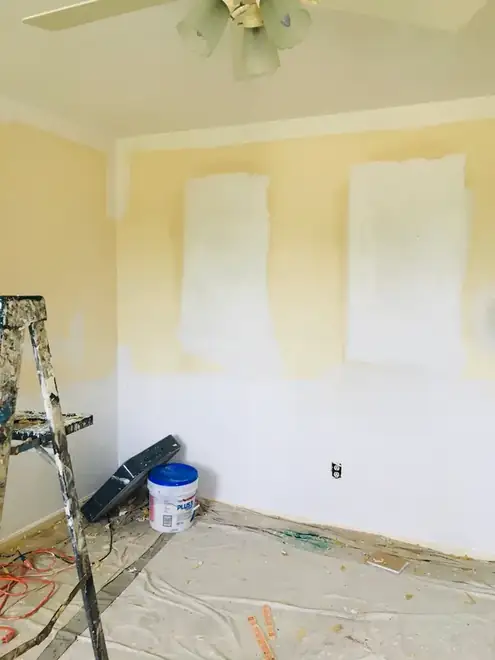
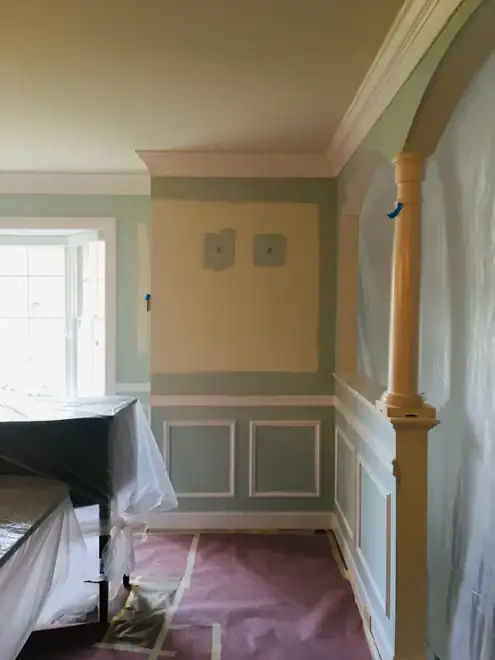
Our own photographs, from jobs around Northern Virginia.
Questions about interior painting
Do you have a minimum job size?
No. We will paint one room, one hallway, or one stairwell. Homeowners tell us all the time that other companies would not return the call for a single bedroom, and it is one of the reasons people in Vienna and Falls Church come back to us. Small jobs are usually a day or two and we schedule them around larger projects so you are not waiting weeks.
Can I stay in the house while you paint?
Almost always, yes. We work room by room so you keep the rest of the house. We clean up daily rather than at the end of the job, so your kitchen and bathrooms stay usable every night. Modern low and zero VOC paints from Sherwin-Williams and Benjamin Moore have very little odor. If you are sensitive to smell, tell us and we will pick a line accordingly and keep ventilation running.
Do you move the furniture?
We move it. Small and mid sized pieces go to the middle of the room under plastic, and heavy furniture gets slid on pads and returned to the same spot. We ask that you take down artwork, electronics, china and anything with sentimental value before day one. It is not that we are careless, it is that some things should only be packed by the person who owns them.
How long before I can hang pictures and push furniture back?
You can put furniture back the next day if you leave a small gap at the wall for about a week. Hang pictures after a week. The paint is dry in an hour but it does not fully cure for two to four weeks, and during that window a hard surface pressed flat against the wall can bond to the film and pull it off when moved. Cold rooms cure slower.
Which sheen should I use in my kitchen?
Satin on the walls in most kitchens. It wipes clean where grease and hands hit it, and it does not throw as much light as semi-gloss, which would highlight every wave in an older wall. Trim and doors go semi-gloss. Ceilings stay flat. If you have a bath or laundry with real steam, we will move you to a paint with mildewcide in it regardless of sheen.
Do you paint over wallpaper?
We would rather remove it. Paint over wallpaper traps moisture in the paste, and the seams telegraph through and start lifting within a year or two. We remove wallpaper, wash the adhesive off, skim any torn drywall face paper, prime with an oil or shellac based sealer and then paint. If removal genuinely is not practical we will tell you what the risks are before you decide.
Why do you prime patches if the paint says self-priming?
Because bare joint compound absorbs paint at a completely different rate than the painted wall around it, so the finished sheen lands unevenly and you see dull halos in daylight. Painters call that flashing. Self-priming paint is meant for painted, sound surfaces, not raw patches. Spot priming takes minutes and it is the difference between a wall that looks right in every light and one that does not.
How far do you travel, and what does it cost to come look?
We cover Vienna, Oakton, McLean, Great Falls, Tysons, Arlington, Falls Church, Fairfax, Burke, Reston, Herndon, Annandale, Alexandria and Springfield. Fred comes out himself to walk the rooms, measure and talk through colors and sheens, and there is no charge for that visit. Call 703-869-0593. Veterans and customers 65 and over get 10 percent off the work.
Interior painting near you
Every town below has its own page with what we run into on those houses.
Our other services
More on this from Fred
- What Actually Drives the Cost of Painting a House in Northern VirginiaHomeowners want a number. What they usually need first is an understanding of why two honest painters can quote the…
- The Best Time of Year to Paint the Outside of a Virginia HomeLate spring and early fall are the sweet spots, but the reason has less to do with the daytime high…
- Painting Your Kitchen Cabinets vs Replacing ThemRefinishing is the cheaper path most of the time. But there are kitchens where it is the wrong answer, and…
Ready when you are.
Fred answers his own phone. If he is up a ladder he calls back the same evening.