
Power Washing in Vienna and Northern Virginia
Pressure is a tool, not the whole job. We match it to the surface, use the right cleaner, and get houses clean without carving the material.
What we clean
We power wash houses, decks, patios, driveways, walkways, fences, retaining walls, porches, steps and pool surrounds. Siding of every kind: vinyl, wood, stucco, brick, composite and fiber cement. We work across Vienna, Oakton, McLean, Great Falls, Falls Church, Arlington, Tysons and Fairfax, and out to Burke, Reston, Herndon, Annandale, Alexandria and Springfield.
Some customers call us for washing alone, once a year, usually in spring after pollen season. Others are having us paint or refinish a deck, and the wash is the first step of that job. Both are normal. There is no minimum, so a walkway and a set of front steps is worth a visit.
Fredy Vargas has been doing this work in Northern Virginia since 2002 and he is on site with the crew. We are licensed, bonded and insured under Virginia contractor license 2705098145, background checked, rated 5.0 on Google across 40 reviews, and a Thumbtack Top Pro every year from 2021 through 2025.
Pressure is the part people get wrong
A pressure washer is a machine that can destroy your house. That is not dramatic. We get called to repaint siding that has been furrowed by a wand, to fix mortar joints blown out of a brick wall, and to deal with water damage inside a wall after somebody sprayed up under lap siding.
Here is the part that is not obvious: the number printed on the machine is not the pressure hitting your wall. What lands on the surface is a product of the tip, the wand distance and the angle. A wide fan tip held two feet back is gentle. The same machine with a narrow tip held four inches away will cut wood. Most damage we see was caused by somebody getting closer to stubborn dirt instead of switching to a cleaner that would dissolve it.
So our approach is to start with the least aggressive setup that will do the work and only go up when the surface can genuinely take it. Wide fan tips, distance held consistent, movement kept even, and detergent doing the work that pressure should not.
Soft washing, and why cleaner beats force
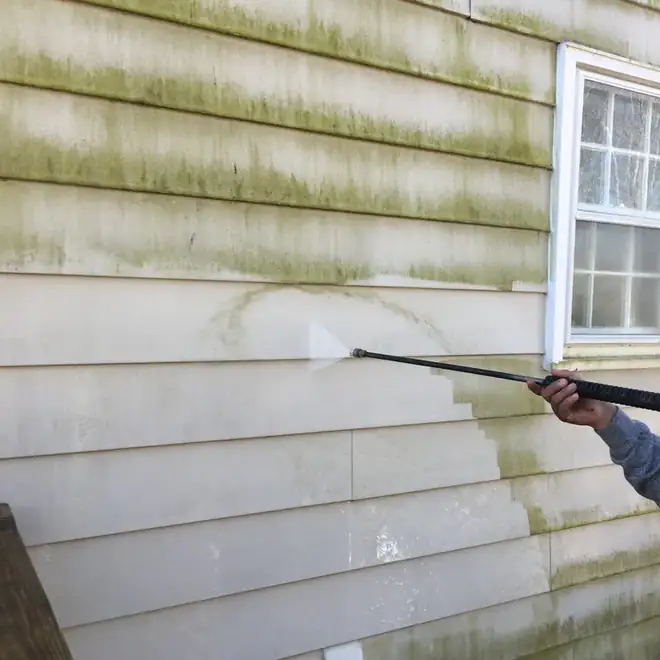
The green and black film on the shaded side of a house is not dirt. It is living growth, algae and mildew, and it has roots into the surface. Blasting it removes what you can see. The organism is still there, which is why a pressure-only wash looks great for two months and then goes green again faster than you expect.
Soft washing means applying a cleaning solution at low pressure, letting it dwell so it actually kills the growth, then rinsing at low pressure. It cleans deeper, it lasts noticeably longer, and it does not stress the surface. On vinyl siding, painted wood, stucco and anything with a coating on it, that is what the job should be.
The other thing detergent solves is chalking. Older vinyl and painted surfaces oxidize, leaving a fine powder that comes off on your hand. Pressure alone smears it. If you are painting afterward, that chalk absolutely has to come off, because a coating applied over chalk is a coating with a layer of loose powder underneath it, and it will let go.
How each surface gets treated
Every material has its own rules. This is roughly how we approach the common ones.
- Vinyl siding: low pressure and detergent, always washing downward or level, never angled up under the laps. Water driven up behind siding has nowhere to go and ends up in the wall.
- Painted wood siding: gentle. Enough to remove dirt, mildew and any loose failing paint, and no more. If paint comes off during a wash it was already failing.
- Stucco: low pressure. Stucco is porous and a narrow tip will erode the surface and force water into the wall system. Cracks get noted, not power washed.
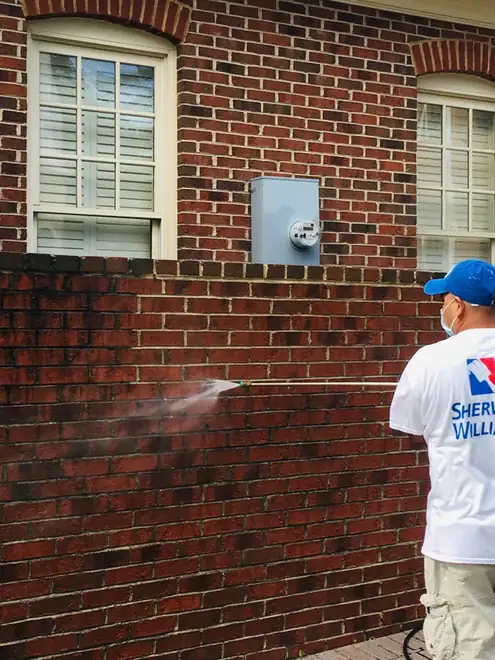
- Brick and masonry: moderate at most, kept off the mortar joints. Old lime mortar is soft and can be washed right out of a wall.
- Concrete driveways and patios: this is where higher pressure belongs, with a rotating surface cleaner rather than a bare wand.
- Pavers: careful pressure, since aggressive washing strips the joint sand and you will need to re-sand afterward.
- Wood decks and fences: low pressure with a wood cleaner. Softwood furrows easily and wand marks are permanent.
- Composite decking: cleaner and low pressure only. High pressure can raise the surface texture and it will not go back.
The stripe problem on concrete
Here is something worth knowing before you rent a machine for a weekend. Concrete washed with a bare wand almost always ends up striped, that zebra pattern of clean and less clean bands across a driveway. It happens because a wand cleans in an arc and no human hand keeps the distance and overlap perfectly consistent across a whole slab.
The fix is a surface cleaner, the round attachment that rides flat on the concrete with spinning jets inside a housing. It holds the same distance across the entire surface and produces an even result, faster and with less water. It also keeps the spray contained instead of throwing dirt across your garage door and the side of your car.
Not all stains come out with pressure. Oil and transmission fluid need a degreaser and time to pull out of the pores. Rust from a fertilizer spreader or metal furniture legs is chemical and needs a rust remover, not force. Tannin stains under an oak tree are a different treatment again. If a stain has been in bare concrete for years, we will tell you honestly whether it will lighten or truly disappear, before we start rather than after.
Washing before painting is a different standard
When a wash is prep for a paint job, the bar is higher. Clean enough to look nice is not the same as clean enough to accept a coating. Every bit of dirt, pollen, mildew and chalk has to come off, because paint bonds to what it touches, and if it touches a layer of chalk, that is what it is stuck to.
We also give the house time to dry after washing. Wood especially holds water well after the surface looks dry, and painting onto damp siding traps moisture under the film, which shows up later as blistering and peeling. Depending on the season and the material, that means one to several days between the wash and the first coat. It is a real part of the schedule, not a delay.
One thing homeowners rarely know: pressure washing does not kill mildew as thoroughly as a cleaning solution does, and mildew that survives under a fresh coat of paint keeps growing and comes back through the new film. If your north side went green last year, it will do it again through new paint unless it is treated properly first. That is a chemical step, not a pressure step.
What a wash will not fix
It is worth setting expectations before we roll a hose out, because a few things look like dirt and are not.
Faded paint is not dirty paint. Ultraviolet light breaks down the resin in a coating over the years and the pigment chalks off. Washing removes the chalk and can make a wall look slightly better, but the color that is gone is gone. That is a repaint conversation.
Weathered gray wood on a fence or deck will lighten with cleaning, but the gray is damaged surface fiber and getting the real wood tone back takes a cleaner plus a brightener and usually sanding.
Efflorescence, the white powdery bloom on brick and block, is mineral salt coming out of the masonry as moisture moves through it. Water will not remove it for long, because more moisture keeps bringing more salt to the surface. It needs the right treatment and, more importantly, an understanding of where the water is coming from.
Artillery fungus, those tiny black specks all over the lower siding of a house with hardwood mulch beds, is stubborn. The spores bond hard to vinyl and paint. Some of it comes off. Some of it does not, and anyone who promises otherwise has not scraped many of them off a wall.
We would rather tell you this at the estimate than have you look at a clean house and wonder why one thing is still there.
How we protect your property while we work
Water goes places. Before we start we walk the site with you and cover what needs covering.
Plants and shrubs get soaked with clean water before any cleaner goes up, which keeps them from taking up the solution, and rinsed thoroughly afterward. Light fixtures, outlets, doorbells and cameras get protected. We check that windows and storm windows are shut, and we point out any that do not seal, because an older window can leak with a garden hose let alone a washer.
We keep water away from soffit and attic vents, ridge and gable vents, and dryer vents. We do not blast up into the underside of a roof edge. And we do not pressure wash roof shingles, because it strips the granules that make the shingle a roof. A roof that is streaked with algae needs a soft wash approach and, honestly, a roofer's opinion if it is old.
We watch the temperature too. Washing in freezing weather leaves ice on walkways and steps, and cleaning solutions do not work properly when it is cold. Late fall and winter jobs get scheduled around that.
Scheduling and what to expect
Most house washes are a single day. Concrete flatwork is often half a day. Decks are washed as part of a refinishing job, with drying time built in before we sand and stain.
Spring is our busiest stretch, once the pollen has finished falling in this area, since a house coated in yellow-green film is the reason most people call. Early fall is the quieter, easier window if you have a choice. Either way, the same crew arrives at the same time and Fred is there with them.
Our week runs 8 to 5, Monday through Friday, and we will book a weekend by appointment. Veterans get 10 percent off, and so does anyone 65 or older. If you are considering painting later in the year, tell us at the wash and we will note what we find on the walls, since a wash is the best possible chance to look at every square foot of a house up close.
Call 703-869-0593. We serve Vienna, Oakton, McLean, Great Falls, Arlington, Falls Church, Tysons, Fairfax, Burke, Reston, Herndon, Annandale, Alexandria and Springfield.
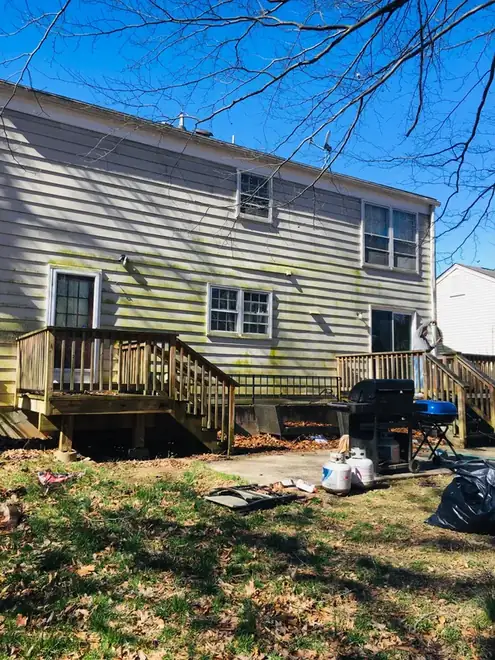
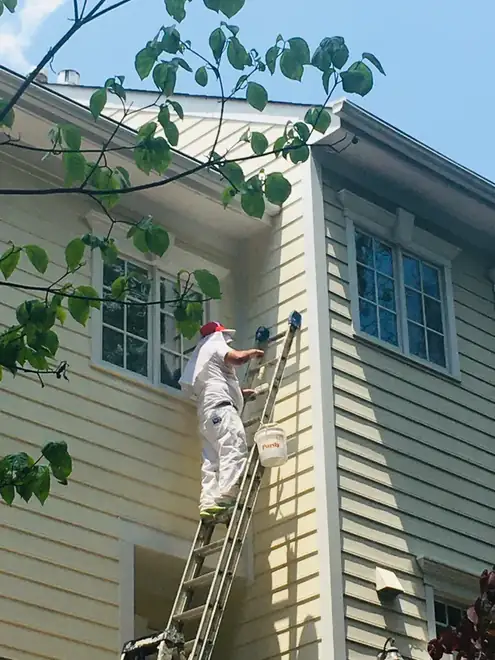
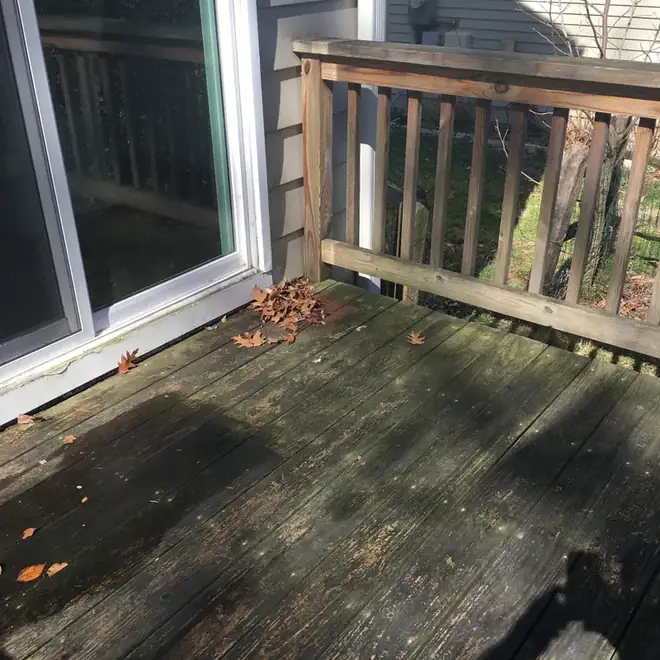
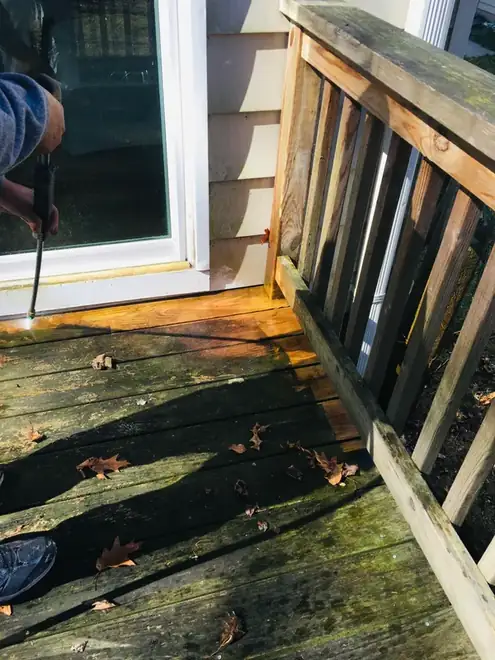
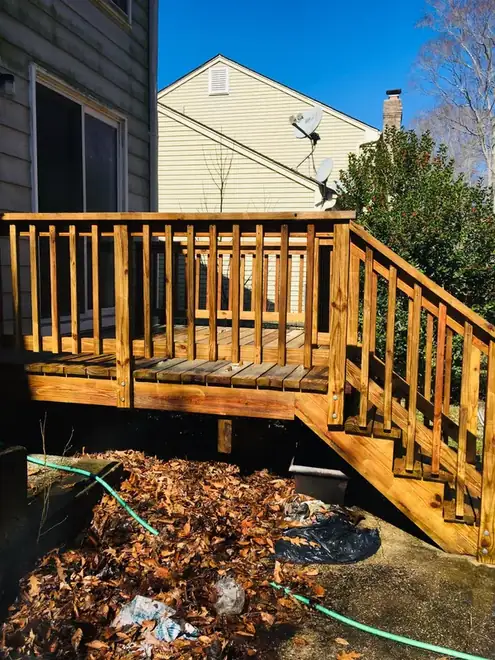
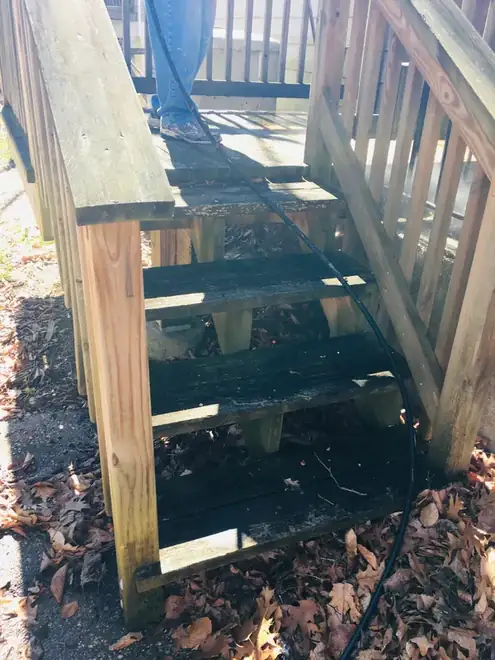
Recent power washing work
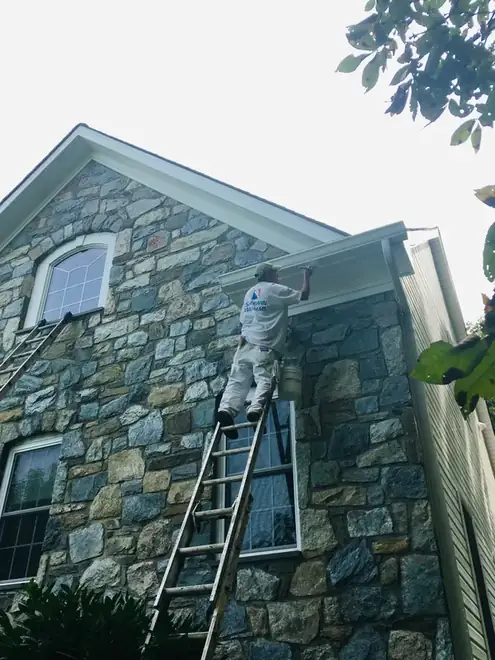
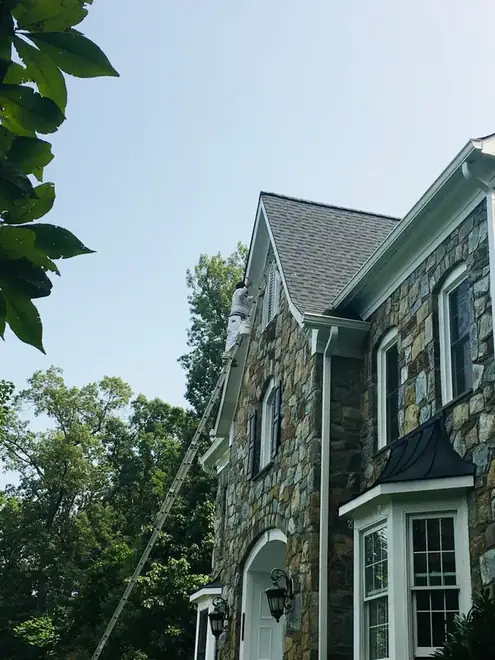
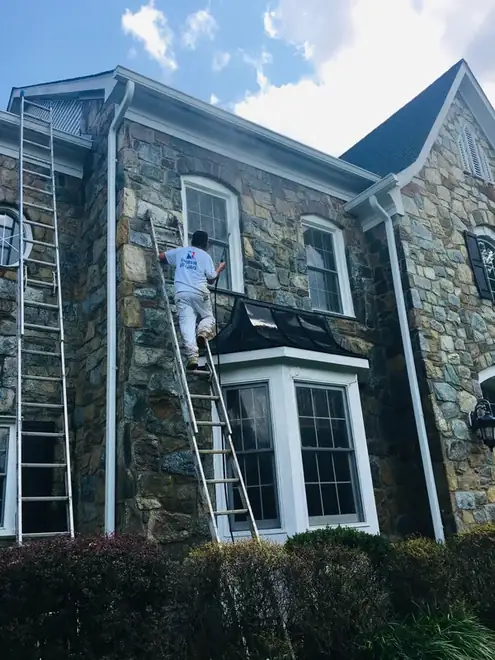
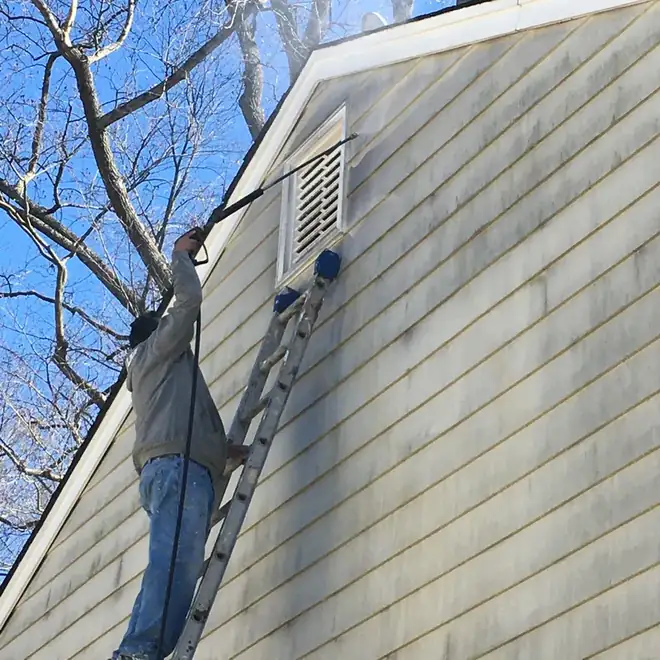
Our own photographs, from jobs around Northern Virginia.
Questions about power washing
Will power washing damage my siding?
Not the way we do it. Damage comes from too narrow a tip held too close, or from spraying upward under lap siding and forcing water into the wall. We use wide fan tips, keep consistent distance, wash downward, and let cleaning solution do the work that pressure should not. On vinyl, stucco and painted wood we soft wash at low pressure rather than trying to blast dirt off.
How often should a house be washed?
Once a year suits most houses here, usually in spring once pollen season is over. Shaded and north-facing walls and anything under tree cover grow algae faster and may want more frequent attention. Houses in open sun on the other side often go longer. If you can wipe a finger down the siding and it comes back green or chalky, it is time.
Do you wash roofs?
We do not pressure wash roof shingles. High pressure strips the granules off asphalt shingles, which is what protects the shingle from the sun, and it can drive water up under the courses. Black streaking on a roof is algae and needs a low-pressure soft wash approach. If your roof is near the end of its life, we will say so rather than clean it and leave you with a leak.
Will the green and black come back?
Eventually, since it is a living organism and the conditions that grew it are still there: shade, moisture, and trees. What matters is how fast. A pressure-only wash removes what you see and leaves the growth in the surface, so it returns quickly. Cleaning with a solution that is allowed to dwell kills it, and the results last considerably longer before it takes hold again.
Can you get oil stains out of my driveway?
Often we can lighten them significantly, and sometimes remove them. Oil soaks into the pores of concrete, so it is a degreaser and dwell time job, not a pressure job. Older stains that have been sitting for years may not come out completely. Rust from fertilizer or metal furniture needs a separate rust treatment. We look at your specific stains and tell you what to expect before we start.
Do I need to be home?
Not necessarily, as long as we have access to an outside water spigot and can reach all sides of the house. We do ask that windows and storm windows be closed and that patio furniture, grills, cushions and potted plants be moved or told to us so we can move them. If you have pets that use a yard, keep them inside while we are working.
Does washing hurt my plants and grass?
Not with the right handling. We saturate shrubs and beds with clean water before any cleaning solution goes on the walls, which keeps plants from absorbing it, and we rinse everything thoroughly when we finish. Delicate specimen plantings get covered. Tell us about anything you are protective of and we will treat it accordingly, or work around it entirely.
Is washing included if you are painting my house?
Yes. Every exterior paint job starts with a wash, because paint bonds to whatever it touches, and dirt, pollen, mildew and chalk are all things it can bond to instead of your siding. Prep washing is done to a higher standard than a cosmetic wash, and we build in drying time before the first coat so no moisture is trapped under the paint.
Power washing near you
Every town below has its own page with what we run into on those houses.
Our other services
More on this from Fred
- What Actually Drives the Cost of Painting a House in Northern VirginiaHomeowners want a number. What they usually need first is an understanding of why two honest painters can quote the…
- The Best Time of Year to Paint the Outside of a Virginia HomeLate spring and early fall are the sweet spots, but the reason has less to do with the daytime high…
- Wood Rot on Trim and Siding, and the Price of WaitingRot is not an event. It is a slow process that begins somewhere you cannot see, and the paint failing…
Ready when you are.
Fred answers his own phone. If he is up a ladder he calls back the same evening.